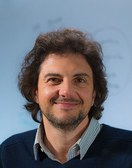
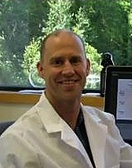
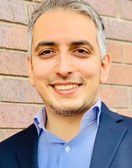
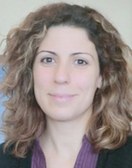
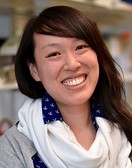
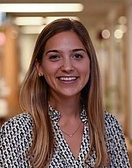
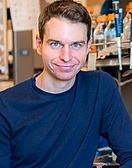
In the labShowed that mTORC1 senses amino acids 'inside-out', starting in the lysosome lumen and requiring the v-ATPase.
Own labZoncu Lab, UC Berkeley (Berkeley, California, USA). He studies the lysosome, the cell's recycling centre, as a 'control tower' that tells mTOR whether nutrients such as cholesterol are available. The lysosome as a signalling hub: cholesterol sensing via SLC38A9/NPC1 and OSBP, FLCN-RagC control of TFEB, and lysosomal quality control in disease.
Lysosome & autophagy
Trained 1 person in this family ↓
Also trained with Pietro De Camilli (PhD)
Sources: 2011 (in the Atlas) · 2012 (in the Atlas) · moleculartherapeutics.org · mcb.berkeley.edu
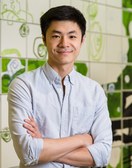
In the labMade RagA-GTP knock-in mice and showed that Rag-dependent mTORC1 control is essential for autophagy and survival right after birth.
Own labMetabolism and Cell Signalling Group, Spanish National Cancer Research Centre (CNIO) (Madrid, Spain). He uses mice to see what happens to the whole body, including immune cells and cancers, when the cell's nutrient sensor is broken or stuck on. Whole-body physiology of nutrient sensing by mTORC1 and the Rag GTPases: B-cell activation and germinal centres, follicular lymphoma, and the mTOR-autophagy axis in obesity.
Immunity
Also trained with Manuel Serrano (PhD)
Sources: 2012 (in the Atlas) · 2011 (in the Atlas) · cicancer.org · cnio.es
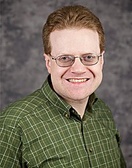
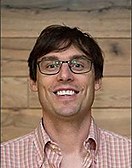
In the labFirst author on mTOR resistance-mutation work (2014) and co-author on the GATOR and Sestrin papers.
Own labSabatini Lab, Whitehead Institute / MIT (HHMI) (Cambridge, Massachusetts, USA). Catalogued cancer-associated MTOR mutations and showed that many of them hyperactivate the kinase and can predict sensitivity to rapamycin; he also contributed to the discovery of GATOR1
Cancer & therapy
Sources: 2014 (in the Atlas) · 2013 (in the Atlas) · alumni.buffalostate.edu
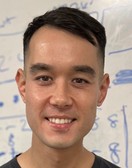
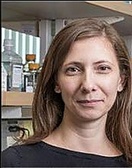
In the labCharacterized Torin1, an ATP-competitive mTOR inhibitor that revealed functions of mTORC1 rapamycin cannot block, and later a model of how mTORC1 controls TOP-mRNA translation.
Own labThoreen Lab, Yale (New Haven, Connecticut, USA). He studies how mTOR decides which protein 'recipes' (mRNAs) the cell's protein factories read first when food is plentiful. How 5'TOP motifs, LARP1 and eIF4F set how strongly an mRNA depends on mTOR, and how that control is used in physiology.
Translation
Sources: 2009 (in the Atlas) · PubMed 16713952 (2006) · 2008 (in the Atlas) · dspace.mit.edu · medicine.yale.edu
In the labUsed rictor and mLST8 knockout mice to define what mTORC2 does in the whole animal (Akt-FOXO and PKC-alpha signalling).
Own labGuertin Lab, UMass Chan (Worcester, Massachusetts, USA). He studies how fat tissue, especially 'brown fat' that burns energy to make heat, uses mTOR signals to manage the body's energy. mTORC2 and nutrient sensing in adipose tissue and liver: brown fat development and thermogenesis, lipid metabolism, obesity, diabetes and cancer.
mTORC2 & growth factors
Sources: PubMed 16713952 (2006) · 2012 (in the Atlas) · 2004 (in the Atlas) · wi.mit.edu · profiles.umassmed.edu · umassmed.edu
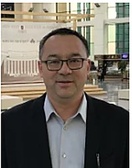
In the labCo-discovered rictor and mTORC2, showed that mTORC2 phosphorylates Akt at Ser473, and that prolonged rapamycin blocks mTORC2 assembly.
Own labFaculty profile, Nazarbayev University (Astana, Kazakhstan). He studies how mTOR and the 'survival' protein Akt get stuck on in cancer cells, and how that could be blocked. Growth-factor and nutrient-dependent mTOR signalling, ribosome biogenesis, and how this signalling goes wrong in cancer.
mTORC2 & growth factors
Sources: 2004 (in the Atlas) · 2006 (in the Atlas) · farabi.university · wi.mit.edu · ssh-old.nu.edu.kz
In the labShowed that rapamycin causes insulin resistance by disrupting mTORC2, while lowering mTORC1 alone can extend lifespan without hurting glucose control.
Own labLamming Lab, UW-Madison (Madison, Wisconsin, USA). He studies how the amount and kind of protein we eat, acting through mTOR, affects weight, diabetes and how long mice live. Dietary protein and branched-chain amino acids as regulators of metabolic health and longevity through mTOR, mTORC2 biology, and safer geroprotective rapamycin regimens.
Aging & lifespan
Also trained with David A. Sinclair (PhD)
Sources: 2012 (in the Atlas) · en.wikipedia.org · lamminglab.medicine.wisc.edu
In the labShowed that SLC38A9 senses arginine and also exports essential amino acids such as leucine from lysosomes; co-developed rapid lysosome purification (LysoIP).
Own labWyant Lab, MGH Cardiovascular Research Center (Boston, Massachusetts, USA). He studies how heart and muscle cells sense oxygen, food and exercise, to find ways to stop muscle wasting and heart failure. How oxygen, nutrients, stretch and electrical activity regulate heart and skeletal muscle, aiming at muscle atrophy, heart failure and cachexia.
Metabolism
Also trained with William G. Kaelin Jr. (Postdoc)
Sources: 2017 (in the Atlas) · 2017 (in the Atlas) · dspace.mit.edu · cvrc.massgeneral.org
In the labSolved the 3.2 A cryo-EM structure of raptor bound to Rag-Ragulator, showing how mTORC1 docks on the lysosome.
Own labRogala Lab, Stanford University (Stanford, California, USA). He builds atom-level 3D models of the proteins that sense food inside cells, and designs chemicals that turn them up or down. Structural and chemical biology of nutrient sensors and transporters and their integration with hormone signals; chemical probes for growth pathways in cancer and TSC.
Structure
Sources: 2019 (in the Atlas) · wi.mit.edu · profiles.stanford.edu
In the labRan genome-wide CRISPR screens cataloguing mTORC1 regulators and showed that AMPK and HRI-ATF4 relay mitochondrial dysfunction to mTORC1.
Own labPhD (Sabatini lab), MIT Department of Biology (Cambridge, Massachusetts, USA). Ran genome-wide CRISPR screens revealing how mitochondrial stress signals to mTORC1
Mitochondria
Sources: 2021 (in the Atlas) · 2018 (in the Atlas) · dspace.mit.edu
In the labIdentified Ragulator as the GEF that switches the Rags on, and GATOR1 as the GAP that switches them off, a tumour-suppressor complex mutated in cancer.
Own labBar-Peled Lab, MGH & Harvard (Boston, Massachusetts, USA). He uses chemistry to find weak spots on cancer-cell proteins where new drugs could attach. Chemical proteomics of reactive cysteines to find druggable cancer dependencies; NRF2/KEAP1 and redox stress signalling in lung cancer.
Cancer & therapy
Also trained with Benjamin F. Cravatt (Postdoc)
Sources: 2013 (in the Atlas) · 2014 (in the Atlas) · wi.mit.edu · chembiophd.hms.harvard.edu
In the labFound that the Sestrins act through GATOR2 and identified CASTOR1 as the cytosolic arginine sensor for mTORC1.
Own labChantranupong Lab, Boston University (Boston, Massachusetts, USA). She studies the special 'diets' of different brain cells, and why some brain cells die in diseases like Parkinson's while others survive. How neurons rewire core metabolic and signalling pathways, including mTOR, for cell-type-specific needs, and why some neurons are selectively vulnerable in neurodegeneration.
Neuroscience
Also trained with Bernardo L. Sabatini (Postdoc)
Sources: 2014 (in the Atlas) · 2015 (in the Atlas) · dspace.mit.edu · bu.edu
In the labShowed that mTORC1 switches on SREBP-1c and fat production in the liver, and worked on DEPTOR.
Own labInstitut universitaire de cardiologie et de pneumologie de Québec – Université Laval (Quebec City, Quebec, Canada). He studies how mTOR and its brake protein DEPTOR control the making of fat cells and fat in the liver. DEPTOR and mTOR signalling in fat-cell formation, obesity and liver metabolism.
Metabolism
Sources: PubMed 20167806 (2010) · 2009 (in the Atlas) · montreal-diabetes-research-center.org · ulaval.ca
In the labDeveloped LysoIP for fast lysosome isolation and lysosomal metabolomics, showing v-ATPase and mTOR-dependent control of amino-acid efflux.
Own labAbu-Remaileh Lab, Stanford University (Stanford, California, USA). He studies what is inside the cell's recycling bins (lysosomes), and how jammed recycling leads to brain diseases. Lysosomal metabolism and lipid biochemistry (BMP, CLN5, PLA2G15) and how lysosome failure drives neurodegeneration, cancer and metabolic disease.
Lysosome & autophagy
Sources: 2017 (in the Atlas) · 2017 (in the Atlas) · 2019 (in the Atlas) · wi.mit.edu · chemh.stanford.edu
In the labShowed that tumours with constantly active PI3K do not respond to dietary restriction.
Own labKalaany Lab, Boston Children's Hospital / Harvard Medical School (Boston, Massachusetts, USA). She studies how what the whole body eats and stores, including blood sugar and insulin, makes tumours grow faster or slower. How whole-body metabolism (insulin/IGF signalling, diet, obesity) shapes cancer incidence and growth, and tumour metabolic dependencies in lung and pancreatic cancer.
Cancer & therapy
Sources: PubMed 19279572 (2009) · wi.mit.edu · research.childrenshospital.org
In the labMapped the mTOR-regulated phosphoproteome and identified Grb10 as an mTORC1 substrate that feeds back to inhibit PI3K.
Own labHsu Lab, University of Michigan Rogel Cancer Center (Ann Arbor, Michigan, USA). She is a lung-cancer doctor and scientist who studies how a tumour's food supply changes which drugs work. How nutrient conditions change cancer-cell sensitivity to metabolic drugs, with a focus on lung cancer.
Cancer & therapy
Also trained with Matthew G. Vander Heiden (Postdoc)
Sources: 2011 (in the Atlas) · 2006 (in the Atlas) · dspace.mit.edu · wi.mit.edu
In the labShowed that Sestrin2 is a direct leucine sensor for mTORC1, binding leucine at about the concentration that half-activates the pathway.
Own labWolfson Lab, Harvard Medical School (Boston, Massachusetts, USA). She studies the nerves that let your brain 'feel' what is going on inside your body, such as a full or upset stomach. Interoception: how visceral sensory neurons detect signals from internal organs such as the gut, and how they shape physiology and disease.
Neuroscience
Sources: 2015 (in the Atlas) · 2014 (in the Atlas) · dspace.mit.edu · cellbio.hms.harvard.edu
In the labSolved the crystal structures of Sestrin2 with leucine and CASTOR1 with arginine, showing how amino acids are recognized upstream of mTORC1.
Own labSaxton Lab, UC Berkeley (Berkeley, California, USA). He redesigns the chemical 'messages' immune cells send each other so they can work as better medicines. Structure-guided engineering of cytokines and receptors to reprogram immune-cell communication for autoimmunity, cancer and infection.
Immunity
Also trained with K. Christopher Garcia (Postdoc)
Sources: 2015 (in the Atlas) · 2014 (in the Atlas) · 2015 (in the Atlas) · dspace.mit.edu · mcb.berkeley.edu
In the labShowed that liver mTORC1 controls ketone-body production during fasting through PPAR-alpha, and that this control changes with age.
Own labAtavistik Bio (Boston, Massachusetts, USA). Showed that mTORC1 controls whether the liver makes ketone bodies during fasting, and now leads biology for drug discovery at a metabolic-disease biotech
Metabolism
Sources: PubMed 20965424 (2010) · 2006 (in the Atlas) · dspace.mit.edu · wi.mit.edu
In the labDeveloped genome-wide CRISPR-Cas9 screens in human cells and defined the genes human cells cannot live without.
Own labSabatini Lab, Whitehead Institute / MIT Biology (at time of both featured studies) (Cambridge, Massachusetts, USA). After inventing a way to switch off every gene one by one, he moved on to studying how brain circuits are wired. Moved to systems neuroscience: structural and functional organization of neocortical circuits.
Neuroscience
Also trained with Karel Svoboda (Postdoc)
Sources: PubMed 26472758 (2015) · 2015 (in the Atlas) · dspace.mit.edu · news.mit.edu
In the labDiscovered DEPTOR, a natural brake on mTOR that is overexpressed in some multiple myelomas, and worked on where mTORC1 sits in the cell.
Own labProfile, WashU Musculoskeletal Center (St. Louis, Missouri, USA). He tries to work out exactly how common drugs like rapamycin act inside cells, and what that means for aging. Genetics-based mapping of how drugs such as rapamycin and metformin act, and the genetic and environmental bases of aging.
Aging & lifespan
Sources: 2009 (in the Atlas) · 2008 (in the Atlas) · PubMed 20965424 (2010) · dspace.mit.edu · bonehealth.wustl.edu
In the labShowed that the Rag GTPases bind raptor and carry the amino-acid signal to mTORC1, that Ragulator anchors them on the lysosome, and identified PRAS40 as an mTORC1 substrate.
Own labSancak Lab, University of Washington (Seattle, Washington, USA). She studies how calcium gets into mitochondria, the cell's power plants, and how that turns their energy output up or down. Mitochondrial calcium uptake through the uniporter (MCU complex) and how it regulates mitochondrial metabolism, innate immunity and cell death.
Mitochondria
Also trained with Vamsi K. Mootha (Postdoc)
Sources: 2008 (in the Atlas) · 2011 (in the Atlas) · sabriulkersymposium.org · pharmacology.uw.edu