Mathieu Laplante
Co-wrote with David Sabatini one of the field's most cited reviews of mTOR in growth and disease, and his Laval lab studies how mTORC1 and DEPTOR control fat tissue and metabolism
Full Professor, Université Laval; Director, Research Center, CRIUCPQ · recruited to Université Laval 2011 · postdoc, Whitehead Institute, MIT (David M. Sabatini lab, 2007–2011) · PhD, Université Laval (Yves Deshaies lab, 2007)
Institut universitaire de cardiologie et de pneumologie de Québec – Université Laval (Quebec City, Quebec, Canada) ↗ Lab lineagetrained under David M. Sabatini →
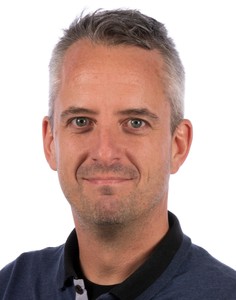 Portrait: Institut universitaire de cardiologie et de pneumologie de Québec (IUCPQ) – Université Laval
As Sabatini postdoc, part of team identifying DEPTOR (PET2009) — a built-in brake on both mTOR complexes, overexpressed in some multiple myelomas to paradoxically keep Akt survival signaling on. In 2012, co-authored with Sabatini the canonical Cell review (LAP2012), still the standard reference for the field.
PhD under Yves Deshaies studying PPARγ agonists and fat redistribution.
Now directs CRIUCPQ research center, studying mTOR/DEPTOR in adipogenesis and metabolic disease.
Milestones in the Atlas
A selection, not a full bibliography: only papers that meet the Atlas inclusion criteria.
| Year | Evidence | Study |
|---|---|---|
| 2009 | M | DEPTOR is an mTOR inhibitor frequently overexpressed in multiple myeloma cells and required for their survival PET2009 Helps identify DEPTOR as a brake on both mTOR complexes, overexpressed in some myelomas. |
| 2010 | M | mTORC1 controls fasting-induced ketogenesis and its modulation by ageing SEN2010 mTORC1 controls fasting-induced hepatic ketogenesis via PPARalpha, and this is blunted with age. |
| 2012 | R | mTOR signaling in growth control and disease LAP2012 Co-authors with Sabatini the field's most-cited synthesis of mTOR signaling. |
Co-authors in the Atlas 8
People with a profile here who share at least one study with Mathieu Laplante.
ShowHide
- David M. Sabatini 3 shared studies Identified mTOR (as RAFT1) in 1994. His lab then mapped much of the machinery around it: raptor and rictor at the core of mTORC1 and mTORC2, the Rag–Ragulator system that docks mTORC1 on the lysosome, and the sensors that detect leucine, arginine and SAM
- Timothy R. Peterson 2 shared studies Discovered DEPTOR, an inhibitor that binds mTOR in both complexes and is overexpressed in some multiple myelomas. He also showed that mTORC1 controls fat synthesis by regulating where the enzyme lipin 1 sits in the cell, and through it the SREBP pathway
- Carson C. Thoreen Used Torin1, one of the first ATP-competitive mTOR inhibitors, to reveal functions of mTORC1 that rapamycin cannot block. He then showed that mTORC1 controls translation of mRNAs for the protein-making machinery mainly through the 4E-BP proteins
- Nathanael S. Gray Medicinal chemist whose lab designed Torin1, an ATP-competitive mTOR inhibitor that blocks functions of mTORC1 that rapamycin misses. His lab is also known for covalent kinase inhibitors and targeted protein degraders
- Seong A. Kang Contributed to the Sabatini-lab studies that identified PRAS40 and DEPTOR, two of the cell's own mTOR inhibitors, and to the first characterisation of the mTOR inhibitor Torin1
- Shomit Sengupta Showed that mTORC1 controls whether the liver makes ketone bodies during fasting, and now leads biology for drug discovery at a metabolic-disease biotech
- W. Michael Kuehl Physician-scientist who spent decades working out the genetic and molecular biology of multiple myeloma and its precursor condition MGUS.
- Yasemin Sancak Showed as a Sabatini-lab graduate student, in parallel with Kun-Liang Guan's lab, that the Rag GTPases relay amino-acid signals to mTORC1, and that Ragulator anchors them to the lysosome where mTORC1 is switched on. She also identified PRAS40 as an insulin-regulated inhibitor of mTORC1
Every researcher with a profile →
Thank you. That helps us know which pages have been read by someone who knows the work.
Thank you. We will check it and correct the page.
Thank you. Your answer was counted anonymously.