Brian C. Grabiner
Catalogued cancer-associated MTOR mutations and showed that many of them hyperactivate the kinase and can predict sensitivity to rapamycin; he also contributed to the discovery of GATOR1
Senior Principal Scientist, Valo Health · Scientist to Senior Scientist, Biogen (2015–2021) · Postdoctoral Associate, Sabatini Lab, Whitehead Institute / MIT (jointly with David Root, Broad Institute) · PhD, UTHealth / MD Anderson Graduate School of Biomedical Sciences (Xin Lin lab)
Sabatini Lab, Whitehead Institute / MIT (HHMI) (Cambridge, Massachusetts, USA) ↗ Lab lineagetrained under David M. Sabatini →
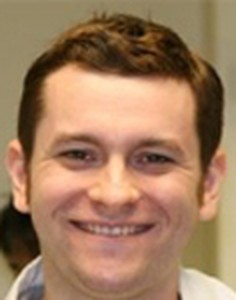 Portrait: Sabatini lab website, Whitehead Institute (2014, archived)
Helped identify GATOR1 (BAR2013) — a GAP for the Rag GTPases; mutated in cancers, making tumors hypersensitive to rapamycin. Led follow-up (GRA2014) cataloguing cancer-associated MTOR mutations that hyperactivate the kinase and predict rapamycin sensitivity.
He came to the Sabatini lab as a postdoc after a PhD in Houston (UTHealth / MD Anderson, Xin Lin lab), then moved into industry: Biogen (translational genomics and target validation, 2015–2021), and since 2021 Valo Health (AI-driven drug discovery, neurology).
Milestones in the Atlas
A selection, not a full bibliography: only papers that meet the Atlas inclusion criteria.
| Year | Evidence | Study |
|---|---|---|
| 2013 | M | A Tumor suppressor complex with GAP activity for the Rag GTPases that signal amino acid sufficiency to mTORC1 BAR2013 GATOR1 is a GAP shutting Rag GTPases (and mTORC1) off when amino acids run low. |
| 2014 | H | Activating mTOR mutations in a patient with an extraordinary response on a phase I trial of everolimus and pazopanib WAG2014 Two concurrent activating MTOR mutations are implicated in an extraordinary clinical response to rapalog therapy. Single-patient observation: hypothesis-generating, not evidence of a general response predictor. |
| 2014 | M | A diverse array of cancer-associated MTOR mutations are hyperactivating and can predict rapamycin sensitivity GRA2014 Cancer-associated MTOR mutations are hyperactivating and predict rapamycin sensitivity. |
Co-authors in the Atlas 9
People with a profile here who share at least one study with Brian C. Grabiner.
ShowHide
- David M. Sabatini 3 shared studies Identified mTOR (as RAFT1) in 1994. His lab then mapped much of the machinery around it: raptor and rictor at the core of mTORC1 and mTORC2, the Rag–Ragulator system that docks mTORC1 on the lysosome, and the sensors that detect leucine, arginine and SAM
- Jonathan E. Rosenberg A bladder and urothelial cancer oncologist whose clinical trial work includes the case of an exceptional responder to everolimus with activating MTOR mutations.
- Kathleen Ottina Researcher in David Sabatini's lab at the Whitehead Institute and HHMI at MIT who contributed to studies of the GATOR1 amino acid off-switch, mTORC1 feedback on growth-factor signalling, and cancer drug resistance
- Kivanç Birsoy Cancer metabolism researcher who trained with Jeffrey Friedman and David Sabatini and now heads the Laboratory of Metabolic Regulation and Genetics at The Rockefeller University, using genetic screens to find how cancer cells rewire their metabolism
- Kuang Shen Solved, as a Sabatini-lab postdoc, cryo-EM structures of GATOR1 and of the FLCN–FNIP2–Rag–Ragulator complex, two switches that set mTORC1 activity. His UMass Chan lab studies the structural basis of nutrient sensing
- Liron Bar-Peled Showed as a Sabatini-lab graduate student that Ragulator switches the Rag GTPases on, acting as their GEF. He also discovered GATOR1 and GATOR2; GATOR1 switches the Rags off and its genes are mutated in some cancers
- Lynne Chantranupong Showed as a Sabatini-lab graduate student that the Sestrins act through GATOR2 to regulate amino-acid signalling to mTORC1. She then discovered the CASTOR proteins, the cell's arginine sensors for the pathway
- Matthew Meyerson Cancer geneticist whose group has helped identify key genes mutated in lung cancer, and who contributed the cancer-genome analysis to the discovery that GATOR1 is a tumour suppressor acting on mTORC1
- Nikhil Wagle Medical oncologist and cancer genomics researcher at Dana-Farber who studies why some patients respond exceptionally well to targeted drugs, including a patient whose tumour carried two activating MTOR mutations
Every researcher with a profile →
Thank you. That helps us know which pages have been read by someone who knows the work.
Thank you. We will check it and correct the page.
Thank you. Your answer was counted anonymously.