Kivanç Birsoy
Cancer metabolism researcher who trained with Jeffrey Friedman and David Sabatini and now heads the Laboratory of Metabolic Regulation and Genetics at The Rockefeller University, using genetic screens to find how cancer cells rewire their metabolism
Associate Professor and head of the Laboratory of Metabolic Regulation and Genetics, The Rockefeller University (title as of 2023) · Postdoc, David Sabatini laboratory, Whitehead Institute and MIT (papers 2012–2015) · PhD, The Rockefeller University, Jeffrey Friedman laboratory
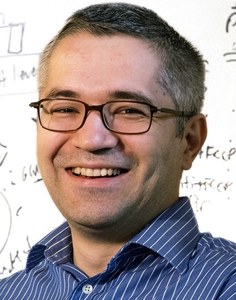 Portrait: The Rockefeller University
Kivanç Birsoy is a co-author of two Atlas papers from David Sabatini's laboratory at the Whitehead Institute. The 2012 Nature paper (YIL2012) showed in mice that calorie restriction lowers mTORC1 activity in Paneth cells, the cells that sit next to intestinal stem cells and support them. With less mTORC1, Paneth cells send signals that make the neighbouring stem cells more numerous and more active. The 2014 Cancer Discovery paper (GRA2014) went through MTOR mutations found in human cancers, identified 33 that switch the pathway on, and showed that cancer cells carrying them were more sensitive to rapamycin in cell culture and in mouse tumour grafts. That suggests the mutations could help pick patients who might respond to mTOR inhibitors.
Birsoy did a PhD at The Rockefeller University in the laboratory of Jeffrey Friedman, the discoverer of the fat hormone leptin, and then joined David Sabatini's laboratory at the Whitehead Institute as a postdoctoral fellow. Birsoy's own first-author work there was on cell metabolism. A 2015 Cell paper used a CRISPR screen to find genes that cells need when their mitochondria are blocked by the drug phenformin. It showed that one essential job of the mitochondrial electron transport chain in dividing cells is to let them make the amino acid aspartate, and that cells without a working chain can grow if they get extra aspartate.
Birsoy returned to Rockefeller to lead the Laboratory of Metabolic Regulation and Genetics, and a 2023 profile lists the title as associate professor. The lab studies how cancer cells reprogram metabolic pathways, especially oxidative metabolism, using unbiased genetic screens together with large-scale measurements of metabolites and proteins. A 2026 paper in Cell Chemical Biology, for example, used CRISPR screens to identify TXNDC15 as a missing part of the system that removes faulty proteins from the endoplasmic reticulum, with effects on lipid balance.
Milestones in the Atlas
A selection, not a full bibliography: only papers that meet the Atlas inclusion criteria.
| Year | Evidence | Study |
|---|---|---|
| 2012 | M | mTORC1 in the Paneth cell niche couples intestinal stem-cell function to calorie intake YIL2012 Co-author of the mouse study showing that calorie restriction lowers mTORC1 in Paneth cells and so boosts the neighbouring intestinal stem cells. |
| 2014 | M | A diverse array of cancer-associated MTOR mutations are hyperactivating and can predict rapamycin sensitivity GRA2014 Co-author of the study showing that many cancer-associated MTOR mutations switch the pathway on and predict rapamycin sensitivity. |
Co-authors in the Atlas 6
People with a profile here who share at least one study with Kivanç Birsoy.
ShowHide
- David M. Sabatini 2 shared studies Identified mTOR (as RAFT1) in 1994. His lab then mapped much of the machinery around it: raptor and rictor at the core of mTORC1 and mTORC2, the Rag–Ragulator system that docks mTORC1 on the lysosome, and the sensors that detect leucine, arginine and SAM
- Brian C. Grabiner Catalogued cancer-associated MTOR mutations and showed that many of them hyperactivate the kinase and can predict sensitivity to rapamycin; he also contributed to the discovery of GATOR1
- Dudley W. Lamming Showed as a postdoc that rapamycin's harm to glucose metabolism comes largely from its effect on mTORC2, while the lifespan benefit tracks mTORC1. His Wisconsin lab studies intermittent rapamycin dosing and how restricting dietary protein or single amino acids affects metabolism and ageing
- Kuang Shen Solved, as a Sabatini-lab postdoc, cryo-EM structures of GATOR1 and of the FLCN–FNIP2–Rag–Ragulator complex, two switches that set mTORC1 activity. His UMass Chan lab studies the structural basis of nutrient sensing
- Ömer H. Yilmaz Pathologist and stem-cell biologist who studies how diet and nutrient sensing control intestinal stem cells; as a postdoc with David Sabatini he showed that calorie restriction acts on the stem-cell niche through mTORC1 in Paneth cells
- Shomit Sengupta Showed that mTORC1 controls whether the liver makes ketone bodies during fasting, and now leads biology for drug discovery at a metabolic-disease biotech
Every researcher with a profile →
Thank you. That helps us know which pages have been read by someone who knows the work.
Thank you. We will check it and correct the page.
Thank you. Your answer was counted anonymously.