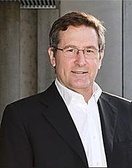
In the labShowed that a mammalian TORC2 (mTOR, mLST8, rictor) exists, is rapamycin-insensitive and controls the actin cytoskeleton (Nat Cell Biol 2004).
Own labJacinto Lab, Rutgers RWJMS (Piscataway, New Jersey, USA). She helped discover the second mTOR machine (mTORC2) and studies how it helps cells survive and use nutrients. mTORC2 regulation and substrates (Akt, SGK, PKC), co-translational phosphorylation, and how mTORC2 links nutrient metabolism such as the hexosamine pathway to growth and cancer.
mTORC2 & growth factors
Also trained with Michael Karin (PhD)
Sources: PubMed 11741537 (2001) · 2004 (in the Atlas) · sites.rutgers.edu · biozentrum.unibas.ch
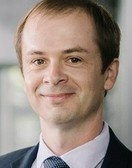
In the labShowed that mTORC2 sits at contact sites between the ER and mitochondria (MAM), where mTORC2-Akt signalling keeps these contacts and mitochondria working (PNAS 2013).
Own labMichael N. Hall Lab, Biozentrum, University of Basel (where these studies were done) (Basel, Switzerland). Traced mTORC2 to a specific address inside the cell — the mitochondria-ER contact site
Mitochondria
Sources: 2013 (in the Atlas) · 2013 (in the Atlas) · edoc.unibas.ch · biozentrum.unibas.ch
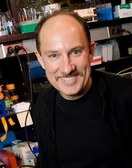
In the labStarted the lab's rapamycin project in yeast, which found FPR1 (FKBP) and the TOR1 and TOR2 genes (Science 1991).
Own labHeitman Lab, Department of Molecular Genetics and Microbiology, Duke University School of Medicine (Durham, North Carolina, USA). He studies fungi that make people sick and how drugs like rapamycin act on them. Fungal pathogenesis and sexual reproduction (Cryptococcus, Candida), calcineurin and TOR signalling in fungi, and how immunosuppressive and antifungal drugs act.
Cancer & therapy
Sources: 1991 (in the Atlas) · PubMed 1705713 (1991) · news.weill.cornell.edu · biozentrum.unibas.ch
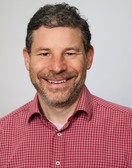
In the labUsed proteomics to identify PRAS40 and PRR5L as new mTOR-binding proteins (PLoS One 2007).
Own labLab for Metabolic Signaling (Thedieck Lab), Department Metabolism, Senescence and Autophagy, Faculty of Medicine, University of Duisburg-Essen (Essen, North Rhine-Westphalia, Germany). She builds computer models, checked against experiments, of how insulin and nutrients flip the mTOR switch over time. Systems biology of the insulin-mTOR network: data-fitted dynamic models and the coupling of mTOR with AMPK and stress granules.
Metabolism
Sources: PubMed 18030348 (2007) · uibk.ac.at · doi.org
In the labCo-discovered the two yeast TOR complexes, TORC1 (rapamycin-sensitive) and TORC2 (rapamycin-insensitive), by purifying TOR partners (Mol Cell 2002).
Own labLoewith Lab, University of Geneva (Geneva, Switzerland). He studies how yeast cells sense food and stress at their surface and pass that news to the TOR growth switches. Upstream regulation of yeast TORC1 and TORC2, including TORC1 inhibition by glucose starvation and TORC2 control of plasma-membrane and sphingolipid balance.
mTORC1 nutrient sensing
Sources: 2002 (in the Atlas) · 2004 (in the Atlas) · sne-chembio.ch · biozentrum.unibas.ch
In the labBuilt an mTOR-driven mouse model of fatty liver turning into liver cancer and showed that liver mTORC2 drives tumours by boosting fat, sphingolipid and cardiolipin synthesis (Cancer Cell 2017).
Own labHall Lab, Biozentrum, University of Basel (Basel, Switzerland). Showed mTORC2 drives liver cancer by rewiring lipid and sphingolipid synthesis
Cancer & therapy
Sources: 2017 (in the Atlas) · 2016 (in the Atlas) · edoc.unibas.ch · biozentrum.unibas.ch