Robbie Loewith
Discovered that TOR exists as two distinct complexes, founding the TORC1/TORC2 framework
BSc, Univ. of Guelph · PhD, Univ. of Calgary (Dallan Young) · postdoc, Univ. of Basel (Michael N. Hall) · Professor, Univ. of Geneva (since 2005)
Loewith Lab, University of Geneva ↗
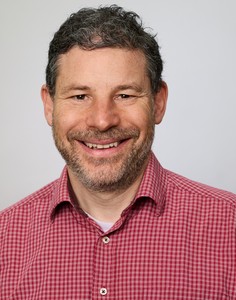 Portrait: University of Geneva
As Hall-lab postdoc, showed (LOE2002) TOR assembles into two biochemically distinct complexes — TORC1 (rapamycin-sensitive) and TORC2 (insensitive, controls actin polarity) — founding the field's organizing vocabulary. In 2009 (FEL2009), helped test the first ATP-competitive mTOR inhibitors (TORKinibs) against this two-complex model.
Own lab at Univ. of Geneva since 2005; ERC Starting (2008) and Consolidator (2014) grants; Deputy Director, NCCR Chemical Biology; elected EMBO Member.
Milestones in the Atlas
| Year | Evidence | Study |
|---|---|---|
| 2002 | M | Two TOR complexes, only one of which is rapamycin sensitive, have distinct roles in cell growth control LOE2002 Defines TORC1/TORC2 as biochemically distinct complexes, founding the two-complex paradigm. |
| 2009 | M | Active-site inhibitors of mTOR target rapamycin-resistant outputs of mTORC1 and mTORC2 FEL2009 Helped test the first ATP-competitive mTOR inhibitors (TORKinibs) against both complexes. |