Stephan Wullschleger
Biochemist trained in Michael Hall's Basel lab on TOR complex 2 in yeast, and first author of the widely cited 2006 Cell review that laid out the two TOR complexes and what each controls
MRC Protein Phosphorylation Unit, University of Dundee, Dario Alessi lab (2007–2011, most recent confirmed affiliation) · Biozentrum, University of Basel (PhD 2004, review 2006)
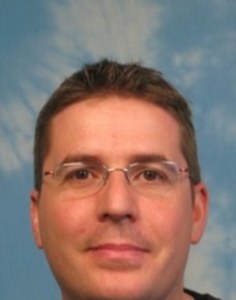 Portrait: ResearchGate
In 2006 Stephan Wullschleger, with Robbie Loewith and Michael Hall, wrote the review "TOR signaling in growth and metabolism" in Cell. A review collects many earlier studies into one picture rather than reporting new experiments. This one described the two TOR complexes: TORC1, which is blocked by the drug rapamycin, and TORC2, which is not. It explained how each complex links nutrients and growth signals to cell growth, from yeast to mammals, and became one of the standard starting points for people entering the field.
Wullschleger did a doctorate at the University of Basel. Wullschleger's 2004 thesis characterised TOR complex 2 in baker's yeast (Saccharomyces cerevisiae), the second TOR complex, which was then newly discovered. Wullschleger is also a co-author of the 2002 Molecular Cell paper that first described the two yeast TOR complexes.
Wullschleger then moved to the MRC Protein Phosphorylation Unit at the University of Dundee in Dario Alessi's group. There, Wullschleger co-authored the 2007 discovery of Protor, a new subunit of mTORC2, and a 2008 mouse study showing that the LKB1-AMPK energy-sensing pathway holds back tumours in PTEN-deficient mice. As first author in 2011, Wullschleger used knock-in mice to test how the adaptor proteins TAPP1 and TAPP2, which bind a membrane lipid made by PI3K, affect insulin sensitivity. Wullschleger's most recent paper found on PubMed is a 2013 colorectal cancer classification study in Nature Medicine. A current position could not be confirmed.
Milestones in the Atlas
A selection, not a full bibliography: only papers that meet the Atlas inclusion criteria.
| Year | Evidence | Study |
|---|---|---|
| 2006 | R | TOR signaling in growth and metabolism WUL2006 First author of the Cell review that set out TORC1 and TORC2 and their roles in growth and metabolism. |
Co-authors in the Atlas 2
People with a profile here who share at least one study with Stephan Wullschleger.
ShowHide
- Michael N. Hall Discovered TOR in yeast in 1991 and established it as a central controller of cell growth that responds to nutrients. His lab later showed that TOR works in two distinct complexes, TORC1 and TORC2, only one of which is blocked by rapamycin
- Robbie Loewith Showed, as first author in Michael Hall's lab, that yeast TOR exists as two distinct complexes, the basis of the TORC1/TORC2 framework
Every researcher with a profile →
Thank you. That helps us know which pages have been read by someone who knows the work.
Thank you. We will check it and correct the page.
Thank you. Your answer was counted anonymously.