Morris E. Feldman
Chemical biologist who, in the Shokat lab at UCSF, introduced PP242 and the TORKinib class of drugs that block mTOR's active site and reach the outputs rapamycin misses
Department of Cellular and Molecular Pharmacology and Howard Hughes Medical Institute, University of California San Francisco, Shokat lab (papers 2006–2012, at the time of the study)
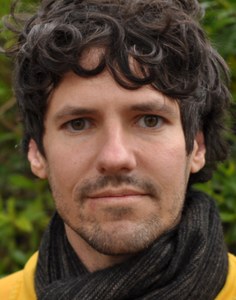 Portrait: hayaData conference
Morris Feldman is first author of the Atlas study FEL2009 from the Shokat lab at UCSF. Rapamycin does not bind mTOR's active site. It sticks to the side of mTORC1 and blocks only some of its outputs, and it barely touches the second complex, mTORC2. Feldman and colleagues made small molecules called TORKinibs, including PP242 and PP30, that sit in the ATP pocket of the mTOR kinase itself. These hit both complexes.
The key result was that active-site inhibitors shut down cap-dependent translation, the main way cells start making proteins, much more strongly than rapamycin. A parallel study by Thoreen and colleagues reported the same conclusion in the same year. Together the two papers opened a new class of mTOR drugs beyond rapamycin and its analogues. The work was done in cultured cells.
PP242 then became a common research tool. Feldman is a co-author on several papers that used it, including the 2012 Nature study from the Ruggero group showing that mTOR-controlled translation steers cancer initiation and metastasis, a 2010 study showing that mTORC2 activates the kidney sodium channel ENaC through SGK1, a 2010 study of a herpesvirus protein that keeps mTORC1 switched on, and a 2012 study combining active-site mTOR inhibitors with chemotherapy for colorectal cancer. No current position could be confirmed.
Milestones in the Atlas
A selection, not a full bibliography: only papers that meet the Atlas inclusion criteria.
| Year | Evidence | Study |
|---|---|---|
| 2009 | M | Active-site inhibitors of mTOR target rapamycin-resistant outputs of mTORC1 and mTORC2 FEL2009 First author: developed the active-site mTOR inhibitors PP242 and PP30 and showed they block rapamycin-resistant outputs of mTORC1 and mTORC2, including cap-dependent translation. |
Co-authors in the Atlas 4
People with a profile here who share at least one study with Morris E. Feldman.
ShowHide
- Davide Ruggero Showed that oncogenic mTOR signalling reprograms which mRNAs are translated, and that tumours become addicted to this through the 4E-BP–eIF4E axis. His UCSF lab found that mTOR-driven translation of a specific set of mRNAs promotes prostate cancer invasion and metastasis
- Kevan M. Shokat Co-developed the ATP-competitive 'TORKinib' mTOR inhibitors that block both mTORC1 and mTORC2, and later, with Neal Rosen's lab at Memorial Sloan Kettering, RapaLink-1, a third-generation inhibitor that overcomes mTOR resistance mutations
- Robbie Loewith Showed, as first author in Michael Hall's lab, that yeast TOR exists as two distinct complexes, the basis of the TORC1/TORC2 framework
- Zachary A. Knight Neuroscientist whose lab studies the brain mechanisms behind appetite, thirst and body-temperature preference; he is a co-author of the 2009 study that introduced the TORKinibs PP242 and PP30.
Every researcher with a profile →
Thank you. That helps us know which pages have been read by someone who knows the work.
Thank you. We will check it and correct the page.
Thank you. Your answer was counted anonymously.