Joseph Heitman
Co-discovered the TOR genes in yeast in 1991 as a first author with Rao Movva and Michael Hall, the genetic identification of what became known as mTOR in mammals
Duke Health Distinguished Professor of Molecular Genetics and Microbiology, Duke University · Member, US National Academy of Sciences (2021) · University of Basel (affiliation on HEI1991, 1991)
Heitman Lab, Department of Molecular Genetics and Microbiology, Duke University School of Medicine (Durham, North Carolina, USA) ↗ Lab lineagetrained under Michael N. Hall →
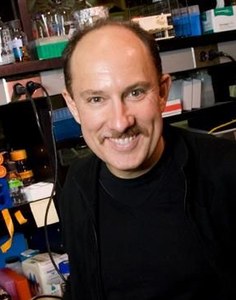 Portrait: Duke University School of Medicine
Rapamycin was known to stop yeast cells from dividing, but nobody knew what it acted on. In HEI1991, Joseph Heitman, working in Michael Hall's group at the University of Basel, treated yeast with rapamycin and found that the cells froze in the G1 phase of the cell cycle. He showed that the drug works by first binding a small protein called FKBP, and that this drug-protein pair is the actual toxic agent: yeast lacking FKBP survived the drug.
The same paper reported two other genes that mattered for rapamycin toxicity. Heitman named them TOR1 and TOR2, short for Target Of Rapamycin. This was the first genetic identification of the TOR pathway. Mammalian mTOR was purified a few years later, and the name carries through from these yeast genes.
Heitman went on to run his own laboratory at Duke University, where he is a professor and a member of the US National Academy of Sciences. His group studies disease-causing fungi such as Cryptococcus, including how rapamycin and related drugs act against them through FKBP12 and TOR.
Milestones in the Atlas
A selection, not a full bibliography: only papers that meet the Atlas inclusion criteria.
| Year | Evidence | Study |
|---|---|---|
| 1991 | M | Targets for cell cycle arrest by the immunosuppressant rapamycin in yeast HEI1991 First author. Showed that rapamycin arrests yeast through an FKBP-rapamycin complex and named the TOR1 and TOR2 genes that take part in its toxicity. |
Co-authors in the Atlas
People with a profile here who share at least one study with Joseph Heitman.
- Michael N. Hall Discovered TOR in yeast in 1991 and established it as a central controller of cell growth that responds to nutrients. His lab later showed that TOR works in two distinct complexes, TORC1 and TORC2, only one of which is blocked by rapamycin
Every researcher with a profile →
Thank you. Your answer was counted anonymously.
Thank you. That helps us know which pages have been read by someone who knows the work.
Thank you. We will check it and correct the page.