Michael Karin
Cell biologist best known for discovering AP-1 and JNK signaling and the IKK-NF-kB inflammation pathway, whose lab also co-led the study of Sestrin as a feedback inhibitor of TOR.
Distinguished Professor of Pharmacology and Pathology, UC San Diego · Ben and Wanda Hildyard Chair for Mitochondrial and Metabolic Diseases · Born 1951, Tel Aviv, Israel
Laboratory of Gene Regulation and Signal Transduction, Departments of Pharmacology and Pathology, UC San Diego School of Medicine (La Jolla, California, USA) ↗ Lab lineage1 direct trainee →
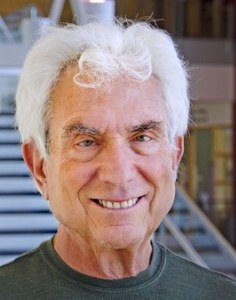 Portrait: UC San Diego Department of Pharmacology
Michael Karin is a Distinguished Professor of Pharmacology and Pathology at the University of California, San Diego. His lab identified the AP-1 transcription factors and the JNK family of kinases, and cloned the IKK complex that switches on NF-kB, a central driver of inflammation.
More recently his group has studied how inflammation, fatty liver disease and metabolism feed into liver cancer. His lab also contributed to a 2010 Science paper led by Jun Hee Lee, together with fly geneticists at Sanford-Burnham.
That study found that Sestrin is switched on by TOR activity and in turn inhibits TOR, forming a feedback loop. In flies lacking Sestrin, signs of aging such as fat build-up, mitochondrial problems and muscle and heart decline appeared, and TOR inhibition or AMPK activation prevented them.
Milestones in the Atlas
A selection, not a full bibliography: only papers that meet the Atlas inclusion criteria.
| Year | Evidence | Study |
|---|---|---|
| 2010 | A | Sestrin as a feedback inhibitor of TOR that prevents age-related pathologies LEE2010 In flies, Sestrin acts as a feedback inhibitor of TOR, and its loss causes age-related fat accumulation, mitochondrial dysfunction and muscle and heart decline that TOR inhibition or AMPK activation prevents; Karin is senior (last) author. |
Co-authors in the Atlas
People with a profile here who share at least one study with Michael Karin.
- Andrei V. Budanov Helped identify the Sestrins as stress-induced proteins and was among the groups that showed they inhibit mTORC1 through the GATOR complex, a brake that protects against age-related disease
Every researcher with a profile →
Thank you. Your answer was counted anonymously.
Thank you. That helps us know which pages have been read by someone who knows the work.
Thank you. We will check it and correct the page.