Rosalie E. Lawrence
Discovered the nutrient-driven affinity switch and FLCN checkpoint that gate mTORC1 activation at the lysosome
BA, Swarthmore College · PhD, UC Berkeley (Roberto Zoncu lab) · postdoc, UCSF/HHMI (Peter Walter lab) · now Assistant Professor, UCLA (since January 2025)
Lawrence Lab, UCLA David Geffen School of Medicine ↗
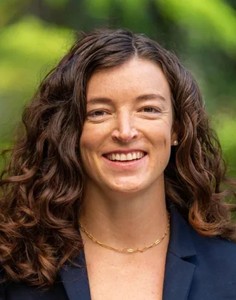 Portrait: UCLA David Geffen School of Medicine
As Zoncu-lab PhD student (Zoncu has his own medailonek), showed (LAW2018) nutrients destabilize the Rag-Ragulator scaffold, requiring two simultaneous Rag-binding interfaces for mTORC1 capture — an affinity switch cancer mutations short-circuit. Solved (LAW2019) a 3.6 Å cryo-EM structure of the lysosomal folliculin (FLCN) complex, showing FLCN's RagC-GAP activity is auto-inhibited until the complex disassembles.
Moved to UCSF/HHMI studying the Integrated Stress Response (eIF2B allostery, ISRIB mechanism). Now own lab at UCLA since Jan 2025, studying stress-signaling feedback on metabolism and glial neurodegeneration.
Milestones in the Atlas
| Year | Evidence | Study |
|---|---|---|
| 2018 | M | A nutrient-induced affinity switch controls mTORC1 activation by its Rag GTPase-Ragulator lysosomal scaffold LAW2018 Nutrients destabilize the Rag-Ragulator scaffold, requiring two engaged Rag interfaces for mTORC1 capture. |
| 2019 | M | Structural mechanism of a Rag GTPase activation checkpoint by the lysosomal folliculin complex LAW2019 Cryo-EM shows FLCN's GAP activity is auto-inhibited within the intact lysosomal complex, gating mTORC1 activation. |