Tim Wang
Co-developed genome-wide CRISPR screening in human cells (reported in parallel by Feng Zhang's lab) as a graduate student with David Sabatini and Eric Lander, and contributed to studies showing that the 4E-BPs mediate mTORC1's control of translation and that CASTOR1 senses arginine
Senior Scientist, Allen Institute for Neural Dynamics · postdoc (Helen Hay Whitney Fellow), Janelia Research Campus (Karel Svoboda lab) · PhD, MIT (Sabatini & Lander labs) · BS Bioengineering, UC Berkeley
Lab lineagetrained under David M. Sabatini →
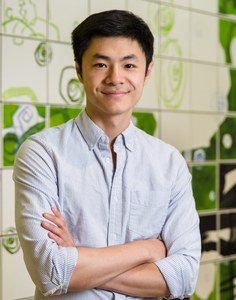 Portrait: MIT News, photo Casey Atkins
Co-author (THO2012): ribosome profiling with Torin1 showed mTORC1 controls translation of TOP-motif mRNAs largely through 4E-BPs. Co-author (CHA2016): CASTOR1 identified as the direct arginine sensor upstream of mTORC1.
Milestones in the Atlas
A selection, not a full bibliography: only papers that meet the Atlas inclusion criteria.
| Year | Evidence | Study |
|---|---|---|
| 2012 | M | A unifying model for mTORC1-mediated regulation of mRNA translation THO2012 Co-authored the ribosome-profiling study showing 4E-BPs are mTORC1's master translational effectors. |
| 2013 | M | The folliculin tumor suppressor is a GAP for the RagC/D GTPases that signal amino acid levels to mTORC1 TSU2013 FLCN-FNIP is a GAP for RagC/D; GDP-bound RagC/D is required for the Rag heterodimer to bind mTORC1, promoting its lysosomal recruitment and activation by amino acids. |
| 2015 | M | Structural basis for leucine sensing by the Sestrin2-mTORC1 pathway SAX2015 Solves the crystal structure of Sestrin2 bound to leucine, revealing the molecular pocket that lets it act as mTORC1's dedicated leucine sensor. |
| 2015 | M | Metabolism. Lysosomal amino acid transporter SLC38A9 signals arginine sufficiency to mTORC1 WAN2015 The lysosomal transporter SLC38A9 signals arginine sufficiency to mTORC1. |
| 2016 | M | The CASTOR Proteins Are Arginine Sensors for the mTORC1 Pathway CHA2016 Co-authored the CASTOR1 arginine-sensor discovery. |
Co-authors in the Atlas 21
People with a profile here who share at least one study with Tim Wang.
ShowHide
- David M. Sabatini 5 shared studies Identified mTOR (as RAFT1) in 1994. His lab then mapped much of the machinery around it: raptor and rictor at the core of mTORC1 and mTORC2, the Rag–Ragulator system that docks mTORC1 on the lysosome, and the sensors that detect leucine, arginine and SAM
- Lynne Chantranupong 5 shared studies Showed as a Sabatini-lab graduate student that the Sestrins act through GATOR2 to regulate amino-acid signalling to mTORC1. She then discovered the CASTOR proteins, the cell's arginine sensors for the pathway
- Gregory A. Wyant 2 shared studies Showed that the lysosomal protein SLC38A9 exports leucine and other essential amino acids out of the lysosome, letting cells grow on proteins they have taken up and broken down there
- Choah Kim 2 shared studies Researcher in David Sabatini's lab at the Whitehead Institute who contributed to three studies on how amino acids at the lysosome are sensed by mTORC1
- Kuang Shen 2 shared studies Solved, as a Sabatini-lab postdoc, cryo-EM structures of GATOR1 and of the FLCN–FNIP2–Rag–Ragulator complex, two switches that set mTORC1 activity. His UMass Chan lab studies the structural basis of nutrient sensing
- Liron Bar-Peled 2 shared studies Showed as a Sabatini-lab graduate student that Ragulator switches the Rag GTPases on, acting as their GEF. He also discovered GATOR1 and GATOR2; GATOR1 switches the Rags off and its genes are mutated in some cancers
- Rachel L. Wolfson 2 shared studies Identified Sestrin2 as the direct leucine sensor of the mTORC1 pathway as a Sabatini-lab MD-PhD student. She also co-discovered KICSTOR, the complex that recruits GATOR1 to the lysosome
- Robert A. Saxton 2 shared studies Solved, as a Sabatini-lab graduate student, the structures of the leucine sensor Sestrin2 and the arginine sensor CASTOR1, showing how each one grips its amino acid. He also co-wrote a widely cited 2017 review of mTOR signalling with David Sabatini
- Roberto Zoncu 2 shared studies Showed as a postdoc that mTORC1 senses amino acids from inside the lysosome, through the v-ATPase and Ragulator. His Berkeley lab has since mapped how the Rag GTPases and the folliculin complex switch mTORC1 on, and how lysosomal cholesterol feeds into the same system
- Zhi-Yang Tsun 2 shared studies Biologist who, as first author in David Sabatini's lab, showed that the tumour suppressor folliculin is a GAP for the RagC and RagD GTPases that carry the amino acid signal to mTORC1
- Carson C. Thoreen Used Torin1, one of the first ATP-competitive mTOR inhibitors, to reveal functions of mTORC1 that rapamycin cannot block. He then showed that mTORC1 controls translation of mRNAs for the protein-making machinery mainly through the 4E-BP proteins
- Elizabeth D. Yuan Second author on the study showing that S6K1 phosphorylates BMAL1 to link mTOR signalling with circadian protein synthesis, and co-author on the follow-up in tuberous sclerosis models.
- Eric Spooner Manager of the Whitehead Institute's Proteomics Core Facility, whose mass spectrometry work identified proteins in complexes for many Whitehead studies, including two on amino acid sensing upstream of mTORC1
- J. Wade Harper Co-discovered the F-box motif that links substrates to SCF ubiquitin ligases, and co-leads with Steven Gygi the BioPlex protein-interaction map, which contributed to the discoveries of the CASTOR and SAMTOR nutrient sensors
- Kevin E. Knockenhauer Structural biologist trained in Thomas Schwartz's MIT lab who helped solve the amino acid sensor structures of Sestrin2 and CASTOR1, and who later moved to drug discovery at Accent Therapeutics
- Michael E. Pacold Radiation oncologist and chemical biologist at NYU Langone who studies the metabolism of brain tumours, and a co-author of the Sabatini lab's structure of the leucine sensor Sestrin2
- Nathanael S. Gray Medicinal chemist whose lab designed Torin1, an ATP-competitive mTOR inhibitor that blocks functions of mTORC1 that rapamycin misses. His lab is also known for covalent kinase inhibitors and targeted protein degraders
- Shuyu Wang Co-discovered SLC38A9 as a Sabatini-lab MD-PhD student, a lysosomal amino-acid transporter that signals arginine sufficiency to mTORC1
- Sonia M. Scaria Contributed, as an MIT undergraduate in the Sabatini lab, to the discovery of CASTOR1 as the arginine sensor and SAMTOR as the SAM sensor of the mTORC1 pathway
- Steven P. Gygi Mass-spectrometry scientist whose Harvard lab builds large-scale proteomics methods, including the BioPlex human protein-interaction map, and contributed proteomics to the discoveries of the CASTOR and SAMTOR nutrient sensors
- Thomas U. Schwartz MIT structural biologist who studies how molecules pass across the nuclear envelope, and whose crystallography lab helped solve the leucine and arginine sensor structures upstream of mTORC1
Every researcher with a profile →
Thank you. That helps us know which pages have been read by someone who knows the work.
Thank you. We will check it and correct the page.
Thank you. Your answer was counted anonymously.