Michael E. Pacold
Radiation oncologist and chemical biologist at NYU Langone who studies the metabolism of brain tumours, and a co-author of the Sabatini lab's structure of the leucine sensor Sestrin2
Assistant Professor of Radiation Oncology, NYU Langone Health · postdoc, David Sabatini lab, Whitehead Institute and MIT, with Department of Radiation Oncology, Dana-Farber Cancer Institute (2010s) · earlier structural work, MRC Laboratory of Molecular Biology, Cambridge (Roger Williams group, 2001)
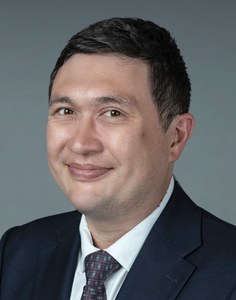 Portrait: NYU Langone Health
Michael Pacold is a co-author of SAX2015, a Science paper from David Sabatini's lab at the Whitehead Institute and MIT. mTORC1, the growth-control complex, only switches on when amino acids are present, and leucine is one of the most important. Sestrin2 is the protein that senses leucine for mTORC1. The team solved the crystal structure of Sestrin2 holding leucine. It shows a single pocket for leucine, closed by a lid-like loop. When the pocket was mutated so that it held leucine less tightly, cells needed more leucine before mTORC1 switched on. This tied a physical shape to a signalling job.
Pacold's training mixed structural biology and medicine. In 2001 Pacold was a co-author, with Roger Williams's group at the MRC Laboratory of Molecular Biology in Cambridge, of the crystal structure of the PX domain of p40phox bound to a lipid. As a postdoc in the Sabatini lab, while also linked to the Department of Radiation Oncology at Dana-Farber, Pacold was first author of a 2016 Nature Chemical Biology paper describing a small-molecule inhibitor of PHGDH, the first enzyme in the pathway that makes serine from glucose, and showing how serine synthesis guides the use of one-carbon units for building DNA.
Pacold now leads a lab at NYU Langone Health as Assistant Professor of Radiation Oncology. The lab uses chemical biology, enzymology, structural biology and mass spectrometry to find the metabolic adaptations that let tumour cells survive in unusual settings, especially in the brain, and to design inhibitors against them.
Milestones in the Atlas
A selection, not a full bibliography: only papers that meet the Atlas inclusion criteria.
| Year | Evidence | Study |
|---|---|---|
| 2015 | M | Structural basis for leucine sensing by the Sestrin2-mTORC1 pathway SAX2015 Co-author on the crystal structure of Sestrin2 bound to leucine, which revealed the pocket that makes it a leucine sensor for mTORC1. |
Co-authors in the Atlas 7
People with a profile here who share at least one study with Michael E. Pacold.
ShowHide
- David M. Sabatini Identified mTOR (as RAFT1) in 1994. His lab then mapped much of the machinery around it: raptor and rictor at the core of mTORC1 and mTORC2, the Rag–Ragulator system that docks mTORC1 on the lysosome, and the sensors that detect leucine, arginine and SAM
- Kevin E. Knockenhauer Structural biologist trained in Thomas Schwartz's MIT lab who helped solve the amino acid sensor structures of Sestrin2 and CASTOR1, and who later moved to drug discovery at Accent Therapeutics
- Lynne Chantranupong Showed as a Sabatini-lab graduate student that the Sestrins act through GATOR2 to regulate amino-acid signalling to mTORC1. She then discovered the CASTOR proteins, the cell's arginine sensors for the pathway
- Rachel L. Wolfson Identified Sestrin2 as the direct leucine sensor of the mTORC1 pathway as a Sabatini-lab MD-PhD student. She also co-discovered KICSTOR, the complex that recruits GATOR1 to the lysosome
- Robert A. Saxton Solved, as a Sabatini-lab graduate student, the structures of the leucine sensor Sestrin2 and the arginine sensor CASTOR1, showing how each one grips its amino acid. He also co-wrote a widely cited 2017 review of mTOR signalling with David Sabatini
- Thomas U. Schwartz MIT structural biologist who studies how molecules pass across the nuclear envelope, and whose crystallography lab helped solve the leucine and arginine sensor structures upstream of mTORC1
- Tim Wang Co-developed genome-wide CRISPR screening in human cells (reported in parallel by Feng Zhang's lab) as a graduate student with David Sabatini and Eric Lander, and contributed to studies showing that the 4E-BPs mediate mTORC1's control of translation and that CASTOR1 senses arginine
Every researcher with a profile →
Thank you. That helps us know which pages have been read by someone who knows the work.
Thank you. We will check it and correct the page.
Thank you. Your answer was counted anonymously.