Zhi-Yang Tsun
Biologist who, as first author in David Sabatini's lab, showed that the tumour suppressor folliculin is a GAP for the RagC and RagD GTPases that carry the amino acid signal to mTORC1
Whitehead Institute for Biomedical Research and MIT Department of Biology, Sabatini lab (papers 2011–2015, affiliation at the time of the studies) · current position not confirmed
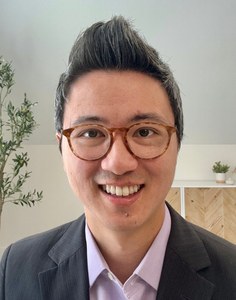 Portrait: Psychology Today
mTORC1, the growth-control complex, is only switched on when amino acids are available. The signal is carried by the Rag GTPases, pairs of small switch proteins that sit on the lysosome. Each Rag can hold GTP or GDP, and the combination decides whether mTORC1 is pulled to the lysosome, where its activator waits. The open question in 2013 was what controls RagC and RagD, one half of each Rag pair.
Zhi-Yang Tsun, first author of the 2013 Molecular Cell paper (TSU2013), found the answer in folliculin, a tumour suppressor protein. Together with its partner FNIP, folliculin acts as a GAP for RagC and RagD, a helper that makes them turn GTP into GDP. Rags in this state bind mTORC1 and bring it to the lysosome when amino acids are present. The work was done in human cells and with purified proteins. Tsun is also a co-author of WAN2015, which showed that the lysosomal transporter SLC38A9 tells mTORC1 that arginine is available.
PubMed lists Tsun at the Whitehead Institute and the MIT Department of Biology on these papers and as first author of a 2015 review with Richard Possemato on how cancer cells handle amino acids, covering glutamine and serine use and amino acid sensing by mTOR. Tsun is also a co-author of the 2011 Nature study from the same lab that found breast cancers dependent on the serine-synthesis enzyme PHGDH. A current position could not be confirmed from an official source.
Milestones in the Atlas
A selection, not a full bibliography: only papers that meet the Atlas inclusion criteria.
| Year | Evidence | Study |
|---|---|---|
| 2013 | M | The folliculin tumor suppressor is a GAP for the RagC/D GTPases that signal amino acid levels to mTORC1 TSU2013 First author: showed in cells and with purified proteins that folliculin-FNIP is a GAP for RagC and RagD, needed for amino acids to bring mTORC1 to the lysosome. |
| 2015 | M | Metabolism. Lysosomal amino acid transporter SLC38A9 signals arginine sufficiency to mTORC1 WAN2015 Co-author on the cell study showing that the lysosomal transporter SLC38A9 signals arginine sufficiency to mTORC1. |
Co-authors in the Atlas 12
People with a profile here who share at least one study with Zhi-Yang Tsun.
ShowHide
- David M. Sabatini 2 shared studies Identified mTOR (as RAFT1) in 1994. His lab then mapped much of the machinery around it: raptor and rictor at the core of mTORC1 and mTORC2, the Rag–Ragulator system that docks mTORC1 on the lysosome, and the sensors that detect leucine, arginine and SAM
- Choah Kim 2 shared studies Researcher in David Sabatini's lab at the Whitehead Institute who contributed to three studies on how amino acids at the lysosome are sensed by mTORC1
- Liron Bar-Peled 2 shared studies Showed as a Sabatini-lab graduate student that Ragulator switches the Rag GTPases on, acting as their GEF. He also discovered GATOR1 and GATOR2; GATOR1 switches the Rags off and its genes are mutated in some cancers
- Lynne Chantranupong 2 shared studies Showed as a Sabatini-lab graduate student that the Sestrins act through GATOR2 to regulate amino-acid signalling to mTORC1. She then discovered the CASTOR proteins, the cell's arginine sensors for the pathway
- Roberto Zoncu 2 shared studies Showed as a postdoc that mTORC1 senses amino acids from inside the lysosome, through the v-ATPase and Ragulator. His Berkeley lab has since mapped how the Rag GTPases and the folliculin complex switch mTORC1 on, and how lysosomal cholesterol feeds into the same system
- Tim Wang 2 shared studies Co-developed genome-wide CRISPR screening in human cells (reported in parallel by Feng Zhang's lab) as a graduate student with David Sabatini and Eric Lander, and contributed to studies showing that the 4E-BPs mediate mTORC1's control of translation and that CASTOR1 senses arginine
- Elizabeth D. Yuan Second author on the study showing that S6K1 phosphorylates BMAL1 to link mTOR signalling with circadian protein synthesis, and co-author on the follow-up in tuberous sclerosis models.
- Eric Spooner Manager of the Whitehead Institute's Proteomics Core Facility, whose mass spectrometry work identified proteins in complexes for many Whitehead studies, including two on amino acid sensing upstream of mTORC1
- Gregory A. Wyant Showed that the lysosomal protein SLC38A9 exports leucine and other essential amino acids out of the lysosome, letting cells grow on proteins they have taken up and broken down there
- Kuang Shen Solved, as a Sabatini-lab postdoc, cryo-EM structures of GATOR1 and of the FLCN–FNIP2–Rag–Ragulator complex, two switches that set mTORC1 activity. His UMass Chan lab studies the structural basis of nutrient sensing
- Rachel L. Wolfson Identified Sestrin2 as the direct leucine sensor of the mTORC1 pathway as a Sabatini-lab MD-PhD student. She also co-discovered KICSTOR, the complex that recruits GATOR1 to the lysosome
- Shuyu Wang Co-discovered SLC38A9 as a Sabatini-lab MD-PhD student, a lysosomal amino-acid transporter that signals arginine sufficiency to mTORC1
Every researcher with a profile →
Thank you. That helps us know which pages have been read by someone who knows the work.
Thank you. We will check it and correct the page.
Thank you. Your answer was counted anonymously.