Nada Y. Kalaany
Studies how a tumour's metabolism depends on the metabolic state of the whole body, and hunts for nutrient dependencies that can be turned into treatments
Associate Professor of Pediatrics, Harvard Medical School · Principal Investigator, Division of Endocrinology, Boston Children's Hospital · Associate Member, Broad Institute of MIT and Harvard · Postdoctoral Fellow, Whitehead Institute / MIT (Sabatini lab) · PhD, UT Southwestern Medical Center
Kalaany Lab, Boston Children's Hospital / Harvard Medical School (Boston, Massachusetts, USA) ↗
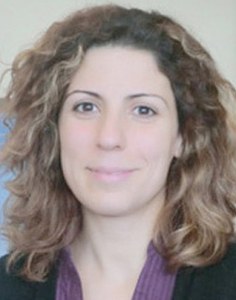 Portrait: Boston Children's Hospital
Kalaany was a postdoctoral fellow in David Sabatini's lab at the Whitehead Institute when the team took the two mTOR complexes apart in living animals instead of in a dish. GUE2006 deleted raptor, rictor or mLST8 in mice and then asked which downstream signals broke: raptor-null embryos died as early as mTOR-null ones, while rictor-null and mLST8-null embryos survived longer and lost only the mTORC2 outputs. The clean split - Akt and PKCalpha on one side, S6K1 untouched on the other - came from comparing the three knockouts side by side.
Her own training was in metabolism rather than kinases. Her PhD at UT Southwestern, with David Mangelsdorf, was on the liver X receptors, the sensors that read a cell's cholesterol load and shift the balance between storing fat and burning it; her earliest paper, from the American University of Beirut, was about how mammary cells coordinate differentiation through gap junctions.
She now runs her own lab at Boston Children's Hospital, asking what a tumour eats and how that changes when the body around it is obese or diabetic. Her group showed that pancreatic tumours build their own ornithine from glutamine using the enzyme OAT - a direction of flow that adult tissues normally abandon after infancy - which makes OAT a target that should hit the tumour far harder than healthy tissue.
Milestones in the Atlas
| Year | Evidence | Study |
|---|---|---|
| 2006 | M | Ablation in mice of the mTORC components raptor, rictor, or mLST8 reveals that mTORC2 is required for signaling to Akt-FOXO and PKCalpha, but not S6K1 GUE2006 Co-author on the Sabatini-lab team that generated and analysed the raptor-, rictor- and mLST8-knockout mice behind the complex-by-complex split of mTOR function. |
Co-authors in the Atlas
People with a profile here who share at least one study with Nada Y. Kalaany.
- Carson C. Thoreen Used Torin1, one of the first ATP-competitive mTOR inhibitors, to reveal functions of mTORC1 that rapamycin cannot block. He then showed that mTORC1 controls translation of mRNAs for the protein-making machinery mainly through the 4E-BP proteins
- David A. Guertin Built the mouse genetics that defined mTORC2's biological roles
- David M. Sabatini Identified mTOR (as RAFT1) in 1994, in parallel with Stuart Schreiber's group and others. His lab then mapped much of the machinery around it, several parts in parallel with other labs: raptor and rictor at the core of mTORC1 and mTORC2, the Rag–Ragulator system that docks mTORC1 on the lysosome, and the sensors that detect leucine, arginine and SAM
Every researcher with a profile →
On the programme
Meetings in the Atlas calendar where Nada Y. Kalaany is listed among the speakers or organisers.
- past Prague Metabolism and Signaling Symposium 2026 ↗ 24–27 Jun 2026 · Prague, Czech Republic · ★★★