Aurelio A. Teleman
Uses fruit-fly genetics and human cells to study how growth signalling through TOR controls cell and body size. His lab showed that starvation and other stresses move TSC2 to the lysosome to switch mTORC1 off
Division Head, DKFZ (since 2012) · Junior Group Leader, DKFZ (2007) · McKinsey & Co. (2001–2002) · PhD, EMBL & Imperial College London (Stephen M. Cohen, 2004) · AB Biochemistry, Harvard (Richard Losick, 1998) · EMBO Member (2020)
Division of Signal Transduction in Cancer and Metabolism, DKFZ (Heidelberg, Germany) ↗ Lab lineage1 direct trainee → Bluesky@telemanlab.bsky.social ↗ ORCID0000-0002-4237-9368 ↗
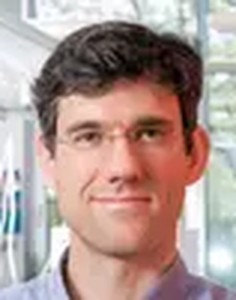 Portrait: German Cancer Research Center (DKFZ)
As corresponding author, guided Demetriades to the TSC2/lysosome discoveries (DEM2014, DEM2016) — showing mTORC1's starvation shutdown depends on TSC2 acting at the lysosome, then generalizing to many stress types.
Trained as biochemist at Harvard, PhD with Stephen Cohen (fly growth signaling), briefly a McKinsey consultant. ERC Starting/Consolidator/Advanced grants.
Milestones in the Atlas
A selection, not a full bibliography: only papers that meet the Atlas inclusion criteria.
| Year | Evidence | Study |
|---|---|---|
| 2014 | M | Regulation of TORC1 in response to amino acid starvation via lysosomal recruitment of TSC2 DEM2014 Senior author: amino-acid starvation recruits TSC2 to the lysosome to inhibit Rheb and mTORC1. |
| 2016 | M | Lysosomal recruitment of TSC2 is a universal response to cellular stress DEM2016 Senior author: lysosomal TSC2 recruitment triggered by many cellular stresses, a general damage-control mechanism. |
| 2021 | M | G3BPs tether the TSC complex to lysosomes and suppress mTORC1 signaling PRE2021 Adds a physical brake upstream of mTORC1. G3BP1 and G3BP2, known until then as core stress-granule proteins, also sit on the cytoplasmic face of the lysosome and are what holds the TSC complex there; without them TSC cannot reach its target and mTORC1 becomes over-responsive to amino acids and insulin. Loss of G3BP1 reproduces TSC-like hyperactivity phenotypes: faster mTORC1-driven motility in breast cancer cells, with low G3BP1 correlating with worse patient outcome, and disturbed neuronal development in zebrafish. Relevant to the Atlas because it is a lysosomal tethering step that the canonical Rheb/TSC diagram does not show. |
| 2023 | M | Malonyl-CoA is a conserved endogenous ATP-competitive mTORC1 inhibitor NIC2023 Malonyl-CoA, an intermediate of fatty-acid biosynthesis, binds the mTOR catalytic pocket directly and acts as a conserved ATP-competitive inhibitor of mTORC1; when fatty acid synthase is downregulated, rising malonyl-CoA feeds back to dampen mTORC1 activity, linking lipogenic capacity to overall biosynthetic output. |
| 2025 | PP | The tumor suppressor CYLD acts as a deubiquitinase for mTOR to constrain its activity FER2025 Co-author on the preprint identifying CYLD as a deubiquitinase that restrains mTOR. |
Co-authors in the Atlas 18
People with a profile here who share at least one study with Aurelio A. Teleman.
ShowHide
- Constantinos Demetriades 5 shared studies Showed as a postdoc in Aurelio Teleman's lab that starvation and other stresses pull TSC2 to the lysosome to switch mTORC1 off. His group, at the Max Planck Institute for Biology of Ageing in Cologne from 2017 and at ERIBA in Groningen since 2025, studies how cells sense nutrients and stress through mTORC1 and how this changes with age
- Gianluca Figlia 2 shared studies Cell biologist who studied how mTORC1 senses nutrients in Aurelio Teleman's group at the German Cancer Research Center, including the finding that glutamine is sensed through the kinase GCN2, and who now works at the Institute of Neuropathology in Aachen
- Julian Nüchel 2 shared studies Co-author on two Demetriades-lab mTORC1 papers from Cologne: the spatial split of mTORC1 signalling by amino acid source and malonyl-CoA as a direct mTORC1 inhibitor.
- Laura Brohée 2 shared studies Cell biologist who studied how lipid metabolism and the lysosome feed into mTORC1, first at the University of Liège and then at the Max Planck Institute for Biology of Ageing in Cologne
- Stephanie A. Fernandes 2 shared studies First author of the study showing that lysosomal and cytoplasmic pools of mTORC1 respond to different amino acid sources and phosphorylate different substrates.
- Alexander M Heberle Cell biologist and Junior Group Leader at the University of Innsbruck who studies how mTOR balances growth signalling and metabolism when cells are under stress, trained in Kathrin Thedieck's systems-biology group
- Bernadette Carroll First author of the study showing why mTORC1 stays switched on in senescent cells, and co-author on G3BP–TSC and senescence-mitophagy work; her own lab studies how nutrient sensing breaks down in ageing cells.
- Claudio De Virgilio Yeast geneticist whose lab found the EGO/Rag GTPase complex that activates TORC1 and showed that the SEACIT complex (Iml1–Npr2–Npr3) switches TORC1 off by acting as a GAP for the Rag GTPase Gtr1.
- Julian R. Sampson Clinical geneticist who led the consortium that identified the TSC2 gene and led trials of mTOR inhibitors in tuberous sclerosis, including the TRON trial of everolimus for cognition.
- Kathrin Thedieck Senior author of three Atlas studies that treat mTOR signalling as a dynamic network: TSC-independent mTORC2 activation, concurrent AMPK and mTOR activation by amino acids, and G3BP tethering of TSC to lysosomes.
- Lukas A. Huber Cell biologist who studied the p14-MP1 scaffold on late endosomes, a complex later recognised as part of Ragulator (LAMTOR), the lysosomal platform that holds mTORC1 in place
- Mariana de Araujo Cell biologist in Lukas Huber's group in Innsbruck who solved the crystal structure of the Ragulator (LAMTOR) complex, the lysosomal platform on which mTORC1 is switched on
- Mirja Tamara Prentzell First author of the study showing that G3BP proteins anchor the TSC complex to lysosomes, a physical brake on mTORC1; earlier co-author on the dynamic insulin–mTOR network model.
- Peter Gollwitzer First author of the 'Rag dimer code' study showing that the four Rag GTPase paralogues are not interchangeable: RagC/D sets substrate choice and RagA/B sets the response to amino acid withdrawal.
- Raffaele Nicastro Cell biologist at the University of Fribourg who studies TORC1 signalling in yeast and mammals, and first author of the discovery that malonyl-CoA is a natural mTORC1 inhibitor
- Ralf Baumeister Head of the Freiburg department that hosted the Thedieck group during the mTOR network modelling work; co-author on the dynamic mTOR model and the G3BP–TSC study.
- Sabine Wilhelm Co-author on two Demetriades-lab studies of amino acid sensing by mTORC1: the Rag GTPase dimer code and the spatial split of mTORC1 signalling.
- Viktor I. Korolchuk Showed that where lysosomes sit inside the cell tunes mTORC1 activity to nutrient supply. His Newcastle lab found that senescent cells can no longer switch mTORC1 off when nutrients or growth factors are withdrawn, and studies how autophagy and mitophagy decline with age
Every researcher with a profile →
Thank you. That helps us know which pages have been read by someone who knows the work.
Thank you. We will check it and correct the page.
Thank you. Your answer was counted anonymously.