Alexander M Heberle
Cell biologist and Junior Group Leader at the University of Innsbruck who studies how mTOR balances growth signalling and metabolism when cells are under stress, trained in Kathrin Thedieck's systems-biology group
Junior Group Leader and postdoctoral researcher, Institute of Biochemistry, University of Innsbruck · earlier in the Thedieck group, Section Systems Medicine of Metabolism and Signaling, University Medical Center Groningen (papers 2016–2021)
Institute of Biochemistry, University of Innsbruck (Innsbruck, Tyrol, Austria) ↗
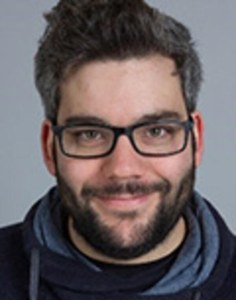 Portrait: University of Innsbruck
Alexander Heberle is a co-author of two Atlas studies from Kathrin Thedieck's group. The 2016 study (DAL2016) combined lab experiments with a computer model of the signalling network. It found that when amino acids are given back to starved cells, AMPK, the cell's energy-shortage sensor, switches on at the same time as mTOR, even though the two are usually described as opposites. AMPK then helps keep autophagy, the cell's recycling system, running through the kinase ULK1. The 2021 Cell paper (PRE2021) found a new brake on mTORC1, the growth-control complex: two proteins called G3BP1 and G3BP2, best known from stress granules, sit on the surface of the lysosome and hold the TSC complex there, so that TSC can keep mTORC1 in check. Without G3BPs, mTORC1 overreacts to nutrients and insulin. Both studies were mainly done in cultured cells.
Heberle's publication list follows the same line of questions: how stress switches mTOR on and off (a 2014 review), how the mitotic kinase PLK1 inhibits mTORC1 and promotes autophagy (2017), how the PI3K and p38 pathways control stress granule assembly (2019), and reviews on mTORC1 and stress granules in aging and on systems approaches to mTOR signalling (2021). Collaborations extend to cardiac IGF-1 receptor signalling and mass spectrometry methods.
PubMed lists Heberle at the University Medical Center Groningen on both Atlas papers. The current University of Innsbruck page lists Heberle as a Junior Group Leader at the Institute of Biochemistry, with a lab that studies how cells survive stress by balancing signalling and metabolism, with mTOR at the centre, and that aims to develop treatments for mTOR- and stress-related diseases.
Milestones in the Atlas
A selection, not a full bibliography: only papers that meet the Atlas inclusion criteria.
| Year | Evidence | Study |
|---|---|---|
| 2016 | M | A systems study reveals concurrent activation of AMPK and mTOR by amino acids DAL2016 Co-author of the systems study showing that amino acids switch on AMPK and mTOR at the same time in starved-then-fed cells. |
| 2021 | M | G3BPs tether the TSC complex to lysosomes and suppress mTORC1 signaling PRE2021 Co-author of the Cell study showing that G3BP proteins hold the TSC complex on lysosomes and so restrain mTORC1. |
Co-authors in the Atlas 15
People with a profile here who share at least one study with Alexander M Heberle.
ShowHide
- Kathrin Thedieck 2 shared studies Senior author of three Atlas studies that treat mTOR signalling as a dynamic network: TSC-independent mTORC2 activation, concurrent AMPK and mTOR activation by amino acids, and G3BP tethering of TSC to lysosomes.
- Annika G. Sonntag Experimental researcher in the Thedieck group who contributed cell data to the dynamic mTOR network model and the AMPK–mTOR amino acid study.
- Aurelio A. Teleman Uses fruit-fly genetics and human cells to study how growth signalling through TOR controls cell and body size. His lab showed that starvation and other stresses move TSC2 to the lysosome to switch mTORC1 off
- Bernadette Carroll First author of the study showing why mTORC1 stays switched on in senescent cells, and co-author on G3BP–TSC and senescence-mitophagy work; her own lab studies how nutrient sensing breaks down in ageing cells.
- Constantinos Demetriades Showed as a postdoc in Aurelio Teleman's lab that starvation and other stresses pull TSC2 to the lysosome to switch mTORC1 off. His group, at the Max Planck Institute for Biology of Ageing in Cologne from 2017 and at ERIBA in Groningen since 2025, studies how cells sense nutrients and stress through mTORC1 and how this changes with age
- Daryl P. Shanley Systems biologist of ageing whose Newcastle modelling group built, with the Thedieck lab, the dynamic models of mTOR signalling in the Atlas.
- Gianluca Figlia Cell biologist who studied how mTORC1 senses nutrients in Aurelio Teleman's group at the German Cancer Research Center, including the finding that glutamine is sensed through the kinase GCN2, and who now works at the Institute of Neuropathology in Aachen
- Julian R. Sampson Clinical geneticist who led the consortium that identified the TSC2 gene and led trials of mTOR inhibitors in tuberous sclerosis, including the TRON trial of everolimus for cognition.
- Laura Brohée Cell biologist who studied how lipid metabolism and the lysosome feed into mTORC1, first at the University of Liège and then at the Max Planck Institute for Biology of Ageing in Cologne
- Lukas A. Huber Cell biologist who studied the p14-MP1 scaffold on late endosomes, a complex later recognised as part of Ragulator (LAMTOR), the lysosomal platform that holds mTORC1 in place
- Mariana de Araujo Cell biologist in Lukas Huber's group in Innsbruck who solved the crystal structure of the Ragulator (LAMTOR) complex, the lysosomal platform on which mTORC1 is switched on
- Mirja Tamara Prentzell First author of the study showing that G3BP proteins anchor the TSC complex to lysosomes, a physical brake on mTORC1; earlier co-author on the dynamic insulin–mTOR network model.
- Piero Dalle Pezze First author of two Atlas modelling studies: the dynamic insulin–mTOR network model (TSC-independent mTORC2) and the systems study of concurrent AMPK and mTOR activation by amino acids.
- Ralf Baumeister Head of the Freiburg department that hosted the Thedieck group during the mTOR network modelling work; co-author on the dynamic mTOR model and the G3BP–TSC study.
- Viktor I. Korolchuk Showed that where lysosomes sit inside the cell tunes mTORC1 activity to nutrient supply. His Newcastle lab found that senescent cells can no longer switch mTORC1 off when nutrients or growth factors are withdrawn, and studies how autophagy and mitophagy decline with age
Every researcher with a profile →
Thank you. That helps us know which pages have been read by someone who knows the work.
Thank you. We will check it and correct the page.
Thank you. Your answer was counted anonymously.