Mariana de Araujo
Cell biologist in Lukas Huber's group in Innsbruck who solved the crystal structure of the Ragulator (LAMTOR) complex, the lysosomal platform on which mTORC1 is switched on
Institute of Cell Biology, Biocenter, Medical University of Innsbruck (papers with Lukas Huber, 2004–2026)
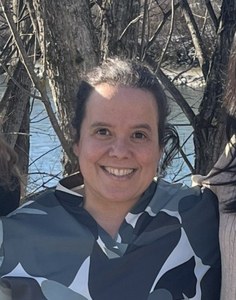 Portrait: Medical University of Innsbruck, Institute of Cell Biology
Mariana de Araujo appears in three Atlas studies about the lysosome surface, where mTORC1, the growth-control complex, is switched on and off. In NAP2020 (cells and mice), mTORC1 was shown to reach the transcription factor TFEB by a special route that depends on the RagC and RagD proteins, and this route drives kidney disease in Birt-Hogg-Dube syndrome. In PRE2021 (cells), the stress-granule proteins G3BP1 and G3BP2 were found to hold the TSC complex, a brake on mTORC1, on the lysosome. CUI2023 is a cryo-EM structure showing how two Rag-Ragulator units hand a TFEB molecule to the mTOR active site. De Araujo is a co-author in the middle of the author list on all three.
These collaborations build on de Araujo's own first-author work. In a 2017 Science paper from Innsbruck, de Araujo and colleagues solved the crystal structure of the human LAMTOR complex, also called Ragulator: five small proteins held together by LAMTOR1 that anchor the Rag GTPases to the lysosome and set their orientation for meeting mTORC1. The paper also showed which short stretches of LAMTOR1 are needed to recruit and hold the Rags. This structure is one of the reference points for how amino acid signals reach mTORC1.
De Araujo has published with Lukas Huber's group at the Medical University of Innsbruck since a 2004 study on the p14/MP1 scaffold, an earlier-known part of the same complex. The group studies how late endosomes and lysosomes organise signaling. In 2026 de Araujo was first author of a PNAS paper showing that the BORC complex, which moves lysosomes along the cell's tracks, can combine with subunits of a related complex, BLOC-1, to take on different transport jobs. No personal profile page was found, so the current job title is not confirmed.
Milestones in the Atlas
A selection, not a full bibliography: only papers that meet the Atlas inclusion criteria.
| Year | Evidence | Study |
|---|---|---|
| 2020 | M | A substrate-specific mTORC1 pathway underlies Birt-Hogg-Dubé syndrome. NAP2020 Co-author: contributed to the study showing that mTORC1 phosphorylates TFEB through a RagC/D-dependent route that drives Birt-Hogg-Dube kidney disease. |
| 2021 | M | G3BPs tether the TSC complex to lysosomes and suppress mTORC1 signaling PRE2021 Co-author: contributed to the discovery that G3BP1 and G3BP2 tether the TSC complex to lysosomes to restrain mTORC1. |
| 2023 | M | Structure of the lysosomal mTORC1-TFEB-Rag-Ragulator megacomplex CUI2023 Co-author: contributed to the cryo-EM structure of the mTORC1-TFEB-Rag-Ragulator megacomplex. |
Co-authors in the Atlas 20
People with a profile here who share at least one study with Mariana de Araujo.
ShowHide
- Lukas A. Huber 3 shared studies Cell biologist who studied the p14-MP1 scaffold on late endosomes, a complex later recognised as part of Ragulator (LAMTOR), the lysosomal platform that holds mTORC1 in place
- Alessandra Esposito 2 shared studies Lysosomal signalling and TFEB regulation
- Andrea Ballabio 2 shared studies Discovered that the transcription factor TFEB is a master switch for building lysosomes (SAR2009) and for autophagy. His lab was one of the groups that showed in 2012 that mTORC1 keeps TFEB out of the nucleus from the lysosome surface, and later (2020) that constitutive TFEB activation drives the kidney disease of Birt-Hogg-Dubé syndrome
- Gennaro Napolitano 2 shared studies mTORC1-TFEB lysosomal signalling
- Jlenia Monfregola 2 shared studies TIGEM postdoc and co-author on the cryo-EM structure of the mTORC1–TFEB–Rag–Ragulator megacomplex and on the TBK1/ULK1 lysosomal stress route to TFEB.
- Alessia Calcagnì TIGEM researcher on the TFEB/TFE3 side of mTORC1 signalling; co-author on the lysosomal stress route to TFEB activation and on mouse models separating mTORC1 from TFEB/TFE3 in kidney cysts and tumours.
- Alexander M Heberle Cell biologist and Junior Group Leader at the University of Innsbruck who studies how mTOR balances growth signalling and metabolism when cells are under stress, trained in Kathrin Thedieck's systems-biology group
- Aurelio A. Teleman Uses fruit-fly genetics and human cells to study how growth signalling through TOR controls cell and body size. His lab showed that starvation and other stresses move TSC2 to the lysosome to switch mTORC1 off
- Bernadette Carroll First author of the study showing why mTORC1 stays switched on in senescent cells, and co-author on G3BP–TSC and senescence-mitophagy work; her own lab studies how nutrient sensing breaks down in ageing cells.
- Constantinos Demetriades Showed as a postdoc in Aurelio Teleman's lab that starvation and other stresses pull TSC2 to the lysosome to switch mTORC1 off. His group, at the Max Planck Institute for Biology of Ageing in Cologne from 2017 and at ERIBA in Groningen since 2025, studies how cells sense nutrients and stress through mTORC1 and how this changes with age
- Gianluca Figlia Cell biologist who studied how mTORC1 senses nutrients in Aurelio Teleman's group at the German Cancer Research Center, including the finding that glutamine is sensed through the kinase GCN2, and who now works at the Institute of Neuropathology in Aachen
- James H. Hurley Structural biologist who uses cryo-EM to show how protein machines assembled on membranes control autophagy and nutrient signalling. His lab solved structures of the Rag–Ragulator complex and of the whole mTORC1–TFEB–Rag–Ragulator assembly on the lysosome
- Julian R. Sampson Clinical geneticist who led the consortium that identified the TSC2 gene and led trials of mTOR inhibitors in tuberous sclerosis, including the TRON trial of everolimus for cognition.
- Kathrin Thedieck Senior author of three Atlas studies that treat mTOR signalling as a dynamic network: TSC-independent mTORC2 activation, concurrent AMPK and mTOR activation by amino acids, and G3BP tethering of TSC to lysosomes.
- Laura Brohée Cell biologist who studied how lipid metabolism and the lysosome feed into mTORC1, first at the University of Liège and then at the Max Planck Institute for Biology of Ageing in Cologne
- Mirja Tamara Prentzell First author of the study showing that G3BP proteins anchor the TSC complex to lysosomes, a physical brake on mTORC1; earlier co-author on the dynamic insulin–mTOR network model.
- Ralf Baumeister Head of the Freiburg department that hosted the Thedieck group during the mTOR network modelling work; co-author on the dynamic mTOR model and the G3BP–TSC study.
- Taras Stasyk Protein chemist in Lukas Huber's group in Innsbruck who has spent two decades applying proteomics to the late endosomes and lysosomes where mTORC1 is controlled
- Viktor I. Korolchuk Showed that where lysosomes sit inside the cell tunes mTORC1 activity to nutrient supply. His Newcastle lab found that senescent cells can no longer switch mTORC1 off when nutrients or growth factors are withdrawn, and studies how autophagy and mitophagy decline with age
- Zhicheng Cui Structural biologist who solved cryo-EM structures of the mTORC1–TFEB–Rag–Ragulator megacomplex and of mTORC1 switched on by RHEB and the Rags on a lipid membrane.
Every researcher with a profile →
Thank you. That helps us know which pages have been read by someone who knows the work.
Thank you. We will check it and correct the page.
Thank you. Your answer was counted anonymously.