Taras Stasyk
Protein chemist in Lukas Huber's group in Innsbruck who has spent two decades applying proteomics to the late endosomes and lysosomes where mTORC1 is controlled
Institute of Cell Biology, Biocenter, Medical University of Innsbruck (papers with Lukas Huber, 2004–2026)
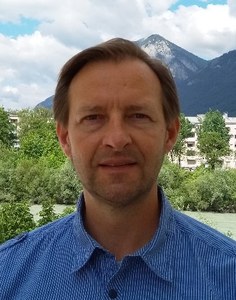 Portrait: Institute of Cell Biology, Medical University of Innsbruck
Taras Stasyk is a co-author of two Atlas studies about mTORC1 control at the lysosome. REB2015 (cells) found that SLC38A9, a transporter in the lysosome membrane, is part of the machinery that senses amino acids and passes the signal to mTORC1. NAP2020 (cells and mice) showed that mTORC1 reaches the transcription factor TFEB by a special route that needs RagC and RagD, and that this route drives kidney disease in Birt-Hogg-Dube syndrome. Stasyk is in the middle of the author list on both.
Stasyk's main tool is proteomics, the use of mass spectrometry to identify which proteins are present in a sample and how they are modified. An early 2004 review with Lukas Huber described how to purify parts of the cell, such as organelles, before mass spectrometry so that rare signaling proteins can be seen. That approach suits the Huber lab's central question: which proteins sit on late endosomes and lysosomes and how they organise signals, including the LAMTOR (Ragulator) complex that anchors the Rag GTPases. Stasyk is also a co-author of the group's 2017 crystal structure of human LAMTOR.
The publication record shows Stasyk at the Medical University of Innsbruck from 2004 to 2026, most recently on a 2026 study of the lysosome transport complex BORC. No personal profile page was found, so the exact current title is not confirmed.
Milestones in the Atlas
A selection, not a full bibliography: only papers that meet the Atlas inclusion criteria.
| Year | Evidence | Study |
|---|---|---|
| 2015 | M | SLC38A9 is a component of the lysosomal amino acid sensing machinery that controls mTORC1 REB2015 Co-author: contributed to the identification of SLC38A9 as part of the lysosomal amino acid sensing machinery for mTORC1. |
| 2020 | M | A substrate-specific mTORC1 pathway underlies Birt-Hogg-Dubé syndrome. NAP2020 Co-author: contributed to the study showing that mTORC1 phosphorylates TFEB through a RagC/D-dependent route that drives Birt-Hogg-Dube kidney disease. |
Co-authors in the Atlas 9
People with a profile here who share at least one study with Taras Stasyk.
ShowHide
- Lukas A. Huber 2 shared studies Cell biologist who studied the p14-MP1 scaffold on late endosomes, a complex later recognised as part of Ragulator (LAMTOR), the lysosomal platform that holds mTORC1 in place
- Alessandra Esposito Lysosomal signalling and TFEB regulation
- Alessia Calcagnì TIGEM researcher on the TFEB/TFE3 side of mTORC1 signalling; co-author on the lysosomal stress route to TFEB activation and on mouse models separating mTORC1 from TFEB/TFE3 in kidney cysts and tumours.
- Andrea Ballabio Discovered that the transcription factor TFEB is a master switch for building lysosomes (SAR2009) and for autophagy. His lab was one of the groups that showed in 2012 that mTORC1 keeps TFEB out of the nucleus from the lysosome surface, and later (2020) that constitutive TFEB activation drives the kidney disease of Birt-Hogg-Dubé syndrome
- Gennaro Napolitano mTORC1-TFEB lysosomal signalling
- Giulio Superti-Furga Systems biologist who maps how proteins and drugs interact in cells, with a focus on solute carrier (SLC) membrane transporters; his group helped identify SLC38A9 as a lysosomal amino-acid sensor for mTORC1.
- Jlenia Monfregola TIGEM postdoc and co-author on the cryo-EM structure of the mTORC1–TFEB–Rag–Ragulator megacomplex and on the TBK1/ULK1 lysosomal stress route to TFEB.
- Manuele Rebsamen Cell biologist who found that the lysosomal transporter SLC38A9 is part of the amino acid sensor for mTORC1, and who now leads a group at the University of Lausanne studying transporters in immune signalling and autoimmunity
- Mariana de Araujo Cell biologist in Lukas Huber's group in Innsbruck who solved the crystal structure of the Ragulator (LAMTOR) complex, the lysosomal platform on which mTORC1 is switched on
Every researcher with a profile →
Thank you. That helps us know which pages have been read by someone who knows the work.
Thank you. We will check it and correct the page.
Thank you. Your answer was counted anonymously.