Claudio De Virgilio
Yeast geneticist whose lab found the EGO/Rag GTPase complex that activates TORC1 and showed that the SEACIT complex (Iml1–Npr2–Npr3) switches TORC1 off by acting as a GAP for the Rag GTPase Gtr1.
Full professor, Department of Biology, University of Fribourg (since 2007) · SNSF professor, Faculty of Medicine, University of Geneva (from 2001) · group leader, University of Basel (1998) · postdoc with John Pringle, UNC Chapel Hill · PhD, University of Basel (Andres Wiemken and Thomas Boller, 1993)
De Virgilio Lab, Department of Biology, University of Fribourg (Fribourg, Canton of Fribourg, Switzerland) ↗ ORCID0000-0001-8826-4323 ↗
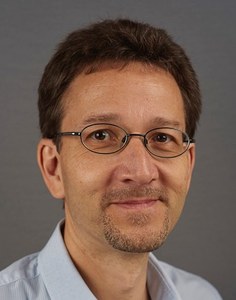 Portrait: University of Fribourg (via MENTOR doctoral network)
His lab showed in yeast that when amino acids run out, the Iml1–Npr2–Npr3 complex (SEACIT, the yeast counterpart of human GATOR1) binds Gtr1 at the vacuole and stimulates its GTPase activity, turning TORC1 down (PAN2013). He is also one of the senior authors of the study showing that malonyl-CoA directly inhibits mTORC1; the first author, R. Nicastro, is from his Fribourg department, and the yeast data supported the claim that the mechanism is conserved (NIC2023).
He studied biology in Basel, did his PhD on trehalose and heat stress in yeast, and a postdoc on cell polarity with John Pringle in North Carolina. He has led his own group since 1998 and has been a full professor at Fribourg since 2007, working on how nutrient signals and TORC1 control entry into and exit from quiescence.
Milestones in the Atlas
A selection, not a full bibliography: only papers that meet the Atlas inclusion criteria.
| Year | Evidence | Study |
|---|---|---|
| 2012 | M | Leucyl-tRNA synthetase controls TORC1 via the EGO complex BON2012 Senior author: in yeast, leucyl-tRNA synthetase binds the Rag GTPase Gtr1 in a leucine-dependent way to pass the leucine signal to TORC1. |
| 2013 | M | Amino acid deprivation inhibits TORC1 through a GTPase-activating protein complex for the Rag family GTPase Gtr1 PAN2013 Senior author: Iml1–Npr2–Npr3 (SEACIT) is a GAP for Gtr1 that inhibits TORC1 when amino acids are removed. |
| 2023 | M | Malonyl-CoA is a conserved endogenous ATP-competitive mTORC1 inhibitor NIC2023 Senior co-author: malonyl-CoA is a conserved endogenous ATP-competitive mTORC1 inhibitor, with yeast work from his Fribourg department. |
Co-authors in the Atlas 10
People with a profile here who share at least one study with Claudio De Virgilio.
ShowHide
- Aurelio A. Teleman Uses fruit-fly genetics and human cells to study how growth signalling through TOR controls cell and body size. His lab showed that starvation and other stresses move TSC2 to the lysosome to switch mTORC1 off
- Constantinos Demetriades Showed as a postdoc in Aurelio Teleman's lab that starvation and other stresses pull TSC2 to the lysosome to switch mTORC1 off. His group, at the Max Planck Institute for Biology of Ageing in Cologne from 2017 and at ERIBA in Groningen since 2025, studies how cells sense nutrients and stress through mTORC1 and how this changes with age
- Gianluca Figlia Cell biologist who studied how mTORC1 senses nutrients in Aurelio Teleman's group at the German Cancer Research Center, including the finding that glutamine is sensed through the kinase GCN2, and who now works at the Institute of Neuropathology in Aachen
- Grégory Bonfils First author of the yeast study proposing that leucyl-tRNA synthetase passes the leucine signal to TORC1 by binding the Rag GTPase Gtr1
- Julian Nüchel Co-author on two Demetriades-lab mTORC1 papers from Cologne: the spatial split of mTORC1 signalling by amino acid source and malonyl-CoA as a direct mTORC1 inhibitor.
- Laura Brohée Cell biologist who studied how lipid metabolism and the lysosome feed into mTORC1, first at the University of Liège and then at the Max Planck Institute for Biology of Ageing in Cologne
- Nicolas Panchaud Biochemist who, during a PhD with Claudio De Virgilio in Fribourg, showed that the yeast SEACIT complex switches off TORC1 when amino acids run out, and who later moved into clinical drug development at Novartis
- Peter Gollwitzer First author of the 'Rag dimer code' study showing that the four Rag GTPase paralogues are not interchangeable: RagC/D sets substrate choice and RagA/B sets the response to amino acid withdrawal.
- Raffaele Nicastro Cell biologist at the University of Fribourg who studies TORC1 signalling in yeast and mammals, and first author of the discovery that malonyl-CoA is a natural mTORC1 inhibitor
- Stephanie A. Fernandes First author of the study showing that lysosomal and cytoplasmic pools of mTORC1 respond to different amino acid sources and phosphorylate different substrates.
Thank you. That helps us know which pages have been read by someone who knows the work.
Thank you. We will check it and correct the page.
Thank you. Your answer was counted anonymously.