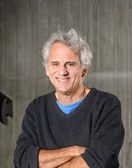
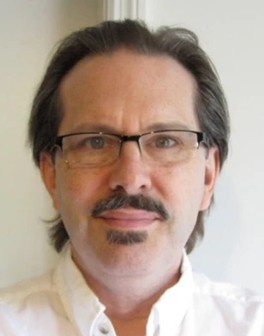
4 scientists over 2 generations of training, 1992–2001.
The family starts with George Thomas.
The lab with the most trainees here is George Thomas's,
with 3 people in this tree.
4 of the 4 have a full profile in the Atlas. Positions and dates come from
the sources listed under each person and can lag behind job moves.
What the family's own labs work on
mTORC1 nutrient sensing 1
Translation 1
Metabolism 1
The tree
Read left to right: each line means "trained in this lab". Names with a profile are links.
Dashed rings mark people without a profile yet. Open it in the interactive map →
PhD, about 1992-1997 (Friedrich Miescher Institute, Basel)
In the labShowed that rapamycin selectively blocks translation of mRNAs that begin with a polypyrimidine (5'TOP) tract, and tied this to S6K1 (PNAS 1994, EMBO J 1997).
Own labMolecular Cell Biology of Autophagy Laboratory (Tooze lab), The Francis Crick Institute (London, England, United Kingdom). Biochemist who worked on S6 kinase and 5'TOP mRNA translation in George Thomas's lab and has studied the molecular machinery of autophagy in Sharon Tooze's lab since 2003.
PhD + postdoc, 1996-2001 (Friedrich Miescher Institute, Basel)
In the labMade S6K1 knockout mice and showed they have small pancreatic beta cells, low insulin and glucose intolerance (Nature 2000); later made S6K1/S6K2 double knockouts.
Own labCell Growth Control by Nutrients team, Institut Necker Enfants Malades, INSERM (Paris, France). He studies how the cell's growth switch (mTOR and its helper S6 kinase) sets cell size and how this goes wrong in diabetes and cancer.mTOR and S6 kinase control of cell growth, ribosome biogenesis and metabolism, and their roles in diabetes, muscle disease, cancer and senescence.
Postdoc, about 1996-2001 (Friedrich Miescher Institute, Basel)
In the labShowed that mTOR responds to cellular ATP levels and so acts as an ATP sensor (Science 2001), and mapped S6K1 activation sites.
Own labMaterials and Manufacturing Directorate, Air Force Research Laboratory, Wright-Patterson Air Force Base (Dayton, Ohio, USA). As a postdoc in George Thomas's lab at the Friedrich Miescher Institute, was first author on the 2001 study proposing that mTOR responds to cellular ATP levels independently of amino acids
How links are chosen: a link appears only when two independent sources agree, a PubMed
paper the trainee wrote with the mentor at the mentor's institution and a separate page naming the mentor.
More on the method.