Mario Pende
Studies how nutrients and growth factors set cell size and metabolism through mTOR and S6 kinase; as a student in George Thomas's lab he helped show that mice lacking S6K1 have small pancreatic beta-cells and low insulin.
Team leader, Cell Growth Control by Nutrients, Institut Necker Enfants Malades, Paris · INSERM Directeur de Recherche (since 2007) · INSERM Avenir group leader (2002) · PhD (University of Basel, 2000) and postdoc with George Thomas, Friedrich Miescher Institute, Basel · visiting scientist, NICHD/NIH (1993–1996) · pharmacy and pharmacology training, University of Genova
Cell Growth Control by Nutrients team, Institut Necker Enfants Malades, INSERM (Paris, France) ↗ Lab lineagetrained under George Thomas →
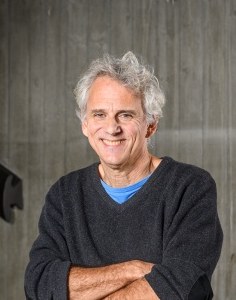 Portrait: Institut Necker Enfants Malades
Mario Pende was first author of the 2000 Nature study in which mice lacking the kinase S6K1 had low blood insulin and poor glucose tolerance (PEN2000). Their muscle was not insulin resistant; the problem was a smaller pancreatic endocrine mass, explained by beta-cells that were smaller than normal. Two years earlier he was a co-author on the paper that described the small S6K1-knockout mouse and identified a second S6 kinase, S6K2 (SHI1998). Both results come from mice, not people.
Pende trained in pharmacy and pharmacology at the University of Genova and worked at the NICHD in Bethesda before doing his PhD and a short postdoc in George Thomas's lab at the Friedrich Miescher Institute in Basel. He started his own INSERM group in Paris in 2002 and now leads the Cell Growth Control by Nutrients team at the Institut Necker Enfants Malades, which works on mTOR and the Vps15/Vps34 complex and on diseases such as tuberous sclerosis complex.
Milestones in the Atlas
A selection, not a full bibliography: only papers that meet the Atlas inclusion criteria.
| Year | Evidence | Study |
|---|---|---|
| 1998 | A | Disruption of the p70(s6k)/p85(s6k) gene reveals a small mouse phenotype and a new functional S6 kinase SHI1998 Co-author: S6K1-knockout mice are small, and a second S6 kinase, S6K2, partly compensates for the loss. |
| 2000 | A | Hypoinsulinaemia, glucose intolerance and diminished beta-cell size in S6K1-deficient mice PEN2000 First author: S6K1-deficient mice are hypoinsulinaemic and glucose intolerant because their pancreatic beta-cells are smaller. |
Co-authors in the Atlas
People with a profile here who share at least one study with Mario Pende.
- George Thomas 2 shared studies Purified and cloned S6K1, the kinase that became the classic readout of mTORC1 activity. His lab later showed that mice lacking S6K1 resist diet-induced obesity, and that amino acids signal to mTORC1 through the lipid kinase hVps34 (GUL2008)
- Sara C. Kozma 2 shared studies Studies the S6K/mTOR pathway and how it controls cell growth, ribosome production, diabetes and cancer, including mTOR signalling in liver cancer.
Every researcher with a profile →
On the programme
Meetings in the Atlas calendar where Mario Pende is listed among the speakers or organisers.
- past Prague Metabolism and Signaling Symposium 2026 ↗ 24–27 Jun 2026 · Prague, Czech Republic · ★★★
All meetings in the calendar →
Thank you. Your answer was counted anonymously.
Thank you. That helps us know which pages have been read by someone who knows the work.
Thank you. We will check it and correct the page.