Sara C. Kozma
Studies the S6K/mTOR pathway and how it controls cell growth, ribosome production, diabetes and cancer, including mTOR signalling in liver cancer.
Associate Professor, Department of Cancer and Cell Biology, University of Cincinnati (since 2004) · Associate Investigator, Friedrich Miescher Institute, Basel (1987–2003)
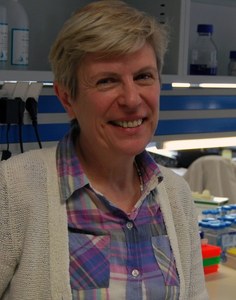 Portrait: IDIBELL
Sara Kozma works on the S6K/mTOR signalling pathway, which links nutrients and growth signals to cell growth. Her laboratory asks how this pathway controls the making of ribosomes, the cell's protein factories, and how that connects to cell division. Her listed career runs from graduate work at the University of Liege through postdoctoral posts in Germany and Switzerland, the Friedrich Miescher Institute in Basel, and then the University of Cincinnati.
The 2010 study in this Atlas, with George Thomas's group, looked at how metformin, the common diabetes drug, switches mTORC1 off. It is often said to work through AMPK, an energy sensor. The team found that metformin still blocked mTORC1 in cells lacking AMPK or the TSC1/TSC2 brake, and that the effect needed the Rag GTPases, the proteins that signal amino-acid supply.
The work suggests that a large part of metformin's action on mTORC1 does not go through AMPK. It was done in cells, not in people.
Milestones in the Atlas
A selection, not a full bibliography: only papers that meet the Atlas inclusion criteria.
| Year | Evidence | Study |
|---|---|---|
| 1998 | A | Disruption of the p70(s6k)/p85(s6k) gene reveals a small mouse phenotype and a new functional S6 kinase SHI1998 Senior author: S6K1 knockout mice are small, and the newly found S6K2 partly compensates for S6 phosphorylation. |
| 1999 | A | Drosophila S6 kinase: a regulator of cell size MON1999 Co-author with George Thomas (last author): Drosophila lacking S6 kinase are small because their cells are smaller. |
| 2000 | A | Hypoinsulinaemia, glucose intolerance and diminished beta-cell size in S6K1-deficient mice PEN2000 Co-author with George Thomas (last author): S6K1-deficient mice have smaller beta cells, low insulin and glucose intolerance. |
| 2001 | M | Mammalian TOR: a homeostatic ATP sensor DEN2001 Co-author with George Thomas (last author): lowering ATP reduces mTOR signalling independently of amino acids (cells). |
| 2003 | M | Insulin activation of Rheb, a mediator of mTOR/S6K/4E-BP signaling, is inhibited by TSC1 and 2 GAR2003 Insulin activates Rheb-GTP, inhibited by TSC1/2, positioning Rheb as the direct upstream activator of TOR. |
| 2004 | A | Absence of S6K1 protects against age- and diet-induced obesity while enhancing insulin sensitivity UMX2004 S6K1 deletion protects mice from age- and diet-induced obesity and enhances insulin sensitivity. |
| 2006 | A | Hypothalamic mTOR signaling regulates food intake COT2006 Co-author with Daniela Cota (first author) and Randy Seeley (last author): hypothalamic mTOR signalling tracks energy status, and raising it with leucine in the brain lowers food intake and body weight (rats). |
| 2008 | M | Inhibition of mTORC1 leads to MAPK pathway activation through a PI3K-dependent feedback loop in human cancer CAR2008 mTORC1 inhibition activates the MAPK pathway via a PI3K-dependent feedback loop. Seen in tumour biopsies from patients with advanced solid tumours treated with RAD001 (everolimus), where the rise depended on the dosing schedule, and in a mouse prostate cancer model, xenografts and cell lines. |
| 2008 | M | Amino acids activate mTOR complex 1 via Ca2+/CaM signaling to hVps34 GUL2008 Co-author with George Thomas (last author): amino acids activate mTORC1 through calcium-calmodulin signalling to hVps34 (cells). |
| 2009 | A | Ribosomal protein S6 kinase 1 signaling regulates mammalian life span SEL2009 Deleting S6K1 (a direct mTORC1 effector) extended lifespan in FEMALE mice (+19% median); the effect was not significant in males. It also protected against age-related bone, immune and motor decline. One of the clearest cases of the sex dimorphism catalogued in gap H6 - and a reminder that a single downstream branch, not mTORC1 as a whole, can carry much of the ageing signal. |
| 2009 | M | The mTOR kinase differentially regulates effector and regulatory T cell lineage commitment DEL2009 T cells lacking mTOR fail to become normal effector cells and default toward regulatory T cells, showing mTOR is a master switch for immune cell fate. |
| 2010 | M | Metformin, independent of AMPK, inhibits mTORC1 in a rag GTPase-dependent manner KAL2010 Co-author with George Thomas (last author) and Adem Kalender: metformin inhibits mTORC1 without AMPK or TSC1/TSC2, in a Rag GTPase-dependent manner. |
Co-authors in the Atlas
People with a profile here who share at least one study with Sara C. Kozma.
- George Thomas 11 shared studies Purified and cloned S6K1, the kinase that became the classic readout of mTORC1 activity. His lab later showed that mice lacking S6K1 resist diet-induced obesity, and that amino acids signal to mTORC1 through the lipid kinase hVps34 (GUL2008)
- Ernst Hafen 2 shared studies Developmental geneticist who used Drosophila to work out how insulin and TOR signalling control cell and body size, including the role of Rheb.
- Mario Pende 2 shared studies Studies how nutrients and growth factors set cell size and metabolism through mTOR and S6 kinase; as a student in George Thomas's lab he helped show that mice lacking S6K1 have small pancreatic beta-cells and low insulin.
- Takahiro Nobukuni 2 shared studies Showed as first author that amino acids activate mTOR through the lipid kinase hVps34, by a route separate from insulin signalling through TSC, in parallel with a study from Jonathan Backer's laboratory
- Arkaitz Carracedo Cancer biologist who, as first author in 2008, showed that blocking mTORC1 can switch on the MAPK pathway through a PI3K-dependent feedback loop.
- Benoit Viollet Showed that metformin still lowers liver glucose production without AMPK or LKB1, pointing instead to a drop in cellular energy charge
- Colin Selman Biogerontologist who studies how diet and nutrient-sensing pathways such as insulin/IGF-1 and mTOR set the pace of ageing
- Daniela Cota Studies how the brain senses nutrients and hormones to control food intake and body weight; as a postdoc in Cincinnati she was first author of the rat study that tied hypothalamic mTOR signalling to food intake and leptin action.
- Dominic J. Withers Studies how hormone and nutrient signaling pathways control metabolism and ageing, including the finding that loss of S6K1 extends lifespan in mice.
- Greg M. Delgoffe Showed as a graduate student in Jonathan Powell's lab that T cells lacking mTOR become regulatory rather than effector T cells, and that mTORC1 and mTORC2 steer different helper-T-cell fates
- Jacques Montagne Drosophila geneticist who, working in George Thomas's group, showed that flies lacking S6 kinase are small because their cells are small, not fewer, and helped characterise fly TOR
- Johannes L. (Hans) Bos Cancer biologist known for work on Ras mutations and for the small GTPase Rap1 and its activator Epac, a cAMP-regulated switch for cell adhesion
- Jonathan D. Powell Showed that T cells lacking mTOR become regulatory T cells instead of effector cells, and that mTORC1 and mTORC2 each steer a different type of helper T cell
- José Baselga Breast cancer oncologist who led the BOLERO-2 trial showing that the mTOR inhibitor everolimus added to hormone therapy lengthens progression-free survival
- Lewis C. Cantley Co-discovered PI3K, the pathway that feeds into mTOR from growth factors
- Linda Partridge Showed that rapamycin extends fruit-fly lifespan through TORC1, via autophagy and reduced protein synthesis, and that it adds benefit even on top of dietary restriction
- Patrick B. Dennis As a postdoc in George Thomas's lab at the Friedrich Miescher Institute, was first author on the 2001 study proposing that mTOR responds to cellular ATP levels independently of amino acids
- Pawan Gulati First author of the study proposing that amino acids activate mTORC1 through a rise in intracellular calcium and calmodulin binding to hVps34, and later of work linking the obesity gene FTO to amino-acid sensing by mTORC1
- Pier Paolo Pandolfi Showed that ERK directly phosphorylates and inactivates TSC2, wiring Ras/MAPK signalling into mTORC1 control, and that blocking mTORC1 in patients' tumours triggers a feedback rise in MAPK signalling
- Randy J. Seeley Studies how gut and brain signals control appetite, body weight and blood sugar, including why bariatric surgery works; his Cincinnati lab was senior on the rat study linking hypothalamic mTOR to food intake.
Every researcher with a profile →
Thank you. Your answer was counted anonymously.
Thank you. That helps us know which pages have been read by someone who knows the work.
Thank you. We will check it and correct the page.