Jacques Montagne
Drosophila geneticist who, working in George Thomas's group, showed that flies lacking S6 kinase are small because their cells are small, not fewer, and helped characterise fly TOR
CNRS researcher; 2026 affiliation Institut de Génomique Fonctionnelle de Lyon · previously led the team “Growth, metabolism and physiology in Drosophila” at I2BC (CNRS, Université Paris-Saclay), Gif-sur-Yvette · earlier Friedrich Miescher Institute, Basel, in George Thomas's group
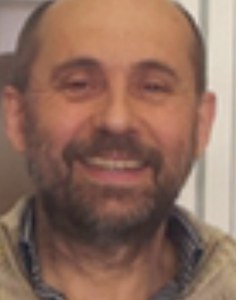 Portrait: I2BC, CNRS / Université Paris-Saclay (team page, via Internet Archive)
Jacques Montagne was first author of the Atlas study in which flies lacking the S6 kinase gene developed slowly and ended up much smaller, because their cells were smaller rather than fewer (MON1999). He was also a co-author of the characterisation of dTOR, the fly TOR gene, which showed that dTOR controls growth through dS6K (OLD2000). Both studies came from a collaboration between George Thomas's group at the Friedrich Miescher Institute in Basel and Ernst Hafen's group in Zurich.
Montagne later moved to the CNRS in Gif-sur-Yvette, where he led a Drosophila group at the Institute for Integrative Biology of the Cell (I2BC) working on how S6K, nutrients and lipid metabolism control growth and physiology. His most recent publication lists the Institut de Génomique Fonctionnelle de Lyon.
Milestones in the Atlas
A selection, not a full bibliography: only papers that meet the Atlas inclusion criteria.
| Year | Evidence | Study |
|---|---|---|
| 1999 | A | Drosophila S6 kinase: a regulator of cell size MON1999 First author: showed that Drosophila lacking dS6K are smaller because of smaller cells, not fewer cells. |
| 2000 | M | Genetic and biochemical characterization of dTOR, the Drosophila homolog of the target of rapamycin OLD2000 Co-author: helped characterise dTOR and its control of growth through dS6K in Drosophila. |
Co-authors in the Atlas
People with a profile here who share at least one study with Jacques Montagne.
- Ernst Hafen 2 shared studies Developmental geneticist who used Drosophila to work out how insulin and TOR signalling control cell and body size, including the role of Rheb.
- George Thomas 2 shared studies Purified and cloned S6K1, the kinase that became the classic readout of mTORC1 activity. His lab later showed that mice lacking S6K1 resist diet-induced obesity, and that amino acids signal to mTORC1 through the lipid kinase hVps34 (GUL2008)
- Sara C. Kozma Studies the S6K/mTOR pathway and how it controls cell growth, ribosome production, diabetes and cancer, including mTOR signalling in liver cancer.
Every researcher with a profile →
Thank you. Your answer was counted anonymously.
Thank you. That helps us know which pages have been read by someone who knows the work.
Thank you. We will check it and correct the page.