Greg M. Delgoffe
Discovered that mTOR kinase signaling is the master switch between effector and regulatory T-cell fate
PhD, Johns Hopkins (Jonathan D. Powell lab, 2010) · postdoc, St. Jude (Dario Vignali lab) · now Professor of Immunology, Director of Tumor Microenvironment Center, UPMC Hillman Cancer Center; Editor-in-Chief, Immunology (Wiley)
Delgoffe Lab, UPMC Hillman Cancer Center / University of Pittsburgh ↗ Bluesky@delgoffelab.bsky.social ↗
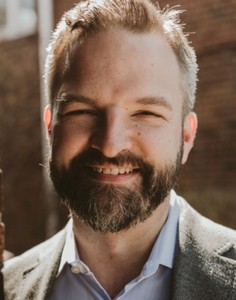 Portrait: UPMC Hillman Cancer Center / University of Pittsburgh
As PhD student with Powell (who has his own medailonek), showed (DEL2009) T cells lacking mTOR fail to differentiate into effector cells, defaulting toward Treg fate. Refined (DEL2011): mTORC1 required specifically for Th1/Th17, mTORC2 specifically for Th2 — which complex is active, not just mTOR on/off, dictates fate.
Built own program at Pitt around the idea that tumors selectively feed Tregs, not just starve killer T cells — blocking lactate export starves tumor Tregs (Nature 2021); dichloroacetate improves CAR-T persistence (Cell Metabolism 2024). Co-founded Novasenta and RemplirBio. CRI Lloyd J. Old STAR awardee.
Milestones in the Atlas
| Year | Evidence | Study |
|---|---|---|
| 2009 | M | The mTOR kinase differentially regulates effector and regulatory T cell lineage commitment DEL2009 T cells lacking mTOR fail to differentiate into effector cells, defaulting toward Treg fate. |
| 2011 | A | The kinase mTOR regulates the differentiation of helper T cells through the selective activation of signaling by mTORC1 and mTORC2 DEL2011 mTORC1 and mTORC2 selectively program distinct CD4 helper T-cell lineages. |