Arkaitz Carracedo
Cancer biologist who, as first author in 2008, showed that blocking mTORC1 can switch on the MAPK pathway through a PI3K-dependent feedback loop.
Ikerbasque Research Professor, CIC bioGUNE (Bilbao, Spain) · Beth Israel Deaconess Cancer Center, Harvard Medical School (affiliation on CAR2008)
Cancer Cell Signaling and Metabolism Laboratory, CIC bioGUNE (Bilbao, Spain) ↗ Lab lineagetrained under Pier Paolo Pandolfi →
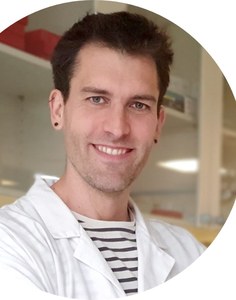 Portrait: FEBS Network
Arkaitz Carracedo is an Ikerbasque research professor at CIC bioGUNE in Bilbao, where his group studies the signalling and metabolic changes that make cancer cells different from normal cells, with a focus on prostate and breast cancer. His work has been supported by an ERC Consolidator Grant, and in 2023 he received a Leonardo Grant from the BBVA Foundation.
CAR2008 comes from his time at the Beth Israel Deaconess Cancer Center at Harvard Medical School, in the group of Pier Paolo Pandolfi. The question was practical. Rapamycin and its relative RAD001 (everolimus) were being tested as cancer drugs, but results in patients were often modest. The authors found that when mTORC1 is blocked, cells lose a brake on a feedback loop that runs through S6K, PI3K and Ras, and the MAPK pathway switches on.
They saw this in biopsies from patients treated with RAD001, in a mouse model of prostate cancer, and in cell lines. Adding a MAPK inhibitor made rapamycin work better in cells and in a xenograft model. In the Atlas this is a standard example of why mTOR inhibitors often work best in combination.
Milestones in the Atlas
A selection, not a full bibliography: only papers that meet the Atlas inclusion criteria.
| Year | Evidence | Study |
|---|---|---|
| 2008 | M | Inhibition of mTORC1 leads to MAPK pathway activation through a PI3K-dependent feedback loop in human cancer CAR2008 First author: mTORC1 inhibition activates MAPK through a PI3K-dependent feedback loop, supporting combined mTORC1 and MAPK blockade in cancer. |
Co-authors in the Atlas
People with a profile here who share at least one study with Arkaitz Carracedo.
- George Thomas Purified and cloned S6K1, the kinase that became the classic readout of mTORC1 activity. His lab later showed that mice lacking S6K1 resist diet-induced obesity, and that amino acids signal to mTORC1 through the lipid kinase hVps34 (GUL2008)
- José Baselga Breast cancer oncologist who led the BOLERO-2 trial showing that the mTOR inhibitor everolimus added to hormone therapy lengthens progression-free survival
- Lewis C. Cantley Co-discovered PI3K, the pathway that feeds into mTOR from growth factors
- Pier Paolo Pandolfi Showed that ERK directly phosphorylates and inactivates TSC2, wiring Ras/MAPK signalling into mTORC1 control, and that blocking mTORC1 in patients' tumours triggers a feedback rise in MAPK signalling
- Sara C. Kozma Studies the S6K/mTOR pathway and how it controls cell growth, ribosome production, diabetes and cancer, including mTOR signalling in liver cancer.
Every researcher with a profile →
On the programme
Meetings in the Atlas calendar where Arkaitz Carracedo is listed among the speakers or organisers.
- past 4th Prague Symposium on Cancer Metabolism 2025 ↗ 14–15 Oct 2025 · Prague, Czech Republic · ★★★
All meetings in the calendar →
Thank you. Your answer was counted anonymously.
Thank you. That helps us know which pages have been read by someone who knows the work.
Thank you. We will check it and correct the page.