Junichi Sadoshima
Studies how mTOR, autophagy and mitophagy protect the heart under stress and in ageing, and contributed to the finding that spermidine protects the heart
Professor and Chair, Department of Cell Biology and Molecular Medicine, Rutgers New Jersey Medical School (Chair since 2012, Professor since 2003) · Associate Professor, UMDNJ–New Jersey Medical School (2000–2003) · Allegheny University of the Health Sciences (1998–2000) · Assistant Professor, University of Michigan (1994–1998) · postdoctoral fellow, Beth Israel Hospital, Harvard Medical School (1990–1994) · PhD (1989) and MD (1983), Kyushu University
Sadoshima Lab, Department of Cell Biology and Molecular Medicine, Rutgers New Jersey Medical School (Newark, New Jersey, USA) ↗ ORCID0000-0003-3724-4132 ↗
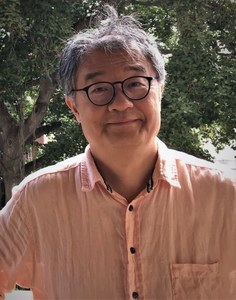 Portrait: Sadoshima Lab, Rutgers New Jersey Medical School
The heart is the organ where the autophagy story stops being abstract. Cardiomyocytes are not replaced, so whatever quality control they have has to last a lifetime, and both too little autophagy and too much of it damage the tissue. Sadoshima's laboratory works on exactly that balance, together with Hippo signalling and redox-sensitive pathways in cardiovascular disease.
His contribution to this corpus sits in two places. He is a co-author of EIS2016, the Graz-led spermidine study whose cardiac work includes the finding that the protection disappears in mice whose cardiomyocytes lack Atg5 — the control that turns a correlation into a requirement. He is also senior author of SCI2014, the Atlas's review of mTOR signalling in cardiac physiology and disease.
The point the Atlas takes from this line of work is a boundary rather than a promise: autophagy in the heart is protective within a range, and interventions that push it are not automatically good for the organ.
Milestones in the Atlas
| Year | Evidence | Study |
|---|---|---|
| 2014 | R | Mammalian target of rapamycin signaling in cardiac physiology and disease SCI2014 Senior author of the review of mTOR signalling in cardiac physiology and disease. |
| 2016 | A | Cardioprotection and lifespan extension by the natural polyamine spermidine EIS2016 Co-author of the study showing spermidine's cardioprotection is lost when cardiomyocytes lack Atg5. |
Co-authors in the Atlas
People with a profile here who share at least one study with Junichi Sadoshima.
- Didac Carmona-Gutierrez Studies how cell death and autophagy shape ageing at the University of Graz, and contributed to the studies showing that spermidine extends lifespan through autophagy
- Frank Madeo Established spermidine as a dietary compound that extends lifespan in yeast, worms, flies and mice, and showed that the effect depends on autophagy
- Frauke Neff First author of the study that separated what rapamycin does to lifespan from what it does to ageing itself
- Christoph Magnes Analytical chemist at Joanneum Research whose group contributed the mass-spectrometry measurements of polyamines in the Graz spermidine studies
- Christoph Ruckenstuhl Yeast geneticist who works out how amino-acid restriction and vacuole acidity set lifespan
- Sabrina Büttner Studies how organelles communicate inside cells and how that communication breaks down with age, and contributed to the Graz studies showing that spermidine extends lifespan by inducing autophagy
- Sabrina Schroeder Researcher in Frank Madeo's group at Graz who has contributed to the spermidine studies from the first yeast longevity experiments to work in mice
- Tobias Eisenberg Showed as first author that the dietary polyamine spermidine extends lifespan by inducing autophagy, and later that it protects the heart in an autophagy-dependent way