Sabrina Büttner
Studies how organelles communicate inside cells and how that communication breaks down with age, and contributed to the Graz studies showing that spermidine extends lifespan by inducing autophagy
Professor, Department of Molecular Biosciences, The Wenner-Gren Institute, Stockholm University · Institute of Molecular Biosciences, University of Graz (affiliation on EIS2009 and EIS2016)
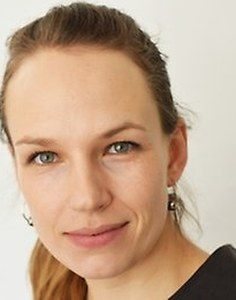 Portrait: Stockholm University
Büttner came up through the Graz school of yeast cell death, and her own laboratory now asks a question one level up from a single pathway: how do organelles inside one cell stay coordinated, and what happens to protein homeostasis and cellular fitness when that coordination degrades with age.
In this corpus she appears on both spermidine papers. EIS2009 established that the polyamine induces autophagy and extends lifespan in yeast, flies, worms and human immune cells; EIS2016 carried it into mice and made the cardiac protection depend on Atg5. Her presence on both is one reason the Atlas can treat them as one line of evidence rather than two unrelated results.
She is also a co-author of the yeast cell death nomenclature guidelines, which is the kind of work that keeps a field's terms usable — the same reason this Atlas is careful about what counts as autophagy and what counts only as autophagosome number.
Milestones in the Atlas
| Year | Evidence | Study |
|---|---|---|
| 2009 | A | Induction of autophagy by spermidine promotes longevity EIS2009 Co-author: spermidine induces autophagy and extends lifespan across yeast, flies, worms and human immune cells. |
| 2016 | A | Cardioprotection and lifespan extension by the natural polyamine spermidine EIS2016 Co-author: oral spermidine extends mouse lifespan and protects the ageing heart, with the effect abolished without Atg5. |
Co-authors in the Atlas
People with a profile here who share at least one study with Sabrina Büttner.
- Didac Carmona-Gutierrez 2 shared studies Studies how cell death and autophagy shape ageing at the University of Graz, and contributed to the studies showing that spermidine extends lifespan through autophagy
- Frank Madeo 2 shared studies Established spermidine as a dietary compound that extends lifespan in yeast, worms, flies and mice, and showed that the effect depends on autophagy
- Christoph Magnes 2 shared studies Analytical chemist at Joanneum Research whose group contributed the mass-spectrometry measurements of polyamines in the Graz spermidine studies
- Christoph Ruckenstuhl 2 shared studies Yeast geneticist who works out how amino-acid restriction and vacuole acidity set lifespan
- Sabrina Schroeder 2 shared studies Researcher in Frank Madeo's group at Graz who has contributed to the spermidine studies from the first yeast longevity experiments to work in mice
- Tobias Eisenberg 2 shared studies Showed as first author that the dietary polyamine spermidine extends lifespan by inducing autophagy, and later that it protects the heart in an autophagy-dependent way
- Frauke Neff First author of the study that separated what rapamycin does to lifespan from what it does to ageing itself
- Junichi Sadoshima Studies how mTOR, autophagy and mitophagy protect the heart under stress and in ageing, and contributed to the finding that spermidine protects the heart