Johannes Beckers
Geneticist at Helmholtz Munich and the Technical University of Munich whose group at the Institute of Experimental Genetics runs gene-expression profiling for the German Mouse Clinic
Institute of Experimental Genetics and German Mouse Clinic, Helmholtz Munich · Chair of Experimental Genetics, Technical University of Munich, Freising · German Center for Diabetes Research (DZD)
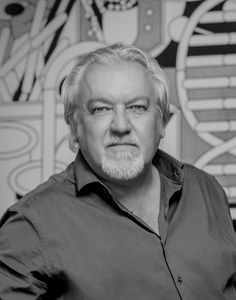 Portrait: International Mouse Phenotyping Consortium (IMPC)
Johannes Beckers is a co-author on two Atlas studies that relied on large-scale mouse phenotyping, the systematic measuring of many body functions in the same animals. EIS2016 showed that oral spermidine, a natural compound also found in food, lengthened the lives of mice, kept heart muscle from thickening and kept the heart able to relax normally between beats. The benefit disappeared in mice whose heart muscle cells lack the autophagy gene Atg5, so autophagy, the cell's self-cleaning system, was needed for the effect. The paper also included a human diet survey linking spermidine intake to lower blood pressure and fewer heart problems, but that part is observational and cannot show cause. NEF2013 gave rapamycin, the drug that blocks mTOR, to young and old mice and measured a very wide panel of body functions. Rapamycin lengthened life but changed only a few of the classic signs of ageing, so a longer life did not mean that ageing slowed down across the whole body. Both are mouse studies.
Beckers works at the Institute of Experimental Genetics of Helmholtz Munich in Neuherberg, near Munich, and PubMed records also list the Chair of Experimental Genetics at the Technical University of Munich and the German Center for Diabetes Research. The German Mouse Clinic at Helmholtz Munich tests mouse models in a standardised way across many organ systems; its recent papers cover heart size, movement, behaviour, metabolism and blood values. In both Atlas papers Beckers appears among the German Mouse Clinic authors. Beckers's own papers centre on measuring which genes are switched on in tissues, for example with Marion Horsch and Martin Irmler, and range from mouse genetics to the effects of air pollution on the lung, as in a 2026 study of wood-smoke aerosols.
Milestones in the Atlas
A selection, not a full bibliography: only papers that meet the Atlas inclusion criteria.
| Year | Evidence | Study |
|---|---|---|
| 2013 | A | Rapamycin extends murine lifespan but has limited effects on aging NEF2013 Co-author from the German Mouse Clinic on the broad phenotyping that showed rapamycin changes only a few ageing traits in mice. |
| 2016 | A | Cardioprotection and lifespan extension by the natural polyamine spermidine EIS2016 Co-author from the German Mouse Clinic, which contributed phenotyping to the mouse spermidine study. |
Co-authors in the Atlas 19
People with a profile here who share at least one study with Johannes Beckers.
ShowHide
- Birgit Rathkolb 2 shared studies Scientist at the German Mouse Clinic of Helmholtz Munich and the Gene Center of LMU Munich who contributes to the clinic's phenotyping of mouse models
- Frauke Neff 2 shared studies First author of the study that separated what rapamycin does to lifespan from what it does to ageing itself
- Helmut Fuchs 2 shared studies Scientific and technical head of the German Mouse Clinic at Helmholtz Munich, the standardised many-organ testing platform for mouse models that Fuchs helped build
- Jan Rozman 2 shared studies Scientist who worked at the German Mouse Clinic of Helmholtz Munich on the standardised phenotyping of mouse models
- Kristin Moreth 2 shared studies Scientist at the German Mouse Clinic of Helmholtz Munich who contributed to its phenotyping of mouse models, including heart measurements
- Marion Horsch 2 shared studies Scientist at the Institute of Experimental Genetics, Helmholtz Munich, who has worked with Johannes Beckers on gene-expression studies of mouse models for the German Mouse Clinic
- Valérie Gailus-Durner 2 shared studies Biochemist who co-founded the German Mouse Clinic at Helmholtz Munich and leads it as scientific head, running standardised testing of mouse models across many organ systems
- Dan Ehninger Showed that rapamycin reverses learning deficits in adult mice carrying a tuberous sclerosis mutation, and later tested carefully whether rapamycin's lifespan effect reflects a true slowing of ageing
- Didac Carmona-Gutierrez Studies how cell death and autophagy shape ageing at the University of Graz, and contributed to the studies showing that spermidine extends lifespan through autophagy
- Frank Madeo Established spermidine as a dietary compound that extends lifespan in yeast, worms, flies and mice, and showed that the effect depends on autophagy
- Christoph Magnes Analytical chemist at Joanneum Research whose group contributed the mass-spectrometry measurements of polyamines in the Graz spermidine studies
- Christoph Ruckenstuhl Yeast geneticist who works out how amino-acid restriction and vacuole acidity set lifespan
- Jörn Dengjel Mass-spectrometry proteomics specialist in autophagy and protein homeostasis; co-author on the TBK1/ULK1–TFEB lysosomal stress pathway and on the spermidine lifespan and cardioprotection study.
- Junichi Sadoshima Studies how mTOR, autophagy and mitophagy protect the heart under stress and in ageing, and contributed to the finding that spermidine protects the heart
- Luca Scorrano Mitochondrial biologist known for showing how the shape of mitochondria and their inner folds (cristae) control energy production and cell death.
- Martin Hrabě de Angelis Mouse geneticist who directs large-scale phenotyping of mouse mutants and the German Mouse Clinic, a platform that tests how genes affect health and disease.
- Sabrina Büttner Studies how organelles communicate inside cells and how that communication breaks down with age, and contributed to the Graz studies showing that spermidine extends lifespan by inducing autophagy
- Sabrina Schroeder Researcher in Frank Madeo's group at Graz who has contributed to the spermidine studies from the first yeast longevity experiments to work in mice
- Tobias Eisenberg Showed as first author that the dietary polyamine spermidine extends lifespan by inducing autophagy, and later that it protects the heart in an autophagy-dependent way
Every researcher with a profile →
Thank you. That helps us know which pages have been read by someone who knows the work.
Thank you. We will check it and correct the page.
Thank you. Your answer was counted anonymously.