Christoph Magnes
Analytical chemist at Joanneum Research whose group contributed the mass-spectrometry measurements of polyamines in the Graz spermidine studies
Head of the Bioanalytics and Metabolomics research group, HEALTH – Institute for Biomedicine and Health Sciences, Joanneum Research, Graz · At Joanneum Research since 2003 · Doctorate in natural sciences (Mag. Dr. rer. nat.)
Bioanalytics and Metabolomics, HEALTH – Institute for Biomedicine and Health Sciences, Joanneum Research (Graz, Austria) ↗ ORCID0000-0002-5153-7444 ↗
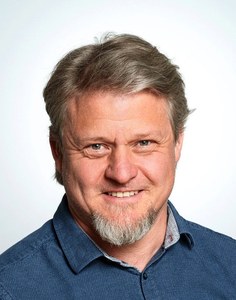 Portrait: Joanneum Research
Magnes is not a cell biologist and does not run aging experiments. He heads a bioanalytics and metabolomics group at Joanneum Research, an applied research company in Graz that works to Good Laboratory Practice standards, and his job in both spermidine papers is measurement. The 2009 paper states plainly in its author-contribution note that he and Frank Sinner performed the polyamine measurements by mass spectrometry; the 2016 paper's methods describe a quantitative HPLC-MS/MS determination of ornithine, putrescine, spermidine and spermine in plasma, whole blood and heart tissue, run by his Joanneum team.
That role is easy to underrate and hard to replace. Spermidine is a small, chemically unremarkable molecule that is already present in every cell, so the whole claim of these papers depends on being able to say how much of it is in a sample, to a level that separates it cleanly from its close relatives putrescine and spermine. Liquid chromatography separates the molecules, the mass spectrometer weighs the fragments, and a spiked internal standard turns the signal into an actual concentration.
Without those numbers the 2016 mouse result would be a story about mice that drank something and lived longer. With them the paper can show that circulating spermidine actually rose after feeding, that ornithine fell, and that the arginine-to-ornithine balance shifted in a direction linked to blood pressure. His group also supplied the polyamine measurements for the 2021 Graz work on spermidine and cognition.
Milestones in the Atlas
| Year | Evidence | Study |
|---|---|---|
| 2009 | A | Induction of autophagy by spermidine promotes longevity EIS2009 Credited in the author-contribution statement, together with Frank Sinner, with performing the polyamine measurements by mass spectrometry. |
| 2016 | A | Cardioprotection and lifespan extension by the natural polyamine spermidine EIS2016 His Joanneum Research bioanalytics group ran the quantitative HPLC-MS/MS determination of ornithine, putrescine, spermidine and spermine in plasma, whole blood and cardiac tissue. |
Co-authors in the Atlas
People with a profile here who share at least one study with Christoph Magnes.
- Didac Carmona-Gutierrez 2 shared studies Studies how cell death and autophagy shape ageing at the University of Graz, and contributed to the studies showing that spermidine extends lifespan through autophagy
- Frank Madeo 2 shared studies Established spermidine as a dietary compound that extends lifespan in yeast, worms, flies and mice, and showed that the effect depends on autophagy
- Christoph Ruckenstuhl 2 shared studies Yeast geneticist who works out how amino-acid restriction and vacuole acidity set lifespan
- Sabrina Büttner 2 shared studies Studies how organelles communicate inside cells and how that communication breaks down with age, and contributed to the Graz studies showing that spermidine extends lifespan by inducing autophagy
- Sabrina Schroeder 2 shared studies Researcher in Frank Madeo's group at Graz who has contributed to the spermidine studies from the first yeast longevity experiments to work in mice
- Tobias Eisenberg 2 shared studies Showed as first author that the dietary polyamine spermidine extends lifespan by inducing autophagy, and later that it protects the heart in an autophagy-dependent way
- Frauke Neff First author of the study that separated what rapamycin does to lifespan from what it does to ageing itself
- Junichi Sadoshima Studies how mTOR, autophagy and mitophagy protect the heart under stress and in ageing, and contributed to the finding that spermidine protects the heart