Frank Madeo
Established spermidine as a dietary compound that extends lifespan in yeast, worms, flies and mice, and showed that the effect depends on autophagy
Full Professor and Director of Research, Institute of Molecular Biosciences, University of Graz (since 2004) · group leader, University of Tübingen (1997–2004) · PhD on tyrosine phosphorylation and apoptosis in yeast, University of Tübingen (1994–1997) · biochemistry studies, University of Tübingen (1987–1993)
Ageing and Cell Death Laboratory, Institute of Molecular Biosciences, University of Graz (Graz, Austria) ↗ ORCID0000-0002-5070-1329 ↗
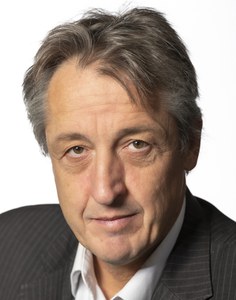 Portrait: University of Graz
Madeo came to ageing through cell death in yeast, and the habit shows in how his laboratory frames interventions: not “does this extend life” but “what has to be intact for it to work”. Spermidine is the case in point. EIS2009 established that the polyamine induces autophagy and extends lifespan across four systems; EIS2016 moved it into mammals and made the heart protection contingent on Atg5 in cardiomyocytes.
The branch matters to this Atlas because it reaches autophagy by a route that does not start at mTOR (EIS2009 did not measure mTOR directly). Where rapamycin releases autophagy by inhibiting mTORC1, spermidine does it by changing histone acetylation and the transcription of autophagy genes. That makes it a useful test of a claim the Atlas is careful about: if the benefits of mTOR inhibition really run through autophagy, an mTOR-independent autophagy inducer should reproduce part of them.
His laboratory also works on other caloric-restriction mimetics and on fasting regimens, and he is an editor of the yeast and cell-stress literature in this area.
Milestones in the Atlas
| Year | Evidence | Study |
|---|---|---|
| 2009 | A | Induction of autophagy by spermidine promotes longevity EIS2009 Senior author: autophagy is required for spermidine to suppress necrosis and extend lifespan. |
| 2016 | A | Cardioprotection and lifespan extension by the natural polyamine spermidine EIS2016 Senior author: spermidine extends mouse lifespan and prevents cardiac ageing, with the effect abolished in cardiomyocyte Atg5 knockouts. |
Co-authors in the Atlas
People with a profile here who share at least one study with Frank Madeo.
- Didac Carmona-Gutierrez 2 shared studies Studies how cell death and autophagy shape ageing at the University of Graz, and contributed to the studies showing that spermidine extends lifespan through autophagy
- Christoph Magnes 2 shared studies Analytical chemist at Joanneum Research whose group contributed the mass-spectrometry measurements of polyamines in the Graz spermidine studies
- Christoph Ruckenstuhl 2 shared studies Yeast geneticist who works out how amino-acid restriction and vacuole acidity set lifespan
- Sabrina Büttner 2 shared studies Studies how organelles communicate inside cells and how that communication breaks down with age, and contributed to the Graz studies showing that spermidine extends lifespan by inducing autophagy
- Sabrina Schroeder 2 shared studies Researcher in Frank Madeo's group at Graz who has contributed to the spermidine studies from the first yeast longevity experiments to work in mice
- Tobias Eisenberg 2 shared studies Showed as first author that the dietary polyamine spermidine extends lifespan by inducing autophagy, and later that it protects the heart in an autophagy-dependent way
- Frauke Neff First author of the study that separated what rapamycin does to lifespan from what it does to ageing itself
- Junichi Sadoshima Studies how mTOR, autophagy and mitophagy protect the heart under stress and in ageing, and contributed to the finding that spermidine protects the heart