Guido Kroemer
Cell biologist known for work on programmed cell death, mitochondria and autophagy, and for linking autophagy to ageing and cancer immunity.
Director of the Metabolomics and Cellular Biology Platforms, Gustave Roussy · Head, Inserm team Metabolism, Cancer and Immunity · Deputy Director, Cordeliers Research Centre · Professor, Paris-Descartes University · Member, Academia Europaea (2007) · Carus Medal, Leopoldina (2007) · Descartes Prize, European Commission (2006)
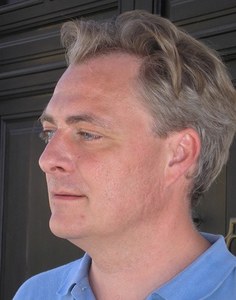 Portrait: Academia Europaea
Guido Kroemer is a cell biologist in Paris whose work centres on how cells die and how they clean up after themselves. He leads an Inserm team called Metabolism, Cancer and Immunity and directs the metabolomics and cellular biology platforms at Gustave Roussy, a cancer centre near Paris. He is also deputy director of the Cordeliers Research Centre.
In the Atlas he appears on the 2009 Nature Cell Biology study led by Frank Madeo and Tobias Eisenberg. The team showed that spermidine, a small natural molecule called a polyamine whose level falls as people age, extended the lifespan of yeast, flies and worms, and of human immune cells in culture. The effect depended on autophagy, the cell's recycling system, which is the same process that mTORC1 holds back when nutrients are plentiful.
The paper became the starting point for the idea that some natural compounds can mimic parts of caloric restriction. Kroemer is a senior author on it, and it sits in the Atlas as the opening study of the spermidine branch.
Milestones in the Atlas
A selection, not a full bibliography: only papers that meet the Atlas inclusion criteria.
| Year | Evidence | Study |
|---|---|---|
| 2009 | A | Induction of autophagy by spermidine promotes longevity EIS2009 Senior author with Frank Madeo: spermidine induces autophagy and extends lifespan in yeast, flies, worms and human immune cells. |
Co-authors in the Atlas 8
People with a profile here who share at least one study with Guido Kroemer.
ShowHide
- Didac Carmona-Gutierrez Studies how cell death and autophagy shape ageing at the University of Graz, and contributed to the studies showing that spermidine extends lifespan through autophagy
- Frank Madeo Established spermidine as a dietary compound that extends lifespan in yeast, worms, flies and mice, and showed that the effect depends on autophagy
- Christoph Magnes Analytical chemist at Joanneum Research whose group contributed the mass-spectrometry measurements of polyamines in the Graz spermidine studies
- Christoph Ruckenstuhl Yeast geneticist who works out how amino-acid restriction and vacuole acidity set lifespan
- Nektarios Tavernarakis Geneticist who uses the roundworm C. elegans to study how ageing, neurodegeneration, necrotic cell death, autophagy and protein turnover are controlled
- Sabrina Büttner Studies how organelles communicate inside cells and how that communication breaks down with age, and contributed to the Graz studies showing that spermidine extends lifespan by inducing autophagy
- Sabrina Schroeder Researcher in Frank Madeo's group at Graz who has contributed to the spermidine studies from the first yeast longevity experiments to work in mice
- Tobias Eisenberg Showed as first author that the dietary polyamine spermidine extends lifespan by inducing autophagy, and later that it protects the heart in an autophagy-dependent way
Every researcher with a profile →
On the programme
Meetings in the Atlas calendar where Guido Kroemer is listed among the speakers or organisers.
- past 1st EFAR Conference on the Biology of Aging 2026 ↗ 14–16 Oct 2026 ·
 Cologne, Germany · ★
All meetings in the calendar →
Thank you. That helps us know which pages have been read by someone who knows the work.
Thank you. We will check it and correct the page.
Thank you. Your answer was counted anonymously.