Christoph Ruckenstuhl
Yeast geneticist who works out how amino-acid restriction and vacuole acidity set lifespan
Associate Professor and group leader, Institute of Molecular Biosciences, University of Graz · Researcher, Madeo group, University of Graz · Yeast sterol biochemistry, Turnowsky group, University of Graz (from 2003) · Mag. rer. nat. and Dr. rer. nat., University of Graz
Ruckenstuhl group, Institute of Molecular Biosciences, University of Graz (Graz, Austria) ↗ ORCID0000-0002-4338-4679 ↗
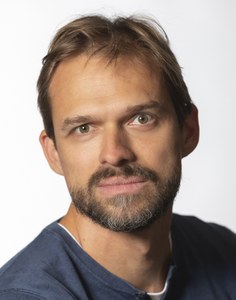 Portrait: University of Graz
Ruckenstuhl is one of the yeast people behind the 2009 spermidine paper: its author-contribution statement names him among the researchers who performed the yeast experiments, which were the backbone of the study. Yeast is where the mechanism could be tested cleanly, by deleting single autophagy genes and watching the lifespan benefit disappear. He is also a co-author on the 2016 mammalian follow-up from the same Graz institute.
His own line of work sits much closer to mTOR. In a 2014 PLoS Genetics paper he showed that restricting the amino acid methionine extends the chronological lifespan of yeast, and that the extension is abolished by deleting ATG5, ATG7 or ATG8 – autophagy is required, not incidental. He then found the step that comes next: methionine restriction makes the vacuole, the yeast equivalent of the lysosome, more acidic, and simply overexpressing components of the vacuolar ATPase proton pump was enough to lengthen lifespan on its own.
The same paper draws a direct line to the TOR pathway. Inhibiting or deleting TOR1 extended lifespan in normal yeast, but added nothing in methionine-restricted cells, which is the genetic signature of two interventions feeding into one shared mechanism. His group at Graz now works on methionine and sulphur metabolism as an entry point into that mechanism.
Milestones in the Atlas
| Year | Evidence | Study |
|---|---|---|
| 2009 | A | Induction of autophagy by spermidine promotes longevity EIS2009 Named in the author-contribution statement among the researchers who ran the yeast experiments that tied spermidine's lifespan effect to autophagy. |
| 2016 | A | Cardioprotection and lifespan extension by the natural polyamine spermidine EIS2016 Co-author from Madeo's Graz institute on the mammalian follow-up, the group that supplied the autophagy side of the mouse work. |
Co-authors in the Atlas
People with a profile here who share at least one study with Christoph Ruckenstuhl.
- Didac Carmona-Gutierrez 2 shared studies Studies how cell death and autophagy shape ageing at the University of Graz, and contributed to the studies showing that spermidine extends lifespan through autophagy
- Frank Madeo 2 shared studies Established spermidine as a dietary compound that extends lifespan in yeast, worms, flies and mice, and showed that the effect depends on autophagy
- Christoph Magnes 2 shared studies Analytical chemist at Joanneum Research whose group contributed the mass-spectrometry measurements of polyamines in the Graz spermidine studies
- Sabrina Büttner 2 shared studies Studies how organelles communicate inside cells and how that communication breaks down with age, and contributed to the Graz studies showing that spermidine extends lifespan by inducing autophagy
- Sabrina Schroeder 2 shared studies Researcher in Frank Madeo's group at Graz who has contributed to the spermidine studies from the first yeast longevity experiments to work in mice
- Tobias Eisenberg 2 shared studies Showed as first author that the dietary polyamine spermidine extends lifespan by inducing autophagy, and later that it protects the heart in an autophagy-dependent way
- Frauke Neff First author of the study that separated what rapamycin does to lifespan from what it does to ageing itself
- Junichi Sadoshima Studies how mTOR, autophagy and mitophagy protect the heart under stress and in ageing, and contributed to the finding that spermidine protects the heart