John M. Asara
Mass-spectrometry specialist whose core facility supplied metabolomics and proteomics for several mTOR studies, including measurements of purine, pyrimidine and SAM metabolism downstream of mTORC1.
Director, Mass Spectrometry Core, Beth Israel Deaconess Medical Center (founded 2004), and Associate Professor of Medicine, Harvard Medical School · postdoc in proteomics, Harvard University, then biotechnology industry · PhD in Analytical Chemistry, Michigan State University (1999)
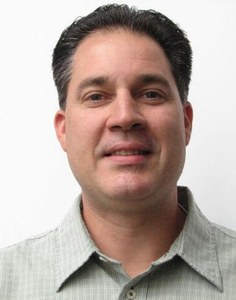 Portrait: Beth Israel Deaconess Medical Center
Asara's core ran the mass spectrometry behind several Atlas studies. With Peng Gao he performed the LC-MS analysis showing that mTORC1 raises bicarbonate import through SLC4A7 to feed nucleotide synthesis (ALI2022), and he co-authored the related Ben-Sahra-lab studies on ERK2 control of purine synthesis (ALI2020) and mTORC1 control of SAM and m6A methylation (VIL2021). He was also a co-author on the study in which mass spectrometry mapped the S6K1 site on the clock protein BMAL1 (LIP2015).
Asara earned a PhD in analytical chemistry at Michigan State University in 1999, trained in proteomics at Harvard and worked briefly in biotechnology. In 2004 he founded the BIDMC Mass Spectrometry Core, which now covers proteomics, metabolomics, lipidomics and stable-isotope flux analysis.
Milestones in the Atlas
A selection, not a full bibliography: only papers that meet the Atlas inclusion criteria.
| Year | Evidence | Study |
|---|---|---|
| 2015 | A | The Circadian Protein BMAL1 Regulates Translation in Response to S6K1-Mediated Phosphorylation LIP2015 Co-author on the study in which LC-MS/MS identified S6K1 phosphorylation of BMAL1 at serine 42. |
| 2020 | M | ERK2 phosphorylates PFAS to mediate posttranslational control of de novo purine synthesis ALI2020 Co-author: mass-spectrometry support for the finding that ERK2 phosphorylates PFAS to speed purine synthesis. |
| 2021 | M | mTORC1 stimulates cell growth through SAM synthesis and m6A mRNA-dependent control of protein synthesis VIL2021 Co-author: mass-spectrometry support for the study showing mTORC1 controls SAM synthesis and m6A mRNA methylation. |
| 2022 | M | The mTORC1-SLC4A7 axis stimulates bicarbonate import to enhance de novo nucleotide synthesis ALI2022 Performed the LC-MS analysis (with P. Gao) showing mTORC1–SLC4A7 bicarbonate import feeds nucleotide synthesis. |
Co-authors in the Atlas
People with a profile here who share at least one study with John M. Asara.
- Brendan P. O'Hara 3 shared studies As lab manager of Issam Ben-Sahra's lab at Northwestern, contributed to its studies of how mTORC1 and ERK control nucleotide synthesis, SAM production and bicarbonate import
- Eunus S. Ali 3 shared studies Showed as a Ben-Sahra-lab postdoc that ERK2 directly activates the purine-synthesis enzyme PFAS, and that mTORC1 increases bicarbonate import through SLC4A7 to fuel nucleotide synthesis. His Kentucky lab studies how growth signals control nucleotide metabolism in cancer
- Issam Ben-Sahra 3 shared studies Showed as a postdoc in Brendan Manning's lab that mTORC1 drives both pyrimidine and purine synthesis, through two different mechanisms. His Northwestern lab has extended this to bicarbonate import, SAM synthesis and ERK control of purine production
- Peng Gao 3 shared studies Directs the Northwestern metabolomics core that supplied mass-spectrometry metabolite measurements for three Ben-Sahra lab studies on how mTORC1 and ERK signalling drive nucleotide and SAM synthesis.
- Elodie Villa 2 shared studies First author of the study showing that mTORC1 raises production of the methyl donor SAM through MAT2A and boosts m6A mRNA methylation to support protein synthesis and cell growth.
- Umakant Sahu 2 shared studies Showed that the building blocks of RNA also tell mitochondria how fast to burn fuel
- Ashwin Nathan Co-author on both Boston Children's Hospital studies linking mTOR signalling to the circadian clock protein BMAL1.
- Elizabeth D. Yuan Second author on the study showing that S6K1 phosphorylates BMAL1 to link mTOR signalling with circadian protein synthesis, and co-author on the follow-up in tuberous sclerosis models.
- Fred C. Davis Circadian biologist from Northeastern University who brought expertise on the brain's master clock to two studies linking mTOR and the clock protein BMAL1.
- Jonathan O. Lipton First author of the two studies that tie mTOR signalling to the circadian clock protein BMAL1: S6K1 phosphorylates BMAL1 to drive translation, and constant mTOR activity in tuberous sclerosis disturbs the clock.
- Lara M. Boyle Research assistant at Boston Children's Hospital who co-authored both studies linking mTOR to the clock protein BMAL1, including the tuberous sclerosis study where she was second author.
- Mustafa Sahin Senior author of the studies showing that mTOR signalling reaches the circadian clock through BMAL1, and a physician-scientist focused on tuberous sclerosis, the classic disease of overactive mTOR.
Every researcher with a profile →
Thank you. Your answer was counted anonymously.
Thank you. That helps us know which pages have been read by someone who knows the work.
Thank you. We will check it and correct the page.