David Lebwohl
Medical oncologist and drug developer who led the clinical development of everolimus (Afinitor) at Novartis through approvals in several cancers and tuberous sclerosis, and later served as Chief Medical Officer of the gene-editing company Intellia Therapeutics
Executive Vice President and Chief Medical Officer, Intellia Therapeutics (2020–2026) · Chief Medical Officer, Semma Therapeutics (2018–2019) · Senior Vice President and Global Program Head, Novartis (everolimus, CAR-T and other programs) · Oncology Clinical Development, Bristol-Myers Squibb · MD, Yale University School of Medicine · AB in Biochemical Sciences, Harvard College
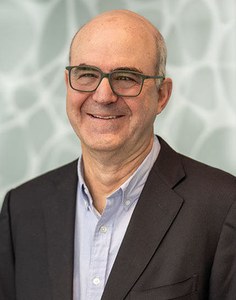 Portrait: Fierce Biotech Summit 2022 (Intellia Therapeutics)
David Lebwohl appears on five Atlas papers, all large clinical trials of everolimus, a rapamycin-like drug that blocks mTORC1, the growth-control complex. RECORD-1 (MOT2008) tested it in advanced kidney cancer, BOLERO-2 (BAS2012) in hormone-receptor-positive breast cancer together with exemestane, and RADIANT-3 (YAO2011) in pancreatic neuroendocrine tumours. EXIST-1 (FRA2013) and EXIST-2 (BIS2013) tested it in tuberous sclerosis complex, a genetic disease in which the TSC genes that normally hold mTORC1 back are broken, causing brain tumours called SEGAs and kidney tumours called angiomyolipomas. These are studies in patients, and they are much of the reason everolimus is an approved medicine today.
Lebwohl studied biochemical sciences at Harvard College and medicine at Yale. He did his internal medicine residency at Brigham and Women's Hospital in Boston and a fellowship at Memorial Sloan Kettering Cancer Center, and is board certified in internal medicine and hematology. He spent about five years in oncology clinical development at Bristol-Myers Squibb before joining Novartis.
At Novartis he led global drug programs. Under his leadership Afinitor (everolimus) was approved for five indications, including breast, kidney, brain and lung tumours, and he later led development of the CAR-T cell therapy Kymriah and the company's Cell and Gene Therapies Unit. In 2018 he became Chief Medical Officer of Semma Therapeutics, which worked on stem-cell-derived insulin-making cells for type 1 diabetes, and in 2020 Chief Medical Officer of Intellia Therapeutics, a CRISPR gene-editing company. Intellia announced in August 2025 that he would retire on 7 August 2026.
Milestones in the Atlas
A selection, not a full bibliography: only papers that meet the Atlas inclusion criteria.
| Year | Evidence | Study |
|---|---|---|
| 2008 | H | Efficacy of everolimus in advanced renal cell carcinoma: a double-blind, randomised, placebo-controlled phase III trial MOT2008 Novartis co-author on the RECORD-1 trial showing that everolimus delayed progression of advanced kidney cancer after earlier targeted treatment. |
| 2011 | H | Everolimus for advanced pancreatic neuroendocrine tumors (RADIANT-3) YAO2011 Novartis co-author on RADIANT-3, the trial of everolimus in advanced pancreatic neuroendocrine tumours. |
| 2012 | H | Everolimus in postmenopausal hormone-receptor-positive advanced breast cancer (BOLERO-2) BAS2012 Novartis co-author on BOLERO-2, the trial adding everolimus to exemestane in advanced hormone-receptor-positive breast cancer. |
| 2013 | H | Everolimus for angiomyolipoma associated with tuberous sclerosis complex or sporadic lymphangioleiomyomatosis (EXIST-2): a multicentre, randomised, double-blind, placebo-controlled trial BIS2013 Novartis co-author on EXIST-2, the trial of everolimus for kidney angiomyolipomas in tuberous sclerosis complex or lymphangioleiomyomatosis. |
| 2013 | H | Efficacy and safety of everolimus for subependymal giant cell astrocytomas associated with tuberous sclerosis complex (EXIST-1): a multicentre, randomised, placebo-controlled phase 3 trial FRA2013 Novartis co-author on EXIST-1, the trial of everolimus for subependymal giant cell astrocytomas in tuberous sclerosis complex. |
Co-authors in the Atlas 24
People with a profile here who share at least one study with David Lebwohl.
ShowHide
- Tarek Sahmoud 3 shared studies Physician and epidemiologist who worked as a clinical program head in Novartis oncology drug development during the everolimus trials, and later as chief medical officer at several cancer drug companies
- Elena Belousova 2 shared studies Child neurologist and epilepsy specialist in Moscow who heads a department of psychoneurology and epileptology and has been a principal investigator in international drug trials for tuberous sclerosis complex
- Michael D. Frost 2 shared studies Co-investigator on the EXIST-1 and EXIST-2 trials showing that the mTOR inhibitor everolimus shrinks tuberous sclerosis tumours in the brain and kidney
- Alejandra Perez Breast cancer oncologist in South Florida who enrolled patients in BOLERO-2, the trial that brought the mTOR inhibitor everolimus into breast cancer treatment
- David N. Franz Led the EXIST-1 trial showing that the mTOR inhibitor everolimus shrinks the brain tumours (SEGAs) of tuberous sclerosis, and helped run the first sirolimus trial for its kidney tumours
- Fabienne Lebrun Medical oncologist at the Institut Jules Bordet in Brussels and a co-author of the BOLERO-2 trial reports that brought the mTOR inhibitor everolimus into breast cancer care
- Gabriel N. Hortobagyi Breast cancer physician-scientist and senior author of BOLERO-2, the phase 3 trial that showed adding the mTOR inhibitor everolimus improves outcomes in advanced hormone-receptor-positive breast cancer
- Hope Rugo Breast cancer oncologist and clinical trialist, long at UCSF, who helped run BOLERO-2 and studied how to manage the side effects of mTOR inhibitors such as everolimus
- Ines Deleu Medical oncologist in Sint-Niklaas, Belgium, who enrolled patients in international breast cancer drug trials, including the BOLERO-2 trial of everolimus
- James C. Yao Medical oncologist at MD Anderson Cancer Center who led the RADIANT-3 and RADIANT-4 trials that made the mTOR inhibitor everolimus a standard treatment for advanced neuroendocrine tumours
- Jaume Capdevila Medical oncologist specialising in neuroendocrine and endocrine tumours
- John J. Bissler Led the first clinical trial showing that the mTOR inhibitor sirolimus shrinks kidney angiomyolipomas in tuberous sclerosis, and the EXIST-2 trial of everolimus for the same tumours
- José Baselga Breast cancer oncologist who led the BOLERO-2 trial showing that the mTOR inhibitor everolimus added to hormone therapy lengthens progression-free survival
- Kathleen Pritchard Breast cancer medical oncologist at Sunnybrook in Toronto, professor emerita at the University of Toronto and long-time leader of breast cancer trials, co-author of the BOLERO-2 everolimus trial
- Kjell Öberg A leading figure in neuroendocrine tumor research and care, and a co-author of the RADIANT-3 trial that supported everolimus for pancreatic neuroendocrine tumors.
- Klemens Budde Kidney and transplant physician who took part as an investigator in the EXIST-2 trial of everolimus for kidney tumours in tuberous sclerosis and LAM; clinician-investigator rather than a bench mTOR researcher.
- Mario Campone Breast cancer oncologist and general director of the Institut de Cancérologie de l'Ouest, a co-investigator on the BOLERO-2 trial that brought everolimus into breast cancer care
- Martine J. Piccart Breast cancer oncologist who co-founded the Breast International Group and has led or co-led major academic trials such as HERA, MINDACT and ALTTO.
- Michael Gnant Surgical oncologist and breast cancer trialist, Professor of Surgery at the Medical University of Vienna and President of the Austrian Breast and Colorectal Cancer Study Group, and a co-author of BOLERO-2, the trial that brought the mTOR inhibitor everolimus into breast cancer treatment
- Robert J. Motzer Kidney-cancer oncologist who led the RECORD-1 phase III trial showing that the mTOR inhibitor everolimus extends progression-free survival in metastatic renal cell carcinoma.
- Sergiusz Jóźwiak A child neurologist known for work on tuberous sclerosis complex and a senior author of the EXIST-1 trial of everolimus.
- Shinzaburo Noguchi Breast cancer surgeon and researcher at Osaka University and a co-investigator of BOLERO-2, the trial that brought the mTOR inhibitor everolimus into breast cancer treatment
- Vicky H Whittemore Neuroscientist and NIH program director for epilepsy and ME/CFS research who spent over two decades working for patient organisations, including the Tuberous Sclerosis Alliance
- Yoshinori Ito Breast medical oncologist at the Cancer Institute Hospital in Tokyo and a co-investigator of BOLERO-2, the trial that brought the mTOR inhibitor everolimus into breast cancer treatment
Every researcher with a profile →
Thank you. That helps us know which pages have been read by someone who knows the work.
Thank you. We will check it and correct the page.
Thank you. Your answer was counted anonymously.