Mario Campone
Breast cancer oncologist and general director of the Institut de Cancérologie de l'Ouest, a co-investigator on the BOLERO-2 trial that brought everolimus into breast cancer care
General Director, Institut de Cancérologie de l'Ouest · Professor of Medical Oncology, University of Angers · Head of Breast Cancer and Translational Research, ICO · Deputy President, Unicancer (since 2019) · MD with oncology certificate, University of Nantes (1998)
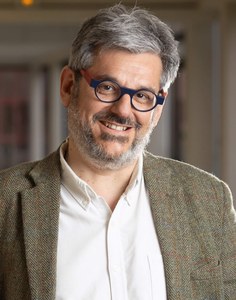 Portrait: Persévérance, fonds de dotation de l'ICO
Mario Campone is a co-author on BOLERO-2, the phase 3 trial that showed mTOR matters in a common cancer. In 724 women with hormone-receptor-positive advanced breast cancer that had grown despite earlier hormone therapy, adding the mTOR blocker everolimus to the hormone drug exemestane more than doubled the time before the cancer grew again (10.6 versus 4.1 months by central review, BAS2012). The idea behind it: cancers that escape hormone therapy often switch on mTOR, so blocking mTOR can restore control. The final report (PIC2014) found a median overall survival of 31.0 months with everolimus and 26.6 months without, a difference that was not statistically significant. Together the two papers show both the real benefit and its limit.
Campone qualified in medicine with a certificate in oncology at the University of Nantes in 1998, with training that included the Beatson Institute in Glasgow, and earned a doctorate in life and health sciences in 2010. Campone is professor of medical oncology at the University of Angers and leads breast cancer and translational research at the Institut de Cancérologie de l'Ouest (ICO), and has headed its phase 1 unit for early drug trials. The research covers new breast cancer drugs, why tumors become resistant to treatment, and markers that predict outcome, including the ORPHEO group that Campone set up with the veterinary school of Nantes.
Today Campone is general director of the ICO, one of France's comprehensive cancer centres with sites in Angers and Saint-Herblain near Nantes, and has been deputy president of Unicancer, the French network of cancer centres, since 2019. Campone also sits on the Science and Innovation Panel of the EU Innovative Health Initiative.
Milestones in the Atlas
A selection, not a full bibliography: only papers that meet the Atlas inclusion criteria.
| Year | Evidence | Study |
|---|---|---|
| 2012 | H | Everolimus in postmenopausal hormone-receptor-positive advanced breast cancer (BOLERO-2) BAS2012 Co-author: took part in BOLERO-2, the phase 3 trial in which everolimus plus exemestane more than doubled progression-free survival in advanced hormone-receptor-positive breast cancer. |
| 2014 | H | Everolimus plus exemestane for hormone-receptor-positive, human epidermal growth factor receptor-2-negative advanced breast cancer: overall survival results from BOLERO-2† PIC2014 Co-author: contributed to the final BOLERO-2 report, which found a 4.4-month longer median survival with everolimus that did not reach statistical significance. |
Co-authors in the Atlas 14
People with a profile here who share at least one study with Mario Campone.
ShowHide
- Alejandra Perez 2 shared studies Breast cancer oncologist in South Florida who enrolled patients in BOLERO-2, the trial that brought the mTOR inhibitor everolimus into breast cancer treatment
- Fabienne Lebrun 2 shared studies Medical oncologist at the Institut Jules Bordet in Brussels and a co-author of the BOLERO-2 trial reports that brought the mTOR inhibitor everolimus into breast cancer care
- Gabriel N. Hortobagyi 2 shared studies Breast cancer physician-scientist and senior author of BOLERO-2, the phase 3 trial that showed adding the mTOR inhibitor everolimus improves outcomes in advanced hormone-receptor-positive breast cancer
- Hope Rugo 2 shared studies Breast cancer oncologist and clinical trialist, long at UCSF, who helped run BOLERO-2 and studied how to manage the side effects of mTOR inhibitors such as everolimus
- Ines Deleu 2 shared studies Medical oncologist in Sint-Niklaas, Belgium, who enrolled patients in international breast cancer drug trials, including the BOLERO-2 trial of everolimus
- José Baselga 2 shared studies Breast cancer oncologist who led the BOLERO-2 trial showing that the mTOR inhibitor everolimus added to hormone therapy lengthens progression-free survival
- Kathleen Pritchard 2 shared studies Breast cancer medical oncologist at Sunnybrook in Toronto, professor emerita at the University of Toronto and long-time leader of breast cancer trials, co-author of the BOLERO-2 everolimus trial
- Martine J. Piccart 2 shared studies Breast cancer oncologist who co-founded the Breast International Group and has led or co-led major academic trials such as HERA, MINDACT and ALTTO.
- Michael Gnant 2 shared studies Surgical oncologist and breast cancer trialist, Professor of Surgery at the Medical University of Vienna and President of the Austrian Breast and Colorectal Cancer Study Group, and a co-author of BOLERO-2, the trial that brought the mTOR inhibitor everolimus into breast cancer treatment
- Shinzaburo Noguchi 2 shared studies Breast cancer surgeon and researcher at Osaka University and a co-investigator of BOLERO-2, the trial that brought the mTOR inhibitor everolimus into breast cancer treatment
- Yoshinori Ito 2 shared studies Breast medical oncologist at the Cancer Institute Hospital in Tokyo and a co-investigator of BOLERO-2, the trial that brought the mTOR inhibitor everolimus into breast cancer treatment
- David Lebwohl Medical oncologist and drug developer who led the clinical development of everolimus (Afinitor) at Novartis through approvals in several cancers and tuberous sclerosis, and later served as Chief Medical Officer of the gene-editing company Intellia Therapeutics
- Howard A Burris Medical oncologist who led the Sarah Cannon Research Institute in Nashville as President and Chief Medical Officer, has run hundreds of early-phase cancer drug trials, including the first trial of the mTORC1-selective inhibitor RMC-5552, and was ASCO President in 2019–2020
- Tarek Sahmoud Physician and epidemiologist who worked as a clinical program head in Novartis oncology drug development during the everolimus trials, and later as chief medical officer at several cancer drug companies
Every researcher with a profile →
Thank you. That helps us know which pages have been read by someone who knows the work.
Thank you. We will check it and correct the page.
Thank you. Your answer was counted anonymously.