Howard A Burris
Medical oncologist who led the Sarah Cannon Research Institute in Nashville as President and Chief Medical Officer, has run hundreds of early-phase cancer drug trials, including the first trial of the mTORC1-selective inhibitor RMC-5552, and was ASCO President in 2019–2020
President and Chief Medical Officer, Sarah Cannon Research Institute, Nashville (retirement from this role announced for end of 2025, advisory role after) · at Sarah Cannon since 1997 · President, American Society of Clinical Oncology (2019–2020) · earlier Director of Clinical Research, Institute for Drug Development, San Antonio · U.S. Army physician, Brooke Army Medical Center (service ended 1997)
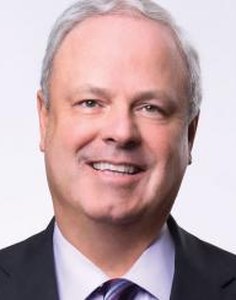 Portrait: ASCO Connection
Howard Burris is a co-author of two Atlas trial papers about mTOR drugs in cancer. PIC2014 is the final report of BOLERO-2, which added everolimus, a rapamycin-like mTORC1 blocker, to the hormone drug exemestane in women with advanced hormone-receptor-positive breast cancer. The combination kept the cancer in check for longer (7.8 against 3.2 months) but did not significantly lengthen overall survival. SCH2025 was the first trial in patients of RMC-5552, a newer bi-steric drug designed to block mTORC1 fully while sparing mTORC2. In 57 patients with advanced solid tumours, high blood sugar, a typical side effect of older mTOR drugs, was uncommon (4 percent). Without a comparison group, the trial is an early signal, not proof.
Burris joined the Sarah Cannon Research Institute in Nashville in 1997. It became one of the largest centres in the United States for early-phase (phase 1) cancer trials, where new drugs are first given to patients to find a safe dose. PubMed lists him with a Sarah Cannon affiliation on more than 200 trial papers, which shows how many new cancer drugs pass through this kind of centre on the way to approval.
Burris studied at the U.S. Military Academy at West Point and at the University of South Alabama College of Medicine. He served as an Army doctor, finishing his service at Brooke Army Medical Center in San Antonio in 1997, and before that directed clinical research at the Institute for Drug Development in San Antonio. At Sarah Cannon he became Chief Medical Officer and Executive Director of the Drug Development Program, and later President and Chief Medical Officer. He was President of the American Society of Clinical Oncology (ASCO) for 2019 to 2020. In October 2025 Sarah Cannon announced that he would retire from the President and Chief Medical Officer role at the end of 2025 and stay on as an adviser.
Milestones in the Atlas
A selection, not a full bibliography: only papers that meet the Atlas inclusion criteria.
| Year | Evidence | Study |
|---|---|---|
| 2014 | H | Everolimus plus exemestane for hormone-receptor-positive, human epidermal growth factor receptor-2-negative advanced breast cancer: overall survival results from BOLERO-2† PIC2014 Co-author of the final BOLERO-2 report, which confirmed longer progression-free survival with everolimus plus exemestane but no significant overall survival gain. |
| 2025 | H | The Bi-steric, mTORC1-Selective Inhibitor, RMC-5552, in Advanced Solid Tumors: A Phase 1 Trial SCH2025 Trial investigator and co-author on the first-in-human phase 1 trial of RMC-5552, a bi-steric mTORC1-selective inhibitor. |
Co-authors in the Atlas 15
People with a profile here who share at least one study with Howard A Burris.
ShowHide
- Alejandra Perez Breast cancer oncologist in South Florida who enrolled patients in BOLERO-2, the trial that brought the mTOR inhibitor everolimus into breast cancer treatment
- Alison M. Schram Medical oncologist at Memorial Sloan Kettering who runs first-in-human cancer drug trials, including the first trial of RMC-5552, an mTORC1-selective inhibitor
- Fabienne Lebrun Medical oncologist at the Institut Jules Bordet in Brussels and a co-author of the BOLERO-2 trial reports that brought the mTOR inhibitor everolimus into breast cancer care
- Gabriel N. Hortobagyi Breast cancer physician-scientist and senior author of BOLERO-2, the phase 3 trial that showed adding the mTOR inhibitor everolimus improves outcomes in advanced hormone-receptor-positive breast cancer
- Hope Rugo Breast cancer oncologist and clinical trialist, long at UCSF, who helped run BOLERO-2 and studied how to manage the side effects of mTOR inhibitors such as everolimus
- Ines Deleu Medical oncologist in Sint-Niklaas, Belgium, who enrolled patients in international breast cancer drug trials, including the BOLERO-2 trial of everolimus
- José Baselga Breast cancer oncologist who led the BOLERO-2 trial showing that the mTOR inhibitor everolimus added to hormone therapy lengthens progression-free survival
- Justin G. Meyerowitz Industry scientist on the team that developed RMC-5552, a bi-steric inhibitor selective for mTORC1
- Kathleen Pritchard Breast cancer medical oncologist at Sunnybrook in Toronto, professor emerita at the University of Toronto and long-time leader of breast cancer trials, co-author of the BOLERO-2 everolimus trial
- Mario Campone Breast cancer oncologist and general director of the Institut de Cancérologie de l'Ouest, a co-investigator on the BOLERO-2 trial that brought everolimus into breast cancer care
- Martine J. Piccart Breast cancer oncologist who co-founded the Breast International Group and has led or co-led major academic trials such as HERA, MINDACT and ALTTO.
- Michael Gnant Surgical oncologist and breast cancer trialist, Professor of Surgery at the Medical University of Vienna and President of the Austrian Breast and Colorectal Cancer Study Group, and a co-author of BOLERO-2, the trial that brought the mTOR inhibitor everolimus into breast cancer treatment
- Shinzaburo Noguchi Breast cancer surgeon and researcher at Osaka University and a co-investigator of BOLERO-2, the trial that brought the mTOR inhibitor everolimus into breast cancer treatment
- Yoshinori Ito Breast medical oncologist at the Cancer Institute Hospital in Tokyo and a co-investigator of BOLERO-2, the trial that brought the mTOR inhibitor everolimus into breast cancer treatment
- Yu Chi Yang Scientist at Revolution Medicines who worked on the company's bi-steric mTORC1-selective inhibitors, from the breast cancer lab studies of RMC-6272 to the first trial of RMC-5552 in patients
Every researcher with a profile →
Thank you. That helps us know which pages have been read by someone who knows the work.
Thank you. We will check it and correct the page.
Thank you. Your answer was counted anonymously.