Justin G. Meyerowitz
Industry scientist on the team that developed RMC-5552, a bi-steric inhibitor selective for mTORC1
Revolution Medicines
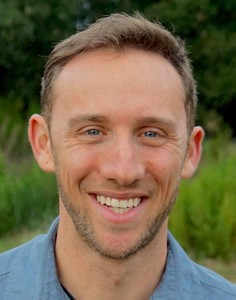 Portrait: Doximity profile
Justin Meyerowitz is a scientist at Revolution Medicines in Redwood City, California, the affiliation PubMed gives on two of his mTORC1 papers. He co-authored the Journal of Medicinal Chemistry paper that described the discovery of RMC-5552, a bi-steric inhibitor designed to block mTORC1 while sparing mTORC2. The Atlas has no other sourced details of his career.
In the Atlas he is senior author of SCH2025, the first-in-human phase 1 trial of RMC-5552 in 57 people with advanced solid tumours. High blood sugar, a common problem with older mTOR inhibitors because they also hit mTORC2, occurred in only 4% of patients and was not dose-limiting. The trial had no comparison arm.
Milestones in the Atlas
A selection, not a full bibliography: only papers that meet the Atlas inclusion criteria.
| Year | Evidence | Study |
|---|---|---|
| 2025 | H | The Bi-steric, mTORC1-Selective Inhibitor, RMC-5552, in Advanced Solid Tumors: A Phase 1 Trial SCH2025 Senior author: phase 1 trial of the mTORC1-selective inhibitor RMC-5552 (n=57); treatment-related hyperglycaemia only 4% (humans, no comparator). |
Co-authors in the Atlas 3
People with a profile here who share at least one study with Justin G. Meyerowitz.
ShowHide
- Alison M. Schram Medical oncologist at Memorial Sloan Kettering who runs first-in-human cancer drug trials, including the first trial of RMC-5552, an mTORC1-selective inhibitor
- Howard A Burris Medical oncologist who led the Sarah Cannon Research Institute in Nashville as President and Chief Medical Officer, has run hundreds of early-phase cancer drug trials, including the first trial of the mTORC1-selective inhibitor RMC-5552, and was ASCO President in 2019–2020
- Yu Chi Yang Scientist at Revolution Medicines who worked on the company's bi-steric mTORC1-selective inhibitors, from the breast cancer lab studies of RMC-6272 to the first trial of RMC-5552 in patients
Every researcher with a profile →
Thank you. That helps us know which pages have been read by someone who knows the work.
Thank you. We will check it and correct the page.
Thank you. Your answer was counted anonymously.