Yu Chi Yang
Scientist at Revolution Medicines who worked on the company's bi-steric mTORC1-selective inhibitors, from the breast cancer lab studies of RMC-6272 to the first trial of RMC-5552 in patients
Revolution Medicines, Redwood City, California (affiliation on PubMed papers from 2023 to 2026)
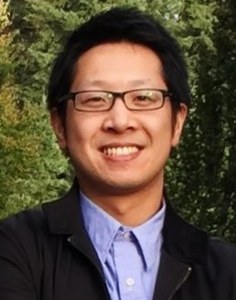 Portrait: LinkedIn
Yu Chi Yang is a co-author of two Atlas papers on a new kind of mTOR drug. Rapamycin and its relatives only partly block mTORC1, the growth-control complex, and leave one of its key targets, 4E-BP1, largely untouched. Drugs that block the mTOR enzyme site block mTORC1 fully but also hit mTORC2, which causes side effects such as high blood sugar. Revolution Medicines built bi-steric molecules, which join a rapamycin-like part to an enzyme-site part so that they bind two places at once and prefer mTORC1. MEN2023 showed that one of them, RMC-6272, fully shut down mTORC1, including 4E-BP1, and overcame resistance to hormone therapy and CDK4/6 inhibitors in breast cancer cells and in tumours from patients grown in mice. SCH2025 was the first trial of the related drug RMC-5552 in 57 patients with advanced solid tumours. High blood sugar was uncommon (4 percent) and the disease was controlled in 64 percent of patients, but with no comparison group the trial cannot prove that sparing mTORC2 is the reason.
PubMed lists Yang at Revolution Medicines in Redwood City, California, on 17 papers from 2023 to 2026, in the company's work on targeted cancer drugs.
Because Yang is a very common surname, only papers with the Revolution Medicines affiliation were counted. No official profile was found, so training and job title are not given.
Milestones in the Atlas
A selection, not a full bibliography: only papers that meet the Atlas inclusion criteria.
| Year | Evidence | Study |
|---|---|---|
| 2023 | A | A bi-steric mTORC1-selective inhibitor overcomes drug resistance in breast cancer MEN2023 Revolution Medicines co-author on the preclinical study showing that the bi-steric mTORC1-selective inhibitor RMC-6272 overcomes drug resistance in breast cancer models. |
| 2025 | H | The Bi-steric, mTORC1-Selective Inhibitor, RMC-5552, in Advanced Solid Tumors: A Phase 1 Trial SCH2025 Revolution Medicines co-author on the first-in-human phase 1 trial of the bi-steric mTORC1-selective inhibitor RMC-5552 in advanced solid tumours. |
Co-authors in the Atlas 6
People with a profile here who share at least one study with Yu Chi Yang.
ShowHide
- Alison M. Schram Medical oncologist at Memorial Sloan Kettering who runs first-in-human cancer drug trials, including the first trial of RMC-5552, an mTORC1-selective inhibitor
- Delong Meng Cancer researcher at UCSF who led the preclinical test of RMC-6272, a drug that blocks mTORC1 much more strongly than mTORC2, in drug-resistant breast cancer
- Hani Goodarzi Systems biologist at UCSF and the Arc Institute who combines computation and experiments to find hidden gene-regulation programs that drive cancer, and a co-author of two Atlas studies on mTORC1 in drug-resistant cancers
- Howard A Burris Medical oncologist who led the Sarah Cannon Research Institute in Nashville as President and Chief Medical Officer, has run hundreds of early-phase cancer drug trials, including the first trial of the mTORC1-selective inhibitor RMC-5552, and was ASCO President in 2019–2020
- Justin G. Meyerowitz Industry scientist on the team that developed RMC-5552, a bi-steric inhibitor selective for mTORC1
- Sourav Bandyopadhyay Uses functional genomics, drug screens and proteomics to understand why breast and lung cancers become resistant to drugs, including drugs that target the mTOR pathway.
Every researcher with a profile →
Thank you. That helps us know which pages have been read by someone who knows the work.
Thank you. We will check it and correct the page.
Thank you. Your answer was counted anonymously.