Hani Goodarzi
Systems biologist at UCSF and the Arc Institute who combines computation and experiments to find hidden gene-regulation programs that drive cancer, and a co-author of two Atlas studies on mTORC1 in drug-resistant cancers
Professor, Department of Biochemistry and Biophysics, UCSF · Core Investigator, Arc Institute (since 2023) · postdoc in cancer systems biology, Rockefeller University (to 2016) · PhD in computational biology and genomics, Princeton (2010)
Goodarzi Lab, Department of Biochemistry and Biophysics, University of California, San Francisco (San Francisco, California, USA) ↗ ORCID0000-0002-9648-8949 ↗
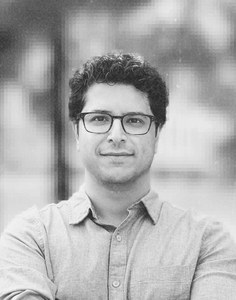 Portrait: Amplify Partners
Goodarzi appears in the Atlas on two cancer studies about mTORC1, the growth-control complex. In MEN2023, the bi-steric inhibitor RMC-6272, which is more than 25 times more selective for mTORC1 than for mTORC2, fully shut down mTORC1, including its control of 4E-BP1, a target that rapamycin only partly blocks. It overcame resistance to hormone therapy and to CDK4/6 inhibitors in breast cancer cells and in tumours grown from patient samples in mice. In YAN2026, from Davide Ruggero's lab, B cell lymphomas that import small protein fragments (dipeptides) through the transporter SLC15A3 kept mTORC1 switched on and resisted the chemotherapy drug 6-mercaptopurine; the resistant tumours became sensitive to rapamycin.
Goodarzi earned a PhD in computational biology and genomics at Princeton in 2010 and did postdoctoral training in cancer systems biology at Rockefeller University, finishing in 2016. According to the UCSF profile, his lab studies how cancer cells reach disordered gene expression states that drive progression, using unbiased computational and experimental methods to find regulatory pathways that are not yet known.
He is a professor in the Department of Biochemistry and Biophysics at UCSF and has been a Core Investigator at the Arc Institute in Palo Alto since 2023.
Milestones in the Atlas
A selection, not a full bibliography: only papers that meet the Atlas inclusion criteria.
| Year | Evidence | Study |
|---|---|---|
| 2023 | A | A bi-steric mTORC1-selective inhibitor overcomes drug resistance in breast cancer MEN2023 Co-author: contributed to the breast cancer study showing that the mTORC1-selective inhibitor RMC-6272 overcomes hormone-therapy and CDK4/6-inhibitor resistance. |
| 2026 | A | SLC15A3-mediated dipeptide metabolism confers antimetabolite resistance in lymphoma via mTORC1 activation. YAN2026 Co-author: contributed to the lymphoma study showing that SLC15A3-driven dipeptide import keeps mTORC1 on and causes chemotherapy resistance that rapamycin can reverse. |
Co-authors in the Atlas 3
People with a profile here who share at least one study with Hani Goodarzi.
ShowHide
- Delong Meng Cancer researcher at UCSF who led the preclinical test of RMC-6272, a drug that blocks mTORC1 much more strongly than mTORC2, in drug-resistant breast cancer
- Sourav Bandyopadhyay Uses functional genomics, drug screens and proteomics to understand why breast and lung cancers become resistant to drugs, including drugs that target the mTOR pathway.
- Yu Chi Yang Scientist at Revolution Medicines who worked on the company's bi-steric mTORC1-selective inhibitors, from the breast cancer lab studies of RMC-6272 to the first trial of RMC-5552 in patients
Every researcher with a profile →
Thank you. That helps us know which pages have been read by someone who knows the work.
Thank you. We will check it and correct the page.
Thank you. Your answer was counted anonymously.