Adam B. Salmon
Biologist of aging at UT Health San Antonio whose work in this Atlas spans rapamycin in mice and in common marmosets. He is a co-author on the Interventions Testing Program reports from the San Antonio site and on the marmoset rapamycin studies on blood markers, epigenetic age and the salivary gland
Department of Molecular Medicine · Barshop Institute for Longevity and Aging Studies, UT Health San Antonio · Geriatric Research, Education and Clinical Center, South Texas Veterans Health Care System
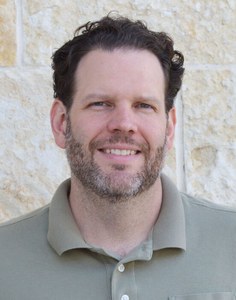 Portrait: San Antonio Nathan Shock Center
Adam Salmon studies the biology of aging at the Barshop Institute in San Antonio. In this Atlas he appears on rapamycin work in two kinds of animals: laboratory mice, including the genetically heterogeneous mice of the NIA Interventions Testing Program, and the common marmoset, a small, short-lived primate.
The mouse papers ask how rapamycin lengthens life and what it does to the body: how dose and sex change the lifespan gain, how it alters gene activity in the liver, and why it can impair glucose handling. The marmoset papers ask the same drug question in a primate, which is closer to humans than a mouse. They report only minor changes in routine blood counts after nine months of rapamycin and no detectable shift in blood epigenetic age, and, in a 2026 study, partial preservation of salivary gland structure in older animals.
The timeline below follows Salmon's contributions gathered in this Atlas.
Milestones in the Atlas
A selection, not a full bibliography: only papers that meet the Atlas inclusion criteria.
| Year | Evidence | Study |
|---|---|---|
| 2012 | A | Rapamycin-induced insulin resistance is mediated by mTORC2 loss and uncoupled from longevity LAM2012 Co-author: chronic rapamycin disrupts a second mTOR complex, mTORC2, which explains its insulin resistance and shows that this effect can be separated from the lifespan gain. |
| 2014 | A | Testing efficacy of administration of the antiaging drug rapamycin in a nonhuman primate, the common marmoset. TAR2014 First description of dosing, pharmacokinetics, biochemical action and tolerability of rapamycin in the common marmoset. Eudragit-encapsulated rapamycin given orally at roughly 1.0 mg/kg/day gave mean trough blood levels of 5.2 ng/mL (range 1.93-10.73), comparable to rodent studies and within the human therapeutic range. In long-term animals (6 of 8) the phospho-rpS6 to total rpS6 ratio fell after 2 weeks, and rapamycin was detectable in liver and adipose tissue with reduced mTOR signalling there. There was no evidence of clinical anemia, fibrotic lung changes or mouth ulcers, and the death rate in the 14-month study was as expected for the animals' ages. Boundary: small cohort (6 of 8 long-term animals showed the pS6 drop), a 3-week and a 14-month study, pharmacology and tolerability only; no lifespan or healthspan outcome was measured, and nothing here is tested in people. |
| 2014 | A | Mice fed rapamycin have an increase in lifespan associated with major changes in the liver transcriptome FOK2014 Co-author: in mice fed rapamycin, lifespan increased together with large changes in the liver transcriptome, with mitochondrial function the most affected pathway. |
| 2014 | A | Rapamycin-mediated lifespan increase in mice is dose and sex dependent and metabolically distinct from dietary restriction MIL2014 Co-author: rapamycin's lifespan benefit in mice is dose- and sex-dependent and metabolically distinct from dietary restriction. |
| 2015 | A | Metabolic consequences of long-term rapamycin exposure on common marmoset monkeys (Callithrix jacchus). ROS2015 Long-term oral encapsulated rapamycin in marmosets had only minor metabolic consequences. Body weight was unchanged overall and fat mass fell only slightly over the first few months. Daily activity counts, blood lipids and glucose metabolism, including oral glucose tolerance, did not change significantly, and adipose tissue showed no difference in metabolic-marker gene expression. In liver, G6Pase activity was suppressed while PCK and GPI activity increased. Boundary: marmoset, oral rapamycin, metabolic endpoints only; the abstract gives neither the dose nor group sizes, and no lifespan result is reported. |
| 2016 | A | Pharmaceutical inhibition of mTOR in the common marmoset: effect of rapamycin on regulators of proteostasis in a non-human primate. LEL2016 In liver and skeletal muscle from rapamycin-treated marmosets (the earlier pilot cohort), rapamycin was associated with higher expression of PSMB5, a core 20S proteasome subunit, in both tissues but not of PSMB8; proteasome activity itself did not change. Mitochondria-targeted chaperones rose in skeletal muscle but not liver, and autophagy rose in skeletal muscle and adipose tissue but not liver. The authors conclude that only some components of the proteostasis network were upregulated, and in a tissue-specific way. Boundary: tissue samples from a small pilot cohort; the changes are expression-level associations and are not shown to cause any health or lifespan effect. |
| 2018 | A | Long-term treatment with the mTOR inhibitor rapamycin has minor effect on clinical laboratory markers in middle-aged marmosets. SIL2018 Co-author: nine months of daily rapamycin in middle-aged marmosets caused only minor changes in blood cell counts. |
| 2021 | A | DNA methylation age analysis of rapamycin in common marmosets. HOR2021 Last author: epigenetic clocks built for marmoset blood did not detect an effect of rapamycin on epigenetic age. |
| 2022 | A | Lifespan benefits for the combination of rapamycin plus acarbose and for captopril in genetically heterogeneous mice STR2022 Co-author: rapamycin plus acarbose, started at 9 months, gave male mice a longer lifespan than rapamycin alone had in earlier cohorts. |
| 2026 | A | Rapamycin Attenuates Age-Related Changes in Marmoset Submandibular Gland: A Non-Human Primate Model of Human Oral Aging. ABD2026 Co-author: in aging marmosets, rapamycin was associated with partial preservation of submandibular gland structure and less fibrosis. |
Co-authors in the Atlas
People with a profile here who share at least one study with Adam B. Salmon.
- Arlan Richardson 2 shared studies Studies how rapamycin slows ageing in mice, including the broad changes it causes in the liver, and co-authored early studies showing that rapamycin protects memory in Alzheimer's-model mice
- David E. Harrison 2 shared studies Led the Jackson Laboratory site of the NIA Interventions Testing Program. His 2009 Nature paper showed that rapamycin extends the lifespan of genetically diverse mice even when feeding starts at 20 months of age, which the authors described as the first pharmacological extension of lifespan in both sexes of a mammal
- Randy Strong 2 shared studies Leads the San Antonio site of the NIA Interventions Testing Program, which tests each compound in parallel at three sites under one shared protocol. He first-authored the program's reports on resveratrol and other supplements (2012) and on rapamycin combined with acarbose (2022)
- Richard A. Miller 2 shared studies Leads the University of Michigan site of the NIA Interventions Testing Program. His papers showed that rapamycin extends mouse lifespan when started in middle age, and that the size of the benefit depends on dose and differs between males and females
- David A. Guertin Built the mouse genetics that defined mTORC2's biological roles
- David M. Sabatini Identified mTOR (as RAFT1) in 1994. His lab then mapped much of the machinery around it: raptor and rictor at the core of mTORC1 and mTORC2, the Rag–Ragulator system that docks mTORC1 on the lysosome, and the sensors that detect leucine, arginine and SAM
- Dudley W. Lamming Showed as a postdoc that rapamycin's harm to glucose metabolism comes largely from its effect on mTORC2, while the lifespan benefit tracks mTORC1. His Wisconsin lab studies intermittent rapamycin dosing and how restricting dietary protein or single amino acids affects metabolism and ageing
- Matt Kaeberlein Extended TOR/aging research from yeast to mice to pet dogs
Every researcher with a profile →
Thank you. Your answer was counted anonymously.
Thank you. That helps us know which pages have been read by someone who knows the work.
Thank you. We will check it and correct the page.