Daniel Boehringer
Electron microscopy specialist at ETH Zurich whose cryo-EM work underpins the Atlas structures of human mTORC1 and mTORC2
Cryo-EM Knowledge Hub (CEMK), ETH Zurich (papers since 2020) · Institute of Molecular Biology and Biophysics, ETH Zurich (papers 2015–2019)
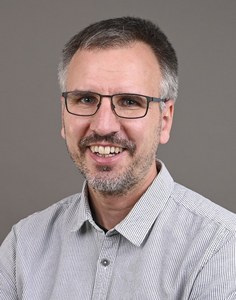 Portrait: LinkedIn
Daniel Boehringer is a co-author on all three Atlas papers that showed the shapes of the two mTOR complexes: the first architecture of human mTORC1 (AYL2015), the architecture of the human mTORC2 core (STU2018), and the 3.2-angstrom structure of mTORC2 (SCA2020). These papers relied on cryo-electron microscopy (cryo-EM): protein complexes are frozen in a thin layer of ice and imaged many thousands of times, and a computer combines the images into a 3D map. Together they explain why mTORC1 is a two-part dimer with its active sites hidden in clefts, and why mTORC2 ignores rapamycin.
The publication record shows Boehringer as a regular cryo-EM contributor to structural projects at ETH Zurich, many with Nenad Ban's group on ribosomes and their assembly. Since about 2020 the papers list the Cryo-EM Knowledge Hub of ETH Zurich, a shared facility, and include method work such as a 2020 study with Christopher Aylett's Imperial College group on transferring fragile support films for cryo-EM samples. No personal web page was opened, so the exact current title is not confirmed.
Milestones in the Atlas
A selection, not a full bibliography: only papers that meet the Atlas inclusion criteria.
| Year | Evidence | Study |
|---|---|---|
| 2015 | M | Architecture of human mTOR complex 1 AYL2015 Co-author: contributed electron microscopy to the cryo-EM architecture of human mTORC1. |
| 2018 | M | Architecture of the human mTORC2 core complex STU2018 Co-author: contributed to the architecture of the human mTORC2 core complex. |
| 2020 | M | The 3.2-Å resolution structure of human mTORC2. SCA2020 Co-author: contributed to the 3.2-angstrom cryo-EM structure of human mTORC2. |
Co-authors in the Atlas 9
People with a profile here who share at least one study with Daniel Boehringer.
ShowHide
- Michael N. Hall 3 shared studies Discovered TOR in yeast in 1991 and established it as a central controller of cell growth that responds to nutrients. His lab later showed that TOR works in two distinct complexes, TORC1 and TORC2, only one of which is blocked by rapamycin
- Nenad Ban 3 shared studies Structural biologist known for atomic structures of the ribosome and for work on how cells make, fold and sort proteins.
- Stefan Imseng 3 shared studies Structural biologist from Timm Maier's group at the Biozentrum Basel who helped solve the first detailed structures of human mTORC1 and mTORC2 and then worked on a drug to block mTORC1 specifically
- Timm Maier 3 shared studies Solved some of the first cryo-EM structures of human mTORC1 (with Nenad Ban's group) and mTORC2, including a high-resolution map of mTORC2
- Alain Scaiola 2 shared studies Structural biologist in Nenad Ban's group at ETH Zurich who solved the 3.2-angstrom cryo-EM structure of human mTORC2 and works on how ribosomes are built and how new proteins are processed
- Edward Stuttfeld 2 shared studies Structural biologist who led the 2018 eLife study that gave the first detailed picture of the human mTORC2 core complex, working in Timm Maier's lab in Basel
- Evelyn Sauer 2 shared studies Structural biologist at the Biozentrum Basel who worked on the structure of the mTOR kinase and contributed to the cryo-EM structures of human mTORC1 and mTORC2
- Christopher Aylett 2 shared studies Structural biologist who solved the first cryo-EM architecture of human mTORC1 at ETH Zurich and now leads a cryo-EM group at Imperial College London
- Mitsugu Shimobayashi Metabolism researcher who trained with Michael Hall in Basel on mTOR in fat tissue and now leads a group at KU Leuven studying how fat and liver control sugar and lipid storage
Every researcher with a profile →
Thank you. That helps us know which pages have been read by someone who knows the work.
Thank you. We will check it and correct the page.
Thank you. Your answer was counted anonymously.