Mitsugu Shimobayashi
Metabolism researcher who trained with Michael Hall in Basel on mTOR in fat tissue and now leads a group at KU Leuven studying how fat and liver control sugar and lipid storage
Group leader, Clinical and Experimental Endocrinology, KU Leuven (last-author papers from 2023) · Biozentrum, University of Basel, Michael N. Hall lab (to about 2023)
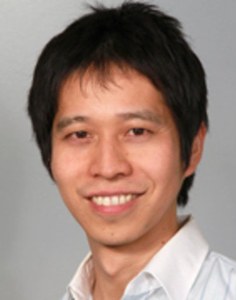 Portrait: ResearchGate
In 2014 Mitsugu Shimobayashi and Michael Hall wrote the review "Making new contacts" in Nature Reviews Molecular Cell Biology. It describes mTOR as a hub in a network: the two mTOR complexes trade signals with other pathways, such as insulin and AMPK signalling, and between them steer how cells take up and use nutrients. A review collects earlier findings and does not add new experiments.
Shimobayashi also appears on two research papers in this Atlas. In a 2013 Science study, a large-scale measurement of phosphorylated proteins showed that mTORC1, the growth-control complex, switches on the cell's own production of pyrimidines, the building blocks of DNA and RNA. In 2020 a cryo-electron microscopy structure of human mTORC2 at 3.2 angstrom resolution pointed to the tail end of the subunit Rictor as the reason this complex is not blocked by rapamycin. These were cell and protein studies.
In Basel, Shimobayashi worked on mTOR in fat tissue and the whole body. A 2023 paper with Shimobayashi as senior author showed that when mTORC2 is lost in fat, mTORC2 in the liver can step in to keep energy storage and blood sugar in balance in mice. Shimobayashi now runs a group at KU Leuven in Belgium. Its 2025 papers show how a chemical tag on the protein MLX stabilises the sugar-sensing ChREBP-MLX complex on DNA to control carbohydrate and fat metabolism, and test a diet change after incretin-drug treatment in obese mice.
Milestones in the Atlas
A selection, not a full bibliography: only papers that meet the Atlas inclusion criteria.
| Year | Evidence | Study |
|---|---|---|
| 2013 | M | Quantitative phosphoproteomics reveal mTORC1 activates de novo pyrimidine synthesis ROB2013 Co-author of the phosphoproteomics study showing that mTORC1 turns on de novo pyrimidine synthesis. |
| 2014 | R | Making new contacts: the mTOR network in metabolism and signalling crosstalk SHI2014 First author of the review describing the mTOR network and its crosstalk with other metabolic signalling pathways. |
| 2020 | M | The 3.2-Å resolution structure of human mTORC2. SCA2020 Co-author of the 3.2 angstrom cryo-EM structure of human mTORC2 that explains its rapamycin insensitivity. |
Co-authors in the Atlas 9
People with a profile here who share at least one study with Mitsugu Shimobayashi.
ShowHide
- Michael N. Hall 3 shared studies Discovered TOR in yeast in 1991 and established it as a central controller of cell growth that responds to nutrients. His lab later showed that TOR works in two distinct complexes, TORC1 and TORC2, only one of which is blocked by rapamycin
- Aaron M. Robitaille Mass spectrometry scientist who, as a PhD student in Michael Hall's lab, used phosphoproteomics to show that mTORC1 switches on the cell's production of pyrimidines, and who now works on proteomics applications at Thermo Fisher Scientific
- Alain Scaiola Structural biologist in Nenad Ban's group at ETH Zurich who solved the 3.2-angstrom cryo-EM structure of human mTORC2 and works on how ribosomes are built and how new proteins are processed
- Daniel Boehringer Electron microscopy specialist at ETH Zurich whose cryo-EM work underpins the Atlas structures of human mTORC1 and mTORC2
- Edward Stuttfeld Structural biologist who led the 2018 eLife study that gave the first detailed picture of the human mTORC2 core complex, working in Timm Maier's lab in Basel
- Marion Cornu Physiologist from Michael Hall's Basel lab who showed in mice that mTORC1 in the liver controls body temperature, movement and fat metabolism through the hormone FGF21
- Nenad Ban Structural biologist known for atomic structures of the ribosome and for work on how cells make, fold and sort proteins.
- Stefan Imseng Structural biologist from Timm Maier's group at the Biozentrum Basel who helped solve the first detailed structures of human mTORC1 and mTORC2 and then worked on a drug to block mTORC1 specifically
- Timm Maier Solved some of the first cryo-EM structures of human mTORC1 (with Nenad Ban's group) and mTORC2, including a high-resolution map of mTORC2
Every researcher with a profile →
Thank you. That helps us know which pages have been read by someone who knows the work.
Thank you. We will check it and correct the page.
Thank you. Your answer was counted anonymously.