Nenad Ban
Structural biologist known for atomic structures of the ribosome and for work on how cells make, fold and sort proteins.
Professor of Structural Molecular Biology, ETH Zurich (since 2000) · Born 1966, Zagreb, Croatia
Ban Group, Institute of Molecular Biology and Biophysics, ETH Zurich (Zurich, Switzerland) ↗ Lab lineage1 direct trainee →
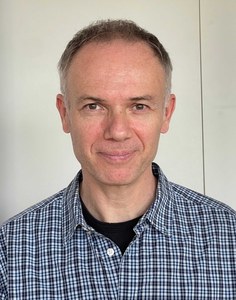 Portrait: ETH Zurich
Nenad Ban was born in Zagreb and trained in molecular biology there, then earned his PhD at the University of California, Riverside, and did postdoctoral work at Yale with Thomas Steitz. He has been a professor of structural molecular biology at ETH Zurich since 2000.
His group works out the three-dimensional shape of the machines that make proteins. His work on the large ribosomal subunit helped show that the ribosome is a ribozyme, an RNA-based catalyst. The group also studies how proteins fold and reach the right membranes while still being made.
In the 2018 eLife paper in the Atlas, led by Edward Stuttfeld, Ban's group and Michael Hall's group in Basel reported the architecture of the human mTORC2 core, made of mTOR, Rictor, SIN1 and mLST8. The structure showed a binding site for accessory proteins on mTOR and helped explain why mTORC2 is insensitive to rapamycin.
Milestones in the Atlas
A selection, not a full bibliography: only papers that meet the Atlas inclusion criteria.
| Year | Evidence | Study |
|---|---|---|
| 2018 | M | Architecture of the human mTORC2 core complex STU2018 Cryo-EM architecture of the human mTORC2 core (mTOR, Rictor, SIN1, mLST8) revealing a conserved accessory-protein site and the basis of rapamycin insensitivity; Ban is senior (last) author. |
Every researcher with a profile →
Thank you. Your answer was counted anonymously.
Thank you. That helps us know which pages have been read by someone who knows the work.
Thank you. We will check it and correct the page.