Evelyn Sauer
Structural biologist at the Biozentrum Basel who worked on the structure of the mTOR kinase and contributed to the cryo-EM structures of human mTORC1 and mTORC2
Biozentrum, University of Basel (PubMed affiliation 2013–2018, at the time of the studies)
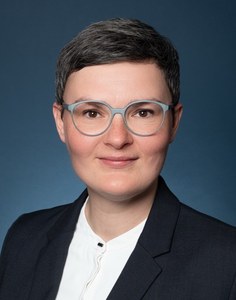 Portrait: LinkedIn
Evelyn Sauer is a co-author of two Atlas studies from Basel that used cryo-electron microscopy to show the shape of the mTOR complexes. The 2015 Science paper (AYL2015) gave the first detailed architecture of human mTORC1, the growth-control complex, including how rapamycin bound to its helper protein FKBP12 narrows access to the active site. The 2018 eLife paper (STU2018) did the same for the core of mTORC2, made of mTOR, Rictor, SIN1 and mLST8, and helped explain why mTORC2 resists rapamycin.
Sauer was first author, with Stefan Imseng, Timm Maier and Michael Hall, of a 2013 review in Biochemical Society Transactions on the conserved sequence motifs and structure of the mTOR kinase domain, the part of the enzyme that transfers phosphate groups. Earlier Basel work by Sauer was in protein crystallography: a 2013 single-author paper on the structure and RNA binding of the bacterial protein Hfq, and a 2014 study of the cell-death regulator BCL-W solved with designed binding proteins.
PubMed lists Sauer at the Biozentrum of the University of Basel on all of these papers. A current position could not be confirmed.
Milestones in the Atlas
A selection, not a full bibliography: only papers that meet the Atlas inclusion criteria.
| Year | Evidence | Study |
|---|---|---|
| 2015 | M | Architecture of human mTOR complex 1 AYL2015 Co-author: contributed to the cryo-EM architecture of human mTORC1. |
| 2018 | M | Architecture of the human mTORC2 core complex STU2018 Co-author: contributed to the architecture of the human mTORC2 core complex. |
Co-authors in the Atlas 8
People with a profile here who share at least one study with Evelyn Sauer.
ShowHide
- Daniel Boehringer 2 shared studies Electron microscopy specialist at ETH Zurich whose cryo-EM work underpins the Atlas structures of human mTORC1 and mTORC2
- Christopher Aylett 2 shared studies Structural biologist who solved the first cryo-EM architecture of human mTORC1 at ETH Zurich and now leads a cryo-EM group at Imperial College London
- Michael N. Hall 2 shared studies Discovered TOR in yeast in 1991 and established it as a central controller of cell growth that responds to nutrients. His lab later showed that TOR works in two distinct complexes, TORC1 and TORC2, only one of which is blocked by rapamycin
- Nenad Ban 2 shared studies Structural biologist known for atomic structures of the ribosome and for work on how cells make, fold and sort proteins.
- Stefan Imseng 2 shared studies Structural biologist from Timm Maier's group at the Biozentrum Basel who helped solve the first detailed structures of human mTORC1 and mTORC2 and then worked on a drug to block mTORC1 specifically
- Timm Maier 2 shared studies Solved some of the first cryo-EM structures of human mTORC1 (with Nenad Ban's group) and mTORC2, including a high-resolution map of mTORC2
- Alain Scaiola Structural biologist in Nenad Ban's group at ETH Zurich who solved the 3.2-angstrom cryo-EM structure of human mTORC2 and works on how ribosomes are built and how new proteins are processed
- Edward Stuttfeld Structural biologist who led the 2018 eLife study that gave the first detailed picture of the human mTORC2 core complex, working in Timm Maier's lab in Basel
Every researcher with a profile →
Thank you. That helps us know which pages have been read by someone who knows the work.
Thank you. We will check it and correct the page.
Thank you. Your answer was counted anonymously.