Nouf N. Laqtom
Cell biologist who helped develop methods to purify intact lysosomes and used them to find what the Batten disease gene CLN3 does, and who now runs a lab at KAUST on lysosome and endoplasmic reticulum defects in rare brain and metabolic diseases
Ibn Rushd Assistant Professor of Bioscience, King Abdullah University of Science and Technology (since 2023) · postdoc, Department of Chemical Engineering, Stanford University (Monther Abu-Remaileh lab) · postdoc, Whitehead Institute and MIT Department of Biology (David Sabatini lab) · PhD, University of Edinburgh (2013) · BS in Biology, King Abdulaziz University
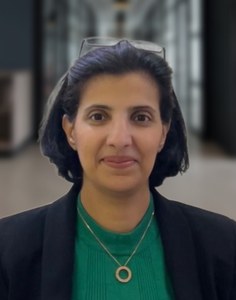 Portrait: KAUST
The lysosome is the cell's recycling sac. It digests worn-out proteins and organelles, and it is also where mTORC1, the growth-control complex, is switched on. Nouf Laqtom is a co-author on three Atlas papers from David Sabatini's lab that looked closely at this organelle. ABU2017 introduced a fast way to pull intact lysosomes out of human cells and measure what is inside; it showed that blocking mTOR strongly reduces the release of most essential amino acids from the lysosome. WYA2018 used the same approach to list 828 lysosome-associated proteins and found that NUFIP1 carries ribosomes to lysosomes for digestion when mTORC1 is off. ROG2019 solved a cryo-EM structure showing how raptor, part of mTORC1, reads the state of the Rag GTPases before mTORC1 docks on the lysosome. The first two are cell studies; the third is a structure of purified proteins backed by cell experiments.
According to KAUST, Laqtom studied biology at King Abdulaziz University and earned a PhD at the University of Edinburgh in 2013. PubMed records from Edinburgh show early work on microRNAs in viral infection and macrophages. She then did postdoctoral work at the Whitehead Institute and MIT and at Stanford University, where she was first author of a 2022 Nature paper with Monther Abu-Remaileh. That study built the LysoTag mouse, which lets researchers isolate lysosomes from chosen tissues, and showed that CLN3, the gene lost in the childhood neurodegenerative disorder Batten disease, is needed to clear glycerophosphodiesters, breakdown products of membrane lipids, from lysosomes. The MIT Ibn Khaldun Fellowship program highlighted the work in 2022.
Laqtom joined KAUST in 2023 as an Ibn Rushd Assistant Professor in Bioscience. Her Subcellular Metabolism and Disease (SMaD) Lab studies how faults in lysosomes and the endoplasmic reticulum cause rare neurodegenerative and metabolic diseases, with a focus on lysosomal storage disorders such as Batten disease, using organelle isolation, CRISPR screens, human stem-cell-derived neurons and mouse models.
Milestones in the Atlas
A selection, not a full bibliography: only papers that meet the Atlas inclusion criteria.
| Year | Evidence | Study |
|---|---|---|
| 2017 | M | Lysosomal metabolomics reveals V-ATPase- and mTOR-dependent regulation of amino acid efflux from lysosomes ABU2017 Co-author on the lysosomal metabolomics study showing that mTOR controls the release of essential amino acids from lysosomes. |
| 2018 | M | NUFIP1 is a ribosome receptor for starvation-induced ribophagy WYA2018 Co-author on the human-cell study that identified NUFIP1 as a receptor that delivers ribosomes to lysosomes for breakdown when mTORC1 is off. |
| 2019 | M | Structural basis for the docking of mTORC1 on the lysosomal surface ROG2019 Co-author on the cryo-EM structure showing how raptor reads the nucleotide state of the Rag GTPases before mTORC1 docks on the lysosome. |
Co-authors in the Atlas 9
People with a profile here who share at least one study with Nouf N. Laqtom.
ShowHide
- Monther Abu-Remaileh 3 shared studies Worked out how to isolate lysosomes fast enough to measure what is inside them, and found that mTOR controls what gets out
- David M. Sabatini 2 shared studies Identified mTOR (as RAFT1) in 1994. His lab then mapped much of the machinery around it: raptor and rictor at the core of mTORC1 and mTORC2, the Rag–Ragulator system that docks mTORC1 on the lysosome, and the sensors that detect leucine, arginine and SAM
- Sze Ham Chan 2 shared studies Researcher at the Whitehead Institute who contributed to studies of lysosome contents, nutrient sensing and cancer metabolism, mostly from David Sabatini's lab
- Edward J. Brignole Research scientist who directs the cryo-electron microscopy facility at MIT.nano and whose cryo-EM work helped solve the structures of GATOR1, GATOR2 and Raptor docked on the Rag GTPases for the Sabatini lab
- Elizaveta Freinkman Chemist and mass-spectrometry specialist at the Whitehead Institute who measured metabolites for many studies of nutrient sensing and cancer metabolism, including the lysosome amino acid work behind two Atlas papers
- Gregory A. Wyant Showed that the lysosomal protein SLC38A9 exports leucine and other essential amino acids out of the lysosome, letting cells grow on proteins they have taken up and broken down there
- Choah Kim Researcher in David Sabatini's lab at the Whitehead Institute who contributed to three studies on how amino acids at the lysosome are sensed by mTORC1
- Kacper B. Rogala Solved the near-atomic cryo-EM structure that shows how mTORC1 physically docks at the lysosome by reading the Rag GTPases
- Xin Gu Cell biologist who discovered SAMTOR, the sensor that lets mTORC1 read the methyl donor SAM, as a PhD student at MIT, and who now leads a lab at Dana-Farber and Harvard Medical School studying ubiquitin-independent protein destruction by the midnolin-proteasome pathway
Every researcher with a profile →
Thank you. That helps us know which pages have been read by someone who knows the work.
Thank you. We will check it and correct the page.
Thank you. Your answer was counted anonymously.