Edward J. Brignole
Research scientist who directs the cryo-electron microscopy facility at MIT.nano and whose cryo-EM work helped solve the structures of GATOR1, GATOR2 and Raptor docked on the Rag GTPases for the Sabatini lab
Director, MIT cryo-EM facility at MIT.nano (appointed 2017) · research scientist in Catherine Drennan's lab, MIT (from 2010)
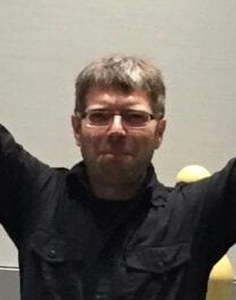 Portrait: Drennan Lab, MIT
Edward Brignole is a co-author of three structural papers in the Atlas from David Sabatini's lab, all made with cryo-electron microscopy (cryo-EM). In cryo-EM, purified proteins are frozen in a thin layer of ice and photographed thousands of times with an electron beam, and the images are combined into a 3D model. The method needs careful sample preparation and microscope work, which is where an EM specialist comes in.
The three papers solve key parts of how mTORC1 senses amino acids. SHE2018 gives the structure of GATOR1, the complex that switches the Rag GTPases off, alone and bound to the Rags, and shows how it does so. ROG2019 shows how Raptor, part of mTORC1, docks onto the Rag-Ragulator complex on the lysosome: one part of Raptor reads the state of RagA and a separate claw reads RagC, and only the right combination lets mTORC1 land. VAL2022 gives the structure of human GATOR2, a large cage-like complex built on an octagonal frame, and maps where the sensors Sestrin2 and CASTOR1 attach. How GATOR2 holds back GATOR1 is still not fully settled.
Brignole joined Catherine Drennan's lab at MIT in 2010 as a research scientist and worked mainly on ribonucleotide reductase, the enzyme that makes the building blocks of DNA; the PubMed record shows fifteen joint papers with the Drennan group up to 2023. In late 2017 the Drennan lab announced that Brignole had been appointed to direct MIT's new cryo-EM facility, housed in the MIT.nano building, while keeping up the work with the lab. Running a shared facility means helping groups across MIT, such as the Sabatini lab, turn purified proteins into 3D structures, which is how the Atlas papers came about.
Milestones in the Atlas
A selection, not a full bibliography: only papers that meet the Atlas inclusion criteria.
| Year | Evidence | Study |
|---|---|---|
| 2018 | M | Architecture of the human GATOR1 and GATOR1-Rag GTPases complexes SHE2018 Co-author on the cryo-EM structures of GATOR1 alone and bound to the Rag GTPases. |
| 2019 | M | Structural basis for the docking of mTORC1 on the lysosomal surface ROG2019 Co-author on the cryo-EM structure showing how Raptor docks on Rag-Ragulator to bring mTORC1 to the lysosome. |
| 2022 | M | Structure of the nutrient-sensing hub GATOR2 VAL2022 Co-author on the cryo-EM structure of human GATOR2, a large cage that carries the binding sites for Sestrin2 and CASTOR1. |
Co-authors in the Atlas 12
People with a profile here who share at least one study with Edward J. Brignole.
ShowHide
- David M. Sabatini 3 shared studies Identified mTOR (as RAFT1) in 1994. His lab then mapped much of the machinery around it: raptor and rictor at the core of mTORC1 and mTORC2, the Rag–Ragulator system that docks mTORC1 on the lysosome, and the sensors that detect leucine, arginine and SAM
- Kacper B. Rogala 2 shared studies Solved the near-atomic cryo-EM structure that shows how mTORC1 physically docks at the lysosome by reading the Rag GTPases
- Lynne Chantranupong 2 shared studies Showed as a Sabatini-lab graduate student that the Sestrins act through GATOR2 to regulate amino-acid signalling to mTORC1. She then discovered the CASTOR proteins, the cell's arginine sensors for the pathway
- Max L. Valenstein 2 shared studies First author of the cryo-EM structures of GATOR2, the hub that tells mTORC1 whether amino acids are present, alone and bound to the sensors Sestrin2 and CASTOR1
- Xin Gu 2 shared studies Cell biologist who discovered SAMTOR, the sensor that lets mTORC1 read the methyl donor SAM, as a PhD student at MIT, and who now leads a lab at Dana-Farber and Harvard Medical School studying ubiquitin-independent protein destruction by the midnolin-proteasome pathway
- Kendall J. Condon Ran genome-wide CRISPR screens revealing how mitochondrial stress signals to mTORC1
- Kuang Shen Solved, as a Sabatini-lab postdoc, cryo-EM structures of GATOR1 and of the FLCN–FNIP2–Rag–Ragulator complex, two switches that set mTORC1 activity. His UMass Chan lab studies the structural basis of nutrient sensing
- Monther Abu-Remaileh Worked out how to isolate lysosomes fast enough to measure what is inside them, and found that mTOR controls what gets out
- Nouf N. Laqtom Cell biologist who helped develop methods to purify intact lysosomes and used them to find what the Batten disease gene CLN3 does, and who now runs a lab at KAUST on lysosome and endoplasmic reticulum defects in rare brain and metabolic diseases
- Pranav V. Lalgudi Co-author of the cryo-EM structures of GATOR2, the nutrient-sensing hub of mTORC1, in 2022 and of GATOR2 bound to Sestrin2 and CASTOR1 in 2025
- Rick K. Huang Cryo-electron microscopy specialist who, at the HHMI Janelia Research Campus, helped solve the 2018 and 2019 structures of the protein machines that pass amino acid signals to mTORC1
- Robert A. Saxton Solved, as a Sabatini-lab graduate student, the structures of the leucine sensor Sestrin2 and the arginine sensor CASTOR1, showing how each one grips its amino acid. He also co-wrote a widely cited 2017 review of mTOR signalling with David Sabatini
Every researcher with a profile →
Thank you. That helps us know which pages have been read by someone who knows the work.
Thank you. We will check it and correct the page.
Thank you. Your answer was counted anonymously.