Sze Ham Chan
Researcher at the Whitehead Institute who contributed to studies of lysosome contents, nutrient sensing and cancer metabolism, mostly from David Sabatini's lab
Whitehead Institute for Biomedical Research (papers 2016–2023, affiliation at the time of the studies) · also listed at the Department of Pharmacology, University of Virginia School of Medicine (2022) · current position not confirmed
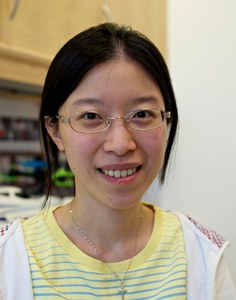 Portrait: University of Virginia School of Medicine
The lysosome is a small sac inside the cell that breaks down old proteins and organelles and stores the freed amino acids. It is also the platform where mTORC1, the growth-control complex, is switched on. Sze Ham Chan is a co-author on two Atlas papers that looked inside lysosomes. In ABU2017, the team pulled lysosomes out of human cells within minutes and measured what was in them. When mTOR was blocked, most essential amino acids stopped leaving the lysosome, so the organelle became a store rather than a source. The study used one human cell line and short drug treatments.
In WYA2018, the same lysosome-isolation method was used to list 828 proteins that gather at lysosomes and to see which ones change when mTORC1 is switched off. One of them, NUFIP1, moved from the nucleus to autophagosomes and lysosomes and carried ribosomes there to be digested. This kind of self-eating of ribosomes, called ribophagy, gives a starving cell back amino acids and nucleotides. The work was done in human cells.
PubMed lists Chan at the Whitehead Institute on a series of papers from 2016 to 2023, including a 2016 Nature Chemical Biology study of a PHGDH inhibitor that blocks serine synthesis in cancer cells, the 2022 Nature paper that used a LysoTag mouse to show what the Batten disease gene CLN3 does in lysosomes, and a 2023 Cell Chemical Biology study showing that cancer cells respond differently to metabolic drugs when grown in a medium made from serum. The 2022 record also lists the Department of Pharmacology at the University of Virginia School of Medicine. No official profile page was found, so the current position could not be confirmed.
Milestones in the Atlas
A selection, not a full bibliography: only papers that meet the Atlas inclusion criteria.
| Year | Evidence | Study |
|---|---|---|
| 2017 | M | Lysosomal metabolomics reveals V-ATPase- and mTOR-dependent regulation of amino acid efflux from lysosomes ABU2017 Co-author on the lysosomal metabolomics study showing that mTOR controls the release of essential amino acids from lysosomes. |
| 2018 | M | NUFIP1 is a ribosome receptor for starvation-induced ribophagy WYA2018 Co-author on the human-cell study that identified NUFIP1 as a receptor that delivers ribosomes to lysosomes for breakdown when mTORC1 is off. |
Co-authors in the Atlas 6
People with a profile here who share at least one study with Sze Ham Chan.
ShowHide
- Monther Abu-Remaileh 2 shared studies Worked out how to isolate lysosomes fast enough to measure what is inside them, and found that mTOR controls what gets out
- Nouf N. Laqtom 2 shared studies Cell biologist who helped develop methods to purify intact lysosomes and used them to find what the Batten disease gene CLN3 does, and who now runs a lab at KAUST on lysosome and endoplasmic reticulum defects in rare brain and metabolic diseases
- David M. Sabatini Identified mTOR (as RAFT1) in 1994. His lab then mapped much of the machinery around it: raptor and rictor at the core of mTORC1 and mTORC2, the Rag–Ragulator system that docks mTORC1 on the lysosome, and the sensors that detect leucine, arginine and SAM
- Elizaveta Freinkman Chemist and mass-spectrometry specialist at the Whitehead Institute who measured metabolites for many studies of nutrient sensing and cancer metabolism, including the lysosome amino acid work behind two Atlas papers
- Gregory A. Wyant Showed that the lysosomal protein SLC38A9 exports leucine and other essential amino acids out of the lysosome, letting cells grow on proteins they have taken up and broken down there
- Choah Kim Researcher in David Sabatini's lab at the Whitehead Institute who contributed to three studies on how amino acids at the lysosome are sensed by mTORC1
Every researcher with a profile →
Thank you. That helps us know which pages have been read by someone who knows the work.
Thank you. We will check it and correct the page.
Thank you. Your answer was counted anonymously.