Leon O Murphy
Cell biologist who led autophagy and mTOR drug discovery at Novartis in Cambridge, Massachusetts, and is now Chief Scientific Officer of Casma Therapeutics, a company that develops drugs acting on the autophagy-lysosome system
Chief Scientific Officer, Casma Therapeutics · Senior Vice President, Biology, Casma Therapeutics (from 2018) · Entrepreneur-in-residence, Third Rock Ventures · drug discovery group leader, Novartis Institutes for BioMedical Research (Cambridge, Massachusetts)
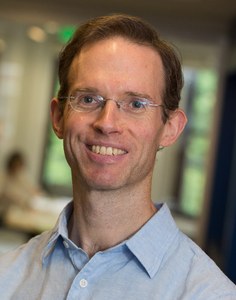 Portrait: LinkedIn
Leon Murphy is a co-author of two Atlas papers from Brendan Manning's Harvard lab and its Novartis collaborators. DUV2010 showed in cultured mouse cells that switching mTORC1, the growth-control complex, permanently on is enough to drive sugar breakdown, the pentose phosphate pathway and the making of new fats, through the transcription factors HIF1alpha and SREBP. DIB2012 added TBC1D7 as a third core part of the TSC1-TSC2 complex, the protein brake that keeps mTORC1 in check.
Murphy trained in biochemistry and cell biology. At the Novartis Institutes for BioMedical Research in Cambridge, Massachusetts, he led a drug discovery group working on autophagy, the cell's system for breaking down and recycling its own parts, and on metabolic disease. PubMed shows his main line of work there: why rapamycin switches on autophagy in some cell lines but not others, and how combining it with a second kind of mTOR inhibitor overcomes this (2011); orally available inhibitors of the autophagy enzyme VPS34 (2015); and a CRISPR screen that found TMEM41B as a new autophagy gene (2018).
In 2018 Murphy moved to Third Rock Ventures as an entrepreneur-in-residence and helped found Casma Therapeutics, first as Senior Vice President of Biology and now as Chief Scientific Officer. With Noboru Mizushima he wrote a 2020 review on how to measure autophagy properly, and Casma's recent papers with academic groups study the lysosomal ion channel TRPML1 as a drug target.
Milestones in the Atlas
A selection, not a full bibliography: only papers that meet the Atlas inclusion criteria.
| Year | Evidence | Study |
|---|---|---|
| 2010 | M | Activation of a metabolic gene regulatory network downstream of mTOR complex 1 DUV2010 Co-author from Novartis on the map of the metabolic gene program that mTORC1 switches on in cultured cells. |
| 2012 | M | TBC1D7 is a third subunit of the TSC1-TSC2 complex upstream of mTORC1 DIB2012 Co-author from Novartis on the identification of TBC1D7 as the third core subunit of the TSC1-TSC2 complex upstream of mTORC1. |
Co-authors in the Atlas 7
People with a profile here who share at least one study with Leon O Murphy.
ShowHide
- Brendan D. Manning 2 shared studies Was among the groups that in 2002 identified TSC2 as a direct target of Akt (MAN2002), linking insulin and PI3K signalling to mTORC1, and later found TBC1D7 as the third subunit of the TSC complex. His lab has shown how mTORC1 turns growth signals into the synthesis of lipids and nucleotides
- Peter M Finan 2 shared studies Biochemist and drug-discovery leader who started the PI 3-kinase drug discovery program at Novartis and ran its Developmental and Molecular Pathways group in Cambridge, Massachusetts, before moving into life-science venture investing
- David J. Kwiatkowski Geneticist and physician who studies tuberous sclerosis complex (TSC) and the TSC1/TSC2 genes that restrain mTORC1.
- Christian C. Dibble Identified TBC1D7 as the third subunit of the TSC complex that controls mTORC1, as a Manning-lab graduate student. His lab at Beth Israel Deaconess studies how PI3K signalling and nutrient supply are integrated to control mTORC1 and cell metabolism
- John M. Asara Mass-spectrometry specialist whose core facility supplied metabolomics and proteomics for several mTOR studies, including measurements of purine, pyrimidine and SAM metabolism downstream of mTORC1.
- Katrin Düvel First author of the study showing that mTORC1 switches on a metabolic gene program through HIF1α and SREBP, driving glycolysis, the pentose phosphate pathway and lipid synthesis
- Sue Menon Showed insulin controls mTORC1 by moving the TSC complex on and off the lysosome
Every researcher with a profile →
Thank you. That helps us know which pages have been read by someone who knows the work.
Thank you. We will check it and correct the page.
Thank you. Your answer was counted anonymously.