David J. Kwiatkowski
Geneticist and physician who studies tuberous sclerosis complex (TSC) and the TSC1/TSC2 genes that restrain mTORC1.
Brigham and Women's Hospital · Senior Physician; Professor of Medicine, Harvard Medical School
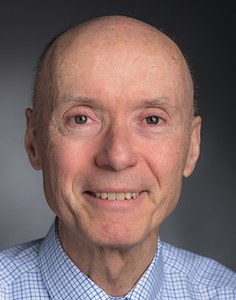 Portrait: Dana-Farber Cancer Institute
David Kwiatkowski is a physician-scientist at Brigham and Women's Hospital and a professor of medicine at Harvard Medical School. His profile says his research covers the genetics of tuberous sclerosis complex (TSC), including mouse models (KWI2002), the roles of the TSC1 and TSC2 proteins, kidney and lung tumours linked to TSC, and genomic methods to find mutations.
TSC is caused by mutations in TSC1 or TSC2. The proteins they make normally keep mTORC1 in check, so without them mTORC1 becomes overactive. In the brain this causes epilepsy and learning and social difficulties.
The 2008 study in the Atlas, with Lynsey Meikle as first author, used a mouse in which Tsc1 is removed from most neurons. Treatment with rapamycin or its relative RAD001 raised median survival from 33 days to over 100 days and improved behaviour and brain cell structure. Even a short course, from day 7 to day 30 of life, gave lasting benefit. The work supported testing mTOR inhibitors for TSC brain disease.
Milestones in the Atlas
A selection, not a full bibliography: only papers that meet the Atlas inclusion criteria.
| Year | Evidence | Study |
|---|---|---|
| 2002 | A | A mouse model of TSC1 reveals sex-dependent lethality from liver hemangiomas, and up-regulation of p70S6 kinase activity in Tsc1 null cells KWI2002 A Tsc1 knockout mouse develops kidney cystadenomas and liver hemangiomas, and Tsc1-null cells show rapamycin-sensitive S6K activation; Kwiatkowski was first author. |
| 2002 | M | Tuberous sclerosis complex-1 and -2 gene products function together to inhibit mammalian target of rapamycin (mTOR)-mediated downstream signaling TEE2002 TSC1 and TSC2 act together to inhibit mTOR signalling to S6K1 and 4E-BP1, in a study from John Blenis's lab; Kwiatkowski was a co-author. |
| 2008 | A | Reversal of learning deficits in a Tsc2+/- mouse model of tuberous sclerosis EHN2008 Rapamycin reverses learning and memory deficits in a Tsc2+/- tuberous sclerosis model. |
| 2008 | A | Response of a neuronal model of tuberous sclerosis to mammalian target of rapamycin (mTOR) inhibitors: effects on mTORC1 and Akt signaling lead to improved survival and function MEI2008 Rapamycin and RAD001 greatly extended survival and improved neuronal and behavioural features in a mouse model of TSC brain disease; Kwiatkowski was senior author. |
| 2012 | M | TBC1D7 is a third subunit of the TSC1-TSC2 complex upstream of mTORC1 DIB2012 TBC1D7 is the third core subunit of the TSC1-TSC2 complex regulating Rheb/mTORC1. |
| 2017 | M | mTORC1 Couples Nucleotide Synthesis to Nucleotide Demand Resulting in a Targetable Metabolic Vulnerability VAL2017 Hyperactive mTORC1 couples nucleotide synthesis to demand; imbalance drives replication stress in these cells. |
Co-authors in the Atlas
People with a profile here who share at least one study with David J. Kwiatkowski.
- Brendan D. Manning 3 shared studies Was among the groups that in 2002 identified TSC2 as a direct target of Akt (MAN2002), linking insulin and PI3K signalling to mTORC1, and later found TBC1D7 as the third subunit of the TSC complex. His lab has shown how mTORC1 turns growth signals into the synthesis of lipids and nucleotides
- John M. Asara 2 shared studies Mass-spectrometry specialist whose core facility supplied metabolomics and proteomics for several mTOR studies, including measurements of purine, pyrimidine and SAM metabolism downstream of mTORC1.
- Alcino J. Silva Studies the molecular and cellular basis of learning and memory, including how overactive mTOR signaling in tuberous sclerosis impairs memory and how rapamycin can reverse it in mice.
- Alexander J. Valvezan Showed as a Manning-lab postdoc that mTORC1 matches nucleotide production to demand, creating a weak point that can be targeted in tumours with TSC loss. His Rutgers lab found that mTORC1 activity rises and falls through the cell cycle and helps drive entry into mitosis
- Andrew R. Tee First author of one of several 2003 papers showing that the TSC1–TSC2 complex acts as a GTPase-activating protein for Rheb
- Dan Ehninger Showed that rapamycin reverses learning deficits in adult mice carrying a tuberous sclerosis mutation, and later tested carefully whether rapamycin's lifespan effect reflects a true slowing of ageing
- Diane C. Fingar Studies how mTORC1 and mTORC2 are regulated, especially through site-specific phosphorylation
- Christian C. Dibble Identified TBC1D7 as the third subunit of the TSC complex that controls mTORC1, as a Manning-lab graduate student. His lab at Beth Israel Deaconess studies how PI3K signalling and nutrient supply are integrated to control mTORC1 and cell metabolism
- John Blenis Showed early on that rapamycin blocks S6 kinase, then worked out how mTORC1 drives cell growth through its two main translation targets, S6K1 and 4E-BP1. His lab also found, in parallel with the Sabatini lab, that mTORC1 phosphorylates Grb10, a feedback brake on insulin signalling
- Lewis C. Cantley Co-discovered PI3K, the pathway that feeds into mTOR from growth factors
Every researcher with a profile →
Thank you. Your answer was counted anonymously.
Thank you. That helps us know which pages have been read by someone who knows the work.
Thank you. We will check it and correct the page.